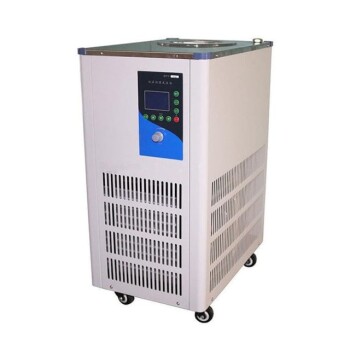
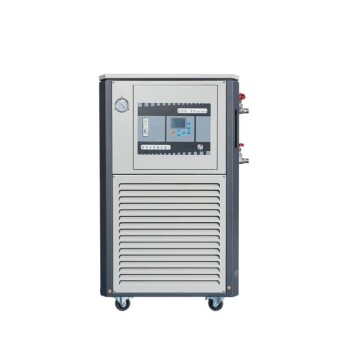
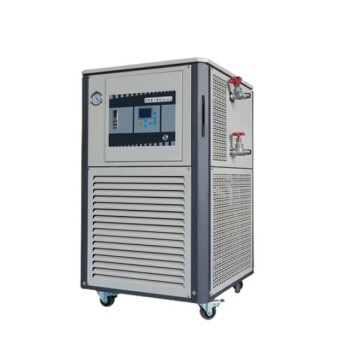
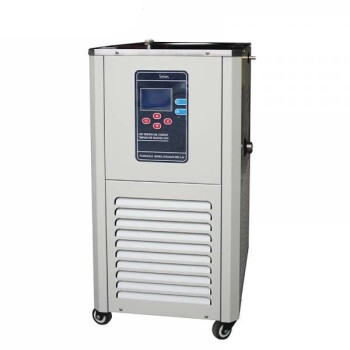
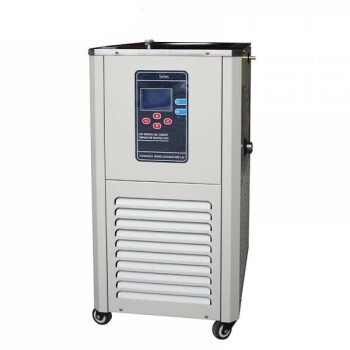
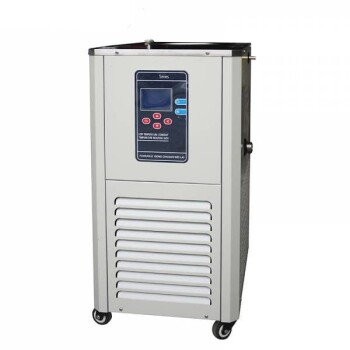
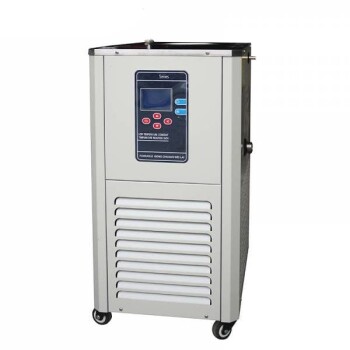
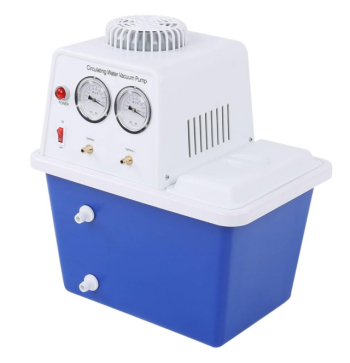
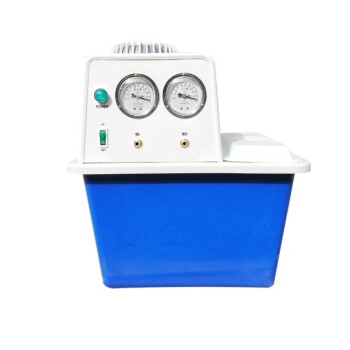
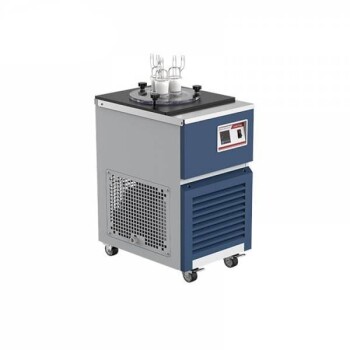
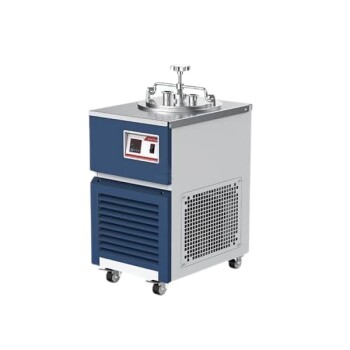
Reliability in thermal cycling tests relies heavily on thermal management. An industrial-grade circulating cooling system is necessary because the high-temperature furnaces and electronic controls used in these tests generate substantial waste heat. This system provides continuous, constant-temperature cooling to protect critical hardware—specifically high-power supplies and vacuum pumps—ensuring they operate safely and stably throughout long-duration experiments.
The core value of an industrial cooling system is the preservation of experimental integrity. By actively neutralizing waste heat, it prevents thermal drift in sensitive control equipment, ensuring that the data collected on your silicide coatings reflects true material performance rather than hardware instability.
Managing the Thermal Environment
High-temperature stability tests are not just stressful for the coating being tested; they are physically demanding on the laboratory infrastructure.
Neutralizing Waste Heat
High-temperature furnaces used for testing silicide coatings do not contain all their heat within the sample chamber.
Significant waste heat radiates outward, affecting the surrounding electronic control equipment.
An industrial cooling system acts as a necessary buffer, absorbing and dissipating this excess energy to maintain a safe operating environment.
Protecting High-Power Supplies
The power supplies required to drive high-temperature furnaces operate at high loads.
Excessive heat accumulation can cause these power supplies to fluctuate or fail.
Continuous cooling ensures these components remain within their optimal thermal operating range, preventing unexpected shutdowns or power spikes.
Maintaining Vacuum Pump Efficiency
Many thermal cycling tests require a controlled atmosphere or vacuum to simulate specific service conditions.
Vacuum pump systems are highly sensitive to overheating, which can degrade their efficiency or cause seizure.
The circulating cooling system provides the constant temperature regulation needed to keep these pumps running smoothly over long periods.
The Link to Data Accuracy
The validity of your research depends entirely on the stability of your test variables.
Ensuring Consistent Test Conditions
For silicide coating data to be valid, the thermal cycles must be precise and repeatable.
If the equipment driving the temperature cycles becomes unstable due to overheating, the thermal profile may deviate from the experimental design.
Active cooling guarantees that the equipment performs consistently, ensuring that any changes observed in the coating are due to the material's properties, not equipment error.
Enabling Long-Term Cycling
Thermal cycling stability tests are inherently time-intensive.
Equipment that performs well for an hour may fail after days of operation without adequate cooling.
Industrial-grade systems are designed for continuous duty, allowing for the uninterrupted completion of extended cycling tasks without risk to the hardware.
The Risks of Inadequate Cooling
While it may be tempting to rely on standard air cooling or less robust systems, the trade-offs involve significant risk to both assets and data.
Equipment Lifespan Reduction
Running high-power electronics and vacuum systems at elevated temperatures drastically shortens their operational lifespan.
Without industrial-grade cooling, you risk frequent and expensive equipment replacements.
Compromised Safety
Overheating in high-power furnace systems presents a tangible safety hazard.
Effective cooling is a critical safety layer that prevents catastrophic thermal runaway or component failure during operation.
Making the Right Choice for Your Goal
When configuring your thermal cycling test setup, consider your primary objectives:
- If your primary focus is Data Precision: Prioritize cooling capacity to ensure your power supplies deliver stable, fluctuation-free heating profiles.
- If your primary focus is Equipment Longevity: Ensure the cooling system is integrated directly with your vacuum pumps and high-load electronics to prevent heat-induced wear.
- If your primary focus is Safety: Verify that the cooling system has continuous operation capabilities to manage waste heat during the most intense phases of the thermal cycle.
Ultimately, the cooling system is not an accessory; it is the foundation that allows high-temperature precision equipment to deliver accurate, reproducible scientific results.
Summary Table:
| Feature | Importance in Thermal Cycling Tests | Benefit to Silicide Research |
|---|---|---|
| Waste Heat Neutralization | Protects sensitive electronics from furnace radiation | Prevents hardware-induced thermal drift |
| Power Supply Cooling | Maintains stable high-load furnace operation | Ensures repeatable and precise thermal profiles |
| Vacuum Pump Regulation | Prevents system seizure or efficiency loss | Maintains consistent atmosphere/vacuum conditions |
| Continuous Duty Cycle | Supports long-duration experimental runs | Enables uninterrupted long-term stability testing |
Maximize Your Research Precision with KINTEK
Don't let equipment instability compromise your high-temperature silicide coating data. KINTEK specializes in advanced laboratory solutions, offering robust industrial cooling systems, high-temperature furnaces, and vacuum pumps designed for the most demanding thermal cycling environments.
Our comprehensive range—from muffle and tube furnaces to high-pressure reactors and cooling solutions (ULT freezers, cold traps)—ensures your lab operates with peak efficiency and safety. Let our experts help you build a reliable testing infrastructure that delivers reproducible scientific results.
Ready to upgrade your lab's thermal management? Contact KINTEK today for a tailored solution!
References
- S. V. Lytovchenko. High-Temperature Silicides: Properties and Application. DOI: 10.26565/2312-4334-2016-3-01
This article is also based on technical information from Kintek Solution Knowledge Base .
Related Products
- 100L Chilling Circulator Cooling Water Circulator for Low Temperature Constant Temperature Reaction Bath Water Bath Cooling
- 10L Heating Chilling Circulator Cooling Water Bath Circulator for High and Low Temperature Constant Temperature Reaction
- 100L Heating Chilling Circulator Cooling Water Bath Circulator for High and Low Temperature Constant Temperature Reaction
- 5L Heating Chilling Circulator Cooling Water Bath Circulator for High and Low Temperature Constant Temperature Reaction
- 20L Heating Chilling Circulator Cooling Water Bath Circulator for High and Low Temperature Constant Temperature Reaction
People Also Ask
- What function does a circulating cooling chiller perform during the gas adsorption isotherm testing of nanoporous carbon?
- Why is a circulating water chiller required for Prussian Blue nanoparticles? Ensure Stability & Batch Reproducibility
- What is the purpose of a cooling circulation water bath system in electrochemical experiments? Enhance Lab Precision
- How does a constant temperature circulator support the leaching reaction of gold scrap? Optimize Gold Recovery Results
- How do constant temperature circulators impact weight-loss immersion tests? Ensure Precision in Corrosion Analysis