Knowledge Why is it necessary to ensure an oxygen-free environment in a pyrolysis reactor? Maximize Bio-Oil & Syngas Yields
Author avatar

Tech Team · Kintek Solution

Updated 1 day ago

Why is it necessary to ensure an oxygen-free environment in a pyrolysis reactor? Maximize Bio-Oil & Syngas Yields


The absolute exclusion of oxygen is mandatory in plastic pyrolysis to prevent the process from shifting into incineration. By heating plastic waste in an oxygen-free environment, you facilitate thermal cracking rather than combustion, ensuring the material breaks down into usable fuel sources instead of being destroyed by fire.

Core Takeaway Pyrolysis relies on heat without fire to transform plastic into high-value resources like bio-oil and syngas. Introducing oxygen triggers direct combustion, which consumes the potential fuel and results in low-value waste products like ash and carbon dioxide.

The Mechanics of Thermochemical Decomposition

To understand why the reactor must be sealed, you must distinguish between burning a material and breaking it down chemically.

Preventing Direct Combustion

The primary reason for eliminating oxygen is to stop the plastic from burning. In the presence of oxygen, high temperatures trigger combustion, an oxidative reaction that releases heat but destroys the material's chemical structure.

Enabling Molecular Cracking

Pyrolysis is defined as thermochemical decomposition under oxygen-deficient conditions. Without oxygen, the heat energy attacks the chemical bonds of the plastic, causing long-chain hydrocarbons to "crack" or fracture into smaller, useful molecules.

Preserving Energy Content

Plastic waste contains significant stored energy in its hydrocarbon chains. An oxygen-free environment conserves this energy within the new products, whereas oxygen would release that energy immediately as waste heat.

Maximizing Product Value and Yield

The environment inside the reactor directly dictates the physical state and economic value of the output.

Generating High-Value Outputs

When long-chain hydrocarbons crack in an oxygen-free vacuum or inert atmosphere, they re-form into valuable industrial commodities. The primary outputs of this controlled process are bio-oil, biochar, and syngas.

Avoiding Simple By-products

If oxygen is introduced, the reaction yields simple combustion by-products. Instead of actionable fuels, the process produces smoke, ash, and oxidized gases which have little to no economic value.

Common Pitfalls and Process Risks

While the concept is simple, maintaining this environment presents specific challenges that affect process efficiency.

The Impact of Partial Oxidation

Even a small leak of oxygen does not necessarily result in a full fire, but it creates "partial combustion." This degrades the quality of the bio-oil and reduces the overall yield of syngas, rendering the process less efficient.

Thermal Control vs. Chemical Reaction

Operators must distinguish between heating the reactor and fueling a reaction. In pyrolysis, the heat source is external; if oxygen enters, the plastic becomes the fuel source, causing temperature spikes that can damage the reactor and ruin the batch.

Ensuring Process Success

To achieve the desired results from plastic pyrolysis, your operational focus must be on reactor integrity.

  • If your primary focus is Maximizing Yield: Ensure the reactor is perfectly sealed to prevent combustion from consuming your feedstock, converting 100% of the mass into bio-oil, syngas, or biochar.
  • If your primary focus is Product Quality: Strictly monitor oxygen levels to prevent the formation of oxidized contaminants that reduce the commercial value of your bio-oil.

Control the atmosphere to control the chemistry, turning potential waste into valuable energy.

Summary Table:

Feature Oxygen Present (Incineration) Oxygen-Free (Pyrolysis)
Chemical Reaction Combustion (Burning) Thermal Cracking
Main Outputs Ash, CO2, Smoke Bio-oil, Syngas, Biochar
Energy Status Energy released as heat Energy stored in fuels
Economic Value Low (Waste products) High (Industrial commodities)

Elevate Your Pyrolysis Research with KINTEK

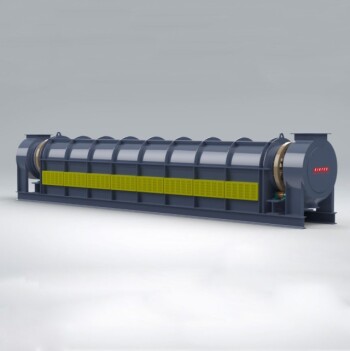
Precision is the key to successfully converting plastic waste into sustainable energy. KINTEK provides the specialized laboratory equipment you need to maintain strict atmospheric control, including high-temperature high-pressure reactors, autoclaves, and a variety of atmosphere-controlled furnaces (vacuum, tube, and rotary).

From feedstock preparation with our crushing and milling systems to final product analysis using our hydraulic presses and cooling solutions, our comprehensive range of tools and consumables—including PTFE products and ceramics—ensures your lab achieves maximum efficiency and superior yields.

Ready to optimize your thermochemical processes? Contact KINTEK today for expert guidance and tailored equipment solutions.

Related Products

People Also Ask

Related Products

Stainless High Pressure Autoclave Reactor Laboratory Pressure Reactor

Stainless High Pressure Autoclave Reactor Laboratory Pressure Reactor

Discover the versatility of Stainless High Pressure Reactor - a safe and reliable solution for direct and indirect heating. Built with stainless steel, it can withstand high temperatures and pressures. Learn more now.

Customizable Laboratory High Temperature High Pressure Reactors for Diverse Scientific Applications

Customizable Laboratory High Temperature High Pressure Reactors for Diverse Scientific Applications

High-pressure lab reactor for precise hydrothermal synthesis. Durable SU304L/316L, PTFE liner, PID control. Customizable volume & materials. Contact us!

High Pressure Laboratory Autoclave Reactor for Hydrothermal Synthesis

High Pressure Laboratory Autoclave Reactor for Hydrothermal Synthesis

Discover the applications of Hydrothermal Synthesis Reactor - a small, corrosion-resistant reactor for chemical labs. Achieve rapid digestion of insoluble substances in a safe and reliable way. Learn more now.

Mini SS High Pressure Autoclave Reactor for Laboratory Use

Mini SS High Pressure Autoclave Reactor for Laboratory Use

Mini SS High Pressure Reactor - Ideal for medicine, chemical, and scientific research industries. Programmed heating temp and stirring speed, up to 22Mpa pressure.

Laboratory High Pressure Horizontal Autoclave Steam Sterilizer for Lab Use

Laboratory High Pressure Horizontal Autoclave Steam Sterilizer for Lab Use

The horizontal autoclave steam sterilizer adopts the gravity displacement method to remove the cold air in the inner chamber, so that the inner steam and cold air content is less, and the sterilization is more reliable.

Visual High-Pressure Reactor for In-Situ Observation

Visual High-Pressure Reactor for In-Situ Observation

The visual high-pressure reactor uses transparent sapphire or quartz glass, maintaining high strength and optical clarity under extreme conditions for real-time reaction observation.

Desktop Fast Laboratory Autoclave Sterilizer 35L 50L 90L for Lab Use

Desktop Fast Laboratory Autoclave Sterilizer 35L 50L 90L for Lab Use

The desktop fast steam sterilizer is a compact and reliable device used for rapid sterilization of medical, pharmaceutical, and research items. It efficiently sterilizes surgical instruments, glassware, medicines, and resistant materials, making it suitable for various applications.

Warm Isostatic Press WIP Workstation 300Mpa for High Pressure Applications

Warm Isostatic Press WIP Workstation 300Mpa for High Pressure Applications

Discover Warm Isostatic Pressing (WIP) - A cutting-edge technology that enables uniform pressure to shape and press powdered products at a precise temperature. Ideal for complex parts and components in manufacturing.

Split Chamber CVD Tube Furnace with Vacuum Station Chemical Vapor Deposition System Equipment Machine

Split Chamber CVD Tube Furnace with Vacuum Station Chemical Vapor Deposition System Equipment Machine

Efficient split chamber CVD furnace with vacuum station for intuitive sample checking and quick cooling. Up to 1200℃ max temperature with accurate MFC mass flowmeter control.

Microwave Plasma Chemical Vapor Deposition MPCVD Machine System Reactor for Lab and Diamond Growth

Microwave Plasma Chemical Vapor Deposition MPCVD Machine System Reactor for Lab and Diamond Growth

Get high-quality diamond films with our Bell-jar Resonator MPCVD machine designed for lab and diamond growth. Discover how Microwave Plasma Chemical Vapor Deposition works for growing diamonds using carbon gas and plasma.

915MHz MPCVD Diamond Machine Microwave Plasma Chemical Vapor Deposition System Reactor

915MHz MPCVD Diamond Machine Microwave Plasma Chemical Vapor Deposition System Reactor

915MHz MPCVD Diamond Machine and its multi-crystal effective growth, the maximum area can reach 8 inches, the maximum effective growth area of single crystal can reach 5 inches. This equipment is mainly used for the production of large-size polycrystalline diamond films, the growth of long single crystal diamonds, the low-temperature growth of high-quality graphene, and other materials that require energy provided by microwave plasma for growth.

Electrolytic Electrochemical Cell Gas Diffusion Liquid Flow Reaction Cell

Electrolytic Electrochemical Cell Gas Diffusion Liquid Flow Reaction Cell

Looking for a high-quality gas diffusion electrolysis cell? Our liquid flow reaction cell boasts exceptional corrosion resistance and complete specifications, with customizable options available to suit your needs. Contact us today!

PTFE Electrolytic Cell Electrochemical Cell Corrosion-Resistant Sealed and Non-Sealed

PTFE Electrolytic Cell Electrochemical Cell Corrosion-Resistant Sealed and Non-Sealed

Choose our PTFE Electrolytic Cell for reliable, corrosion-resistant performance. Customize specifications with optional sealing. Explore now.

Customizable CO2 Reduction Flow Cell for NRR ORR and CO2RR Research

Customizable CO2 Reduction Flow Cell for NRR ORR and CO2RR Research

The cell is meticulously crafted from high-quality materials to ensure chemical stability and experimental accuracy.

Customizable PEM Electrolysis Cells for Diverse Research Applications

Customizable PEM Electrolysis Cells for Diverse Research Applications

Custom PEM test cell for electrochemical research. Durable, versatile, for fuel cells & CO2 reduction. Fully customizable. Get a quote!

Optical Water Bath Electrolytic Electrochemical Cell

Optical Water Bath Electrolytic Electrochemical Cell

Upgrade your electrolytic experiments with our Optical Water Bath. With controllable temperature and excellent corrosion resistance, it's customizable for your specific needs. Discover our complete specifications today.

Custom PTFE Teflon Parts Manufacturer for Acid and Alkali Resistant Chemical Powder Material Scoops

Custom PTFE Teflon Parts Manufacturer for Acid and Alkali Resistant Chemical Powder Material Scoops

Known for its excellent thermal stability, chemical resistance and electrical insulating properties, PTFE is a versatile thermoplastic material.

Double Layer Five-Port Water Bath Electrolytic Electrochemical Cell

Double Layer Five-Port Water Bath Electrolytic Electrochemical Cell

Experience optimal performance with our Water Bath Electrolytic Cell. Our double-layer, five-port design boasts corrosion resistance and longevity. Customizable to fit your specific needs. View specs now.

Double-Layer Water Bath Electrolytic Electrochemical Cell

Double-Layer Water Bath Electrolytic Electrochemical Cell

Discover the temperature-controllable electrolytic cell with a double-layer water bath, corrosion resistance, and customization options. Complete specifications included.

Super Sealed Electrolytic Electrochemical Cell

Super Sealed Electrolytic Electrochemical Cell

Super-sealed electrolytic cell offers enhanced sealing capabilities, making it ideal for experiments that require high airtightness.


Leave Your Message