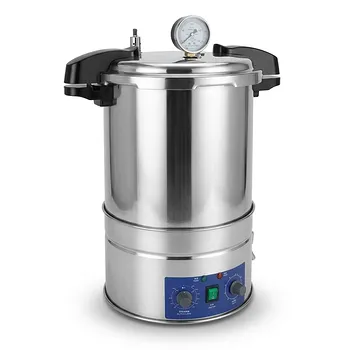
Accurate quantification of electron efficiency relies on complete mass balance. You must use a reactor with gas-tightness and headspace sampling capabilities to trap and measure the hydrogen gas produced during the Hydrogen Evolution Reaction (HER). Because HER is the primary competing pathway for electrons, failing to capture and quantify this byproduct makes it impossible to distinguish between electrons used for contaminant reduction and those lost to water reduction.
The Core Reality To calculate electron efficiency, you must account for where every electron goes. Since a significant portion of electrons in Zero-Valent Iron systems are "wasted" on reducing water to create hydrogen gas, a sealed system is the only way to measure this loss and isolate the electrons actually used for dehalogenation.
The Electron Competition in ZVI Systems
Two Pathways for Electrons
When Zero-Valent Iron (ZVI) oxidizes, it releases electrons that can follow one of two main paths.
The first path is the dehalogenation of your target organic halides, which is the desired outcome of the remediation process.
The second path is the Hydrogen Evolution Reaction (HER), where electrons reduce water molecules.
The Problem with Water Reduction
The reduction of water is a parasitic reaction that competes directly with your target contaminant.
If you do not measure the extent of this reaction, you cannot know the true efficiency of the ZVI.
To know how many electrons went to the contaminant, you must first subtract the electrons consumed by the water.
Why Reactor Design Dictates Data Quality
The Necessity of Gas-Tight Seals
Hydrogen gas ($H_2$) is the physical evidence of the electrons consumed by water reduction.
Because hydrogen is extremely light and volatile, it will immediately escape from an open system.
Gas-tight seals prevent this escape, ensuring that the byproduct of the competing reaction remains available for analysis.
The Function of Headspace Sampling
Merely trapping the gas is not enough; you must be able to quantify it without disrupting the closed system.
Headspace sampling ports allow you to extract samples of the trapped gas for analysis (typically via gas chromatography).
By analyzing the hydrogen concentration in the headspace, you can calculate exactly how many moles of electrons were diverted to the HER pathway.
Understanding the Trade-offs
Operational Complexity vs. Data Precision
Using a gas-tight reactor adds significant complexity compared to simple open-batch experiments.
You must ensure leak-free fittings and manage the sampling of pressurized gas, which requires more specialized equipment.
However, an open system sacrifices the ability to perform a mass balance on the electrons, rendering efficiency calculations speculative.
Pressure Management
In highly reactive systems, the accumulation of hydrogen gas can increase internal reactor pressure.
While this allows for accurate measurement, it requires careful monitoring to ensure the physical integrity of the seals is not compromised.
A leak during the experiment invalidates the mass balance, forcing you to restart the quantification process.
Making the Right Choice for Your Goal
To ensure your experimental setup aligns with your specific data requirements, consider the following:
- If your primary focus is precise electron efficiency: You must use a gas-tight reactor with headspace sampling to quantify the Hydrogen Evolution Reaction.
- If your primary focus is simple contaminant degradation kinetics: You may use an open system, but you must accept that you cannot calculate the electron selectivity or efficiency of the ZVI.
True electron efficiency can only be calculated when the competing consumption of electrons by water is fully quantified.
Summary Table:
| Feature | Purpose in ZVI Systems | Impact on Data Quality |
|---|---|---|
| Gas-Tight Seal | Traps volatile Hydrogen gas ($H_2$) | Enables complete electron mass balance |
| Headspace Sampling | Allows gas extraction for GC analysis | Quantifies electrons lost to water reduction |
| Pressure Monitoring | Maintains reactor physical integrity | Prevents leaks that invalidate efficiency data |
| Closed System | Isolates dehalogenation vs. HER pathways | Distinguishes contaminant reduction from waste |
Maximize Your Research Precision with KINTEK
Accurate quantification of electron efficiency requires hardware that never leaks. KINTEK specializes in advanced laboratory solutions, offering high-precision high-temperature high-pressure reactors and autoclaves designed specifically for sensitive mass balance experiments.
Whether you are studying Zero-Valent Iron (ZVI) kinetics or complex dehalogenation pathways, our reactors provide the gas-tight integrity and headspace sampling capabilities necessary for rigorous data. Beyond reactors, explore our comprehensive range of electrolytic cells, electrodes, and crushing systems to streamline your material preparation.
Ready to upgrade your lab's efficiency? Contact our technical experts today to find the perfect reactor configuration for your specific research goals.
References
- Feng He, Gregory V. Lowry. Quantifying the efficiency and selectivity of organohalide dechlorination by zerovalent iron. DOI: 10.1039/c9em00592g
This article is also based on technical information from Kintek Solution Knowledge Base .
Related Products
- Customizable Laboratory High Temperature High Pressure Reactors for Diverse Scientific Applications
- Customizable High Pressure Reactors for Advanced Scientific and Industrial Applications
- Stainless High Pressure Autoclave Reactor Laboratory Pressure Reactor
- Mini SS High Pressure Autoclave Reactor for Laboratory Use
- High Pressure Laboratory Autoclave Reactor for Hydrothermal Synthesis
People Also Ask
- How do high-pressure and high-temperature reactors ensure the effective treatment of lignocellulosic wastewater in WAO?
- What equipment is required for high-pressure high-temperature reactions? Master Extreme Chemistry Safely
- How do you control high pressure in a reactor? A Guide to Safe & Stable Operation
- How does initial oxygen pressure affect the wet oxidation of pharmaceutical sludge? Master Your Oxidation Depth
- Why is argon better than nitrogen for inert atmosphere? Ensure Absolute Reactivity & Stability