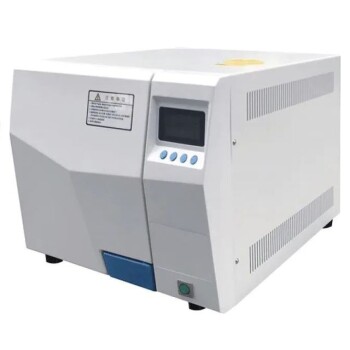
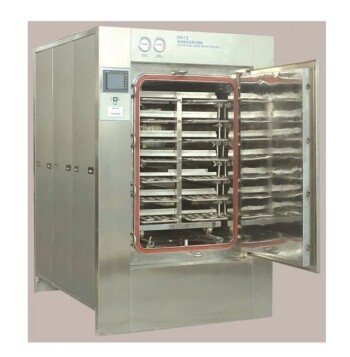
The treatment of Ni-Cr alloy and carbon-coated samples in a pressure steam autoclave is a mandatory sterilization protocol designed to eliminate all pre-existing microbial life. By exposing these materials to high-pressure steam at 135 °C, the process ensures the substrate is biologically inert before any experimental variables are introduced.
Core Insight Reliable data requires a pristine baseline. Autoclaving removes environmental contaminants, ensuring that any bacterial adhesion observed later is caused solely by the specific test strain and the material properties, rather than accidental pollution.
The Principles of Surface Sterilization
Utilizing High-Temperature Steam
The primary mechanism for this treatment is the application of steam under pressure at a temperature of 135 °C.
This intense thermal environment is sufficient to destroy bacteria, spores, and other biological agents that may be adhering to the alloy or coating.
Establishing Biosafety Standards
This process is a fundamental requirement for biosafety experiments.
It ensures that the materials handled by researchers do not introduce unknown pathogens into the laboratory environment or the specific culture medium.
Guaranteeing Experimental Accuracy
Removing Environmental Interference
The most critical reason for autoclaving is to eliminate interference from "environmental microbes."
Without this step, bacteria naturally present in the air or on surfaces could colonize the sample before the experiment begins.
Isolating the Variable
The purpose of the experiment is to evaluate how the carbon coating specifically affects the adhesion of targeted strains, such as Escherichia coli.
If the surface is not sterile, researchers cannot determine if observed adhesion is due to the carbon coating's properties or pre-existing contamination.
Confirming the Source of Adhesion
Thorough sterilization confirms that the results originate solely from the designated culture process.
This creates a closed system where the only biological input is the specific bacterial strain introduced by the researcher.
Common Pitfalls to Avoid
The Risk of False Positives
Failing to autoclave creates a significant risk of false positive results.
If environmental bacteria are already present, they will be counted alongside the test strain, artificially inflating adhesion data and leading to incorrect conclusions about the material's performance.
Material Compatibility
While necessary, researchers must ensure their specific coating formulations are robust enough to withstand 135 °C steam.
However, for standard Ni-Cr alloys and carbon coatings used in dental or medical applications, this durability is typically a prerequisite for their use.
Making the Right Choice for Your Experiment
To ensure your bacterial adhesion data is publishable and scientifically valid, apply the following guidelines:
- If your primary focus is Data Integrity: Prioritize the 135 °C autoclave cycle to guarantee that 100% of the bacteria counted are from your inoculated strain (e.g., E. coli).
- If your primary focus is Material Characterization: Verify that your specific carbon coating synthesis method produces a layer stable enough to endure high-pressure steam without delaminating.
Sterilization is not just a cleaning step; it is the control mechanism that validates every subsequent data point in your study.
Summary Table:
| Parameter | Specification | Purpose in Experiment |
|---|---|---|
| Sterilization Method | Pressure Steam Autoclave | Elimination of all pre-existing microbial life |
| Standard Temperature | 135 °C | Thermal destruction of spores and pathogens |
| Primary Target | Environmental Contaminants | Prevention of false-positive adhesion data |
| Key Outcome | Biologically Inert Baseline | Ensuring adhesion results stem solely from the test strain |
Elevate Your Research Precision with KINTEK
Don’t let environmental contamination compromise your bacterial adhesion data. KINTEK specializes in high-performance laboratory solutions, providing the advanced high-temperature high-pressure reactors and autoclaves required to achieve a pristine, biologically inert baseline for your experiments.
Whether you are working with Ni-Cr alloys, dental materials, or carbon coatings, our robust sterilization systems ensure your results are scientifically valid and publishable. Beyond autoclaves, we offer a comprehensive range of crushing and milling systems, hydraulic presses, and specialized consumables like ceramics and crucibles tailored for material science and microbiology researchers.
Ready to optimize your laboratory workflow? Contact us today to discuss your specific equipment needs and see how KINTEK’s precision tools can enhance your research outcomes.
References
- Zofia Kula, L. Klimek. Carbon Coatings Deposited on Prosthodontic Ni-Cr Alloy. DOI: 10.3390/app11104551
This article is also based on technical information from Kintek Solution Knowledge Base .
Related Products
- Laboratory High Pressure Steam Sterilizer Vertical Autoclave for Lab Department
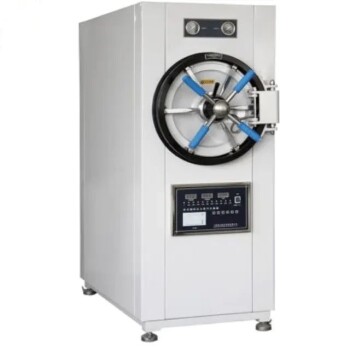
- Laboratory High Pressure Horizontal Autoclave Steam Sterilizer for Lab Use
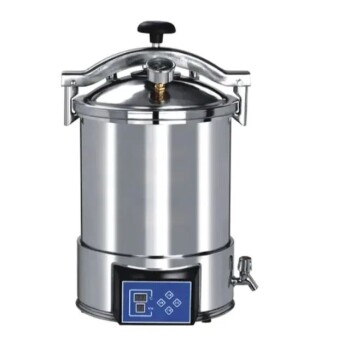
- Portable High Pressure Laboratory Autoclave Steam Sterilizer for Lab Use
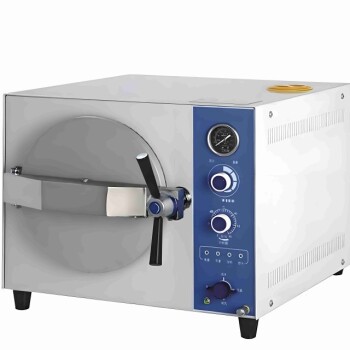
- Desktop Fast High Pressure Laboratory Autoclave Sterilizer 16L 24L for Lab Use
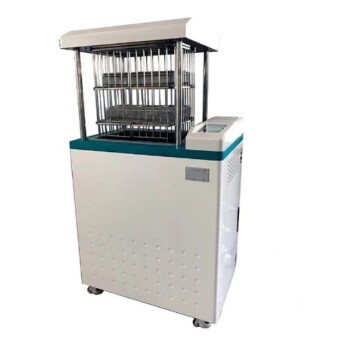
- Laboratory Sterilizer Lab Autoclave Vertical Pressure Steam Sterilizer for Liquid Crystal Display Automatic Type
People Also Ask
- What is the role of a laboratory high-pressure autoclave in the conversion of furfural to piperidine? Optimize Yields
- Why is a laboratory high-pressure autoclave sterilizer necessary? Ensure Accuracy in Antibacterial Research
- What function does a high-pressure laboratory autoclave serve in walnut shell pretreatment? Enhance Biomass Reactivity.
- How does a laboratory high-pressure autoclave function to control Mn3O4 morphology? Precision Particle Engineering
- Autoclave's Role in PAA & MA Nanosheet Assembly? Driving High-Pressure Solvothermal Chemical Integration