Understanding Particle Size Distribution
In various industries, including pharmaceuticals, material particle size distribution significantly impacts product quality and manufacturing processes. For pharmaceutical companies, particle size control has evolved beyond traditional micronization of active pharmaceutical ingredients (APIs) to fine-tuning drug properties and leveraging nanotechnology for pharmaceutical formulation. The control of particle size distribution plays a crucial role in enhancing drug properties, such as improving blend uniformity, altering drug absorption, and creating suspensions and solutions.
Importance of Particle Size Distribution and Bulk Density
The particle size distribution and bulk density of materials influence the sizing of kiln components in industrial processes. Materials with high bulk density require more power and a robust drive system, while agglomerated or larger-sized particles may affect kiln diameter and air velocity requirements. Additionally, the abrasiveness or corrosiveness of materials impacts the choice of construction materials for kiln components, often necessitating the use of corrosion / abrasion-resistant refractory linings.
Uniform Particle Size Control in Pharmaceutical Pelletization
In the pharmaceutical industry, uniform particle size control is essential for the pelletization process, particularly for creating pellets through extrusion and spheronization. Pelletization is an agglomeration process that transforms fine powders or granules of bulk drugs and excipients into small, free-flowing spherical or semi-spherical units known as pellets. These pellets, often ranging between 0.3 – 1.5 mm in size, must meet specific requirements to ensure their quality and suitability for pharmaceutical formulations.
The Basics of Sieve Analysis for Particle Size Determination
Understanding the particle size distribution of natural and manufactured materials is critical for assessing their physical and chemical properties. These properties include mechanical bulk behavior, surface reactions, taste, miscibility, filtration properties, and conductivity, all of which impact the quality of the final product. Regular monitoring of particle size distribution is vital to maintaining consistent product quality, especially during the manufacturing process.
Methods for Particle Size Determination
Various methods are employed to determine particle size distribution, with the choice of method dependent on the dispersion status or fineness of the sample. Sieve analysis is one of the oldest and widely used methods for particle size determination. It involves dividing granular material into size fractions and determining the weight of these fractions to analyze a broad particle size spectrum quickly and reliably.
Principles of Sieve Analysis
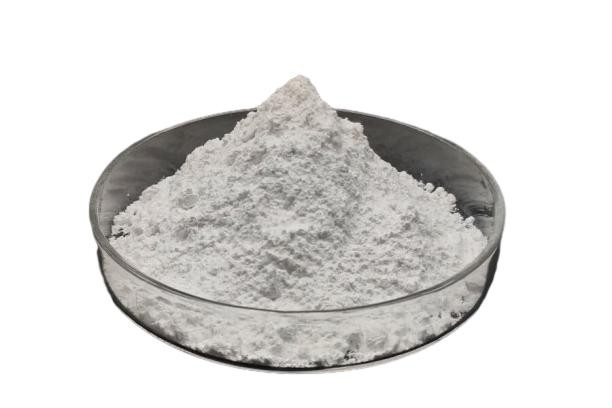
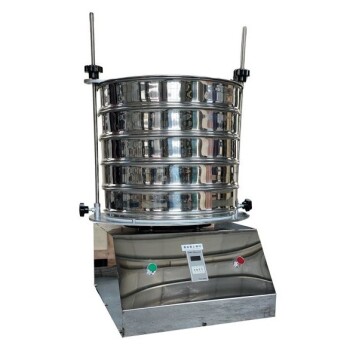
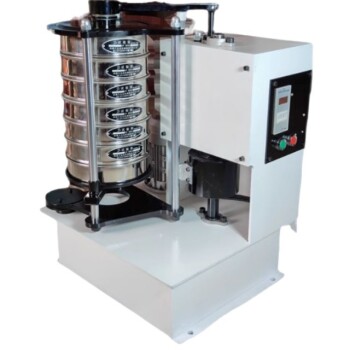
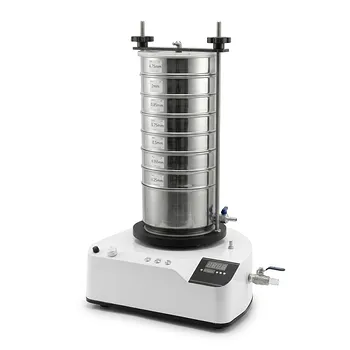
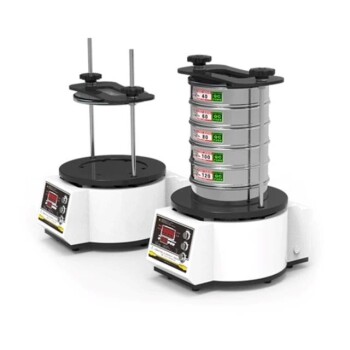
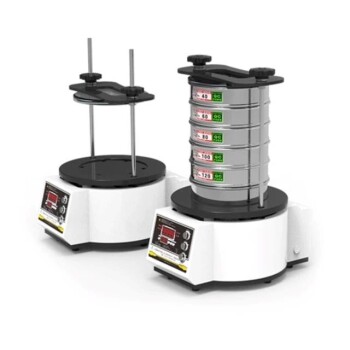
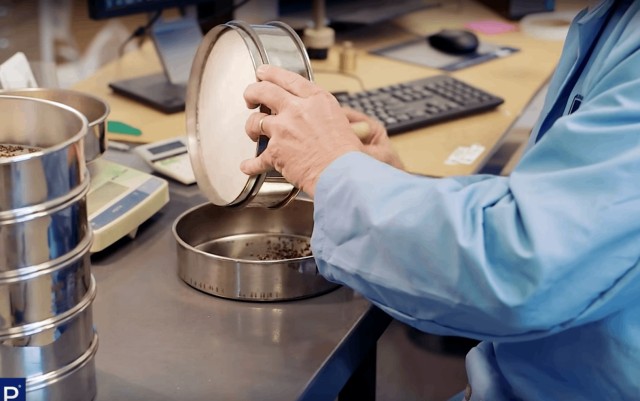
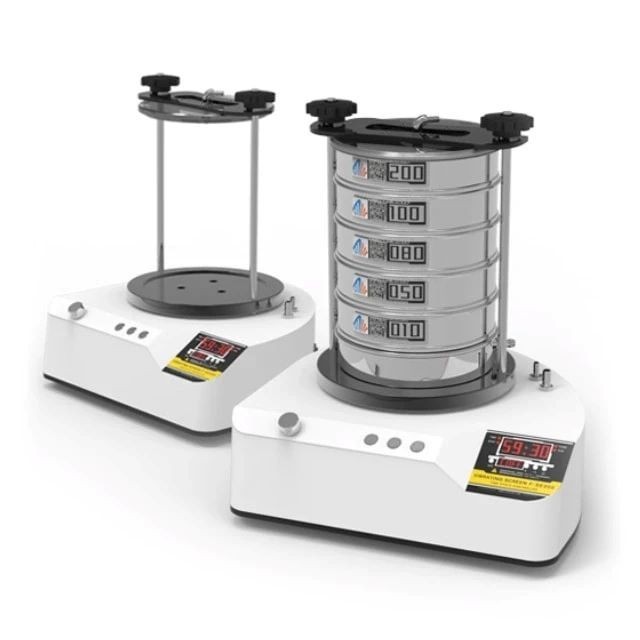
Sieve analysis is a widely used method for determining the particle distribution in granular materials. It involves dividing the material into size fractions using a series of sieves and then determining the weight of these fractions. The throw-action sieving process and the working principle of laboratory test sieves play a crucial role in this analysis, allowing for a relatively broad particle size spectrum to be analyzed quickly and reliably. The sample to be separated is kept in vertical or horizontal motion during the sieving process, resulting in relative movement between the sieve and the particles. The particles are then either passed through the sieve mesh or remained on the surface of the sieve based on their size.
Particle size distribution is crucial for various industries such as food, construction, plastics, cosmetics, and pharmaceuticals. It influences material properties including flow and conveying behavior, reactivity, abrasiveness, solubility, and more. Sieve analysis is the traditional and most widely used method to measure particle size distribution due to its ease of use, minimal investment costs, accuracy, reproducibility, and ability to separate particle size fractions.
Automating the sieve analysis workflow using an accurate balance with convenient features and digital data management can greatly reduce the tedious and error-prone process of sieve weighing. This can optimize process engineering and ensure the quality and safety of final products in different industries.
The particle size distribution, determined through sieve analysis, defines the distribution of total particles based on their size within a sample, which is critical for production control requirements, design, and verification specifications.
The particle size determination methods vary based on the dispersion status of the granular material. One of the oldest and best-known methods is the particle size determination by sieve analysis. It divides the granular material into size fractions and then determines the weight of these fractions, allowing for a relatively broad particle size spectrum to be analyzed quickly and reliably.
The sieving process and the principles of sieve analysis play a fundamental role in the assessment of the particle size distribution, contributing to the characterization and quality assurance of bulk goods in various industries.
Types of Laboratory Test Sieves
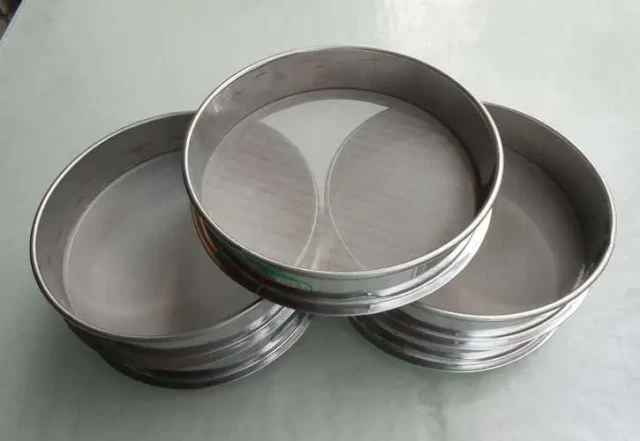
Laboratory test sieves come in various types, including wire braided mesh test sieves, metal perforated plate test sieves, and electroforming test sieves. Each type serves specific purposes and offers unique advantages for particle size determination and analysis.
Laboratory test sieves are essential tools in a laboratory setting, providing an accurate and precise method of separating and classifying particles according to particle size. By ensuring that the material is of consistent size and quality, laboratory test sieves help ensure that the final product will perform as expected in its intended application.
What Are Test Sieves Used For?
Test sieves facilitate materials analysis and examination in various industries, such as automotive, aerospace, and pharmaceuticals, leading to higher quality products and fewer internal failures for manufacturers. The use of stainless steel test sieves with features that reduce potential contaminants has been widely recognized as being more durable and having fewer crevices relative to similar devices. Test sieves are commonly used in quality control, research and development, and production settings for particle size analysis, grading, and separation of materials. Some specific applications of laboratory test sieves include: Particle size analysis: Laboratory test sieves are used to determine the particle size distribution of materials, which is important for understanding how materials will behave in various applications, such as in pharmaceutical formulations, food processing, and construction materials.
Working Principle of Laboratory Test Sieves
The mixture of particles of different sizes passes through the sieve or sieve mesh, with the smaller particles passing through the sieve hole and the larger particles being intercepted by the sieve mesh. The sieving process can be divided into two stages: removing particles smaller than the standard pore size, and separating particles of a size close to the standard pore size through the openings.
This facilitates accurate determination of particle sizes, ensuring that materials are of the desired size and quality for specific applications, leading to higher quality products and improved performance in various industries.
The Purpose and Importance of Test Sieves
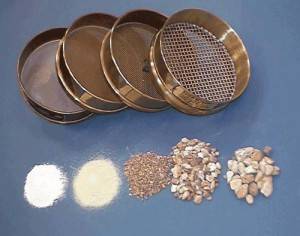
Test sieves are an essential tool in laboratory settings, particularly for precise screening and particle size detection of granular or powdery materials in industries such as abrasives, geological exploration, metallurgy, pharmacopoeia, chemical industry, and building materials. The application of lab sieves extends to various materials, including metal powders (aluminum, lead, zinc, copper, iron, nickel, alloys, magnetic materials), chemicals (resins, plastics, rubber additives, dyes, fillers), food products (flour, cocoa, coffee, condiments, additives), and abrasives (glass beads, alumina, corundum, chlorocarbon, corundum, quartz sand). This demonstrates the versatility and importance of test sieves in diverse industries.
The Purpose of Test Sieves
Sieving serves as a standard method for measuring particle size, deeply rooted in materials testing laboratories. Although questions have been raised about the absolute accuracy of particle sizing by sieving due to assumptions about particle shape, it has been widely accepted and practiced in numerous industries, including construction materials, chemicals, food, pharmaceuticals, and powders. The purpose of test sieves, along with the variations in shape and the impact on accuracy, are crucial aspects to consider in particle size measurements.
Importance in Particle Size Measurement
Particle size determination is crucial for a wide range of industries, such as food, construction, plastics, cosmetics, and pharmaceuticals, as it influences material properties like flow and conveying behavior for bulk materials, reactivity, solubility, and taste. Furthermore, particle size analysis is essential to optimize process engineering and ensure the quality and safety of final products. Consequently, the ability of test sieves to provide accurate and reproducible results in a relatively short time makes them an important asset for particle size distribution measurements.
Methods for Particle Size Measurement
Various methods and procedures can be applied to measure particle size distribution, depending on the sample material, expected particle sizes, and the scope of the examination. These methods include direct image analysis (static or dynamic), light scattering (static or dynamic), and sieve analysis. Among these methods, sieve analysis is the traditional and most widely used approach for measuring particle size distribution.
Significance of Sieve Weighing
Sieve analysis offers several advantages, such as ease of use, minimal investment costs, accurate and reproducible results, and the ability to separate particle size fractions. Nevertheless, the sieve analysis procedure by differential sieve weighing can be a tedious and error-prone process. Therefore, using an accurate balance with convenient features and digital data management can significantly improve efficiency and accuracy in sieve analysis workflows.
In conclusion, test sieves play a crucial role in laboratory settings by providing a reliable and standardized method for measuring particle size distribution. Their versatility and importance across various industries underscore their significance and impact on ensuring the quality and consistency of materials and products.
Related Products
- Laboratory Test Sieves and Sieving Machines
- Laboratory Test Sieves and Vibratory Sieve Shaker Machine
- Laboratory Vibratory Sieve Shaker Machine Slap Vibrating Sieve
- Laboratory Vibratory Sieve Shaker Machine for Dry and Wet Three-Dimensional Sieving
- Laboratory Wet Three-Dimensional Vibratory Sieve Shaker Machine
Related Articles
- Revolutionizing Lab Efficiency: The Ultimate Guide to Laboratory Sieving Machines
- Comprehensive Guide to Handheld Soil Analyzers: Revolutionizing Soil Testing and Remediation
- What is a Laboratory Crusher Used For?
- The Ultimate Guide to the Application and Benefits of Vibratory Sieve Shaker in Laboratory Testing
- Unlocking the Power of Sieving Machines: Functions, Applications and Maintenance