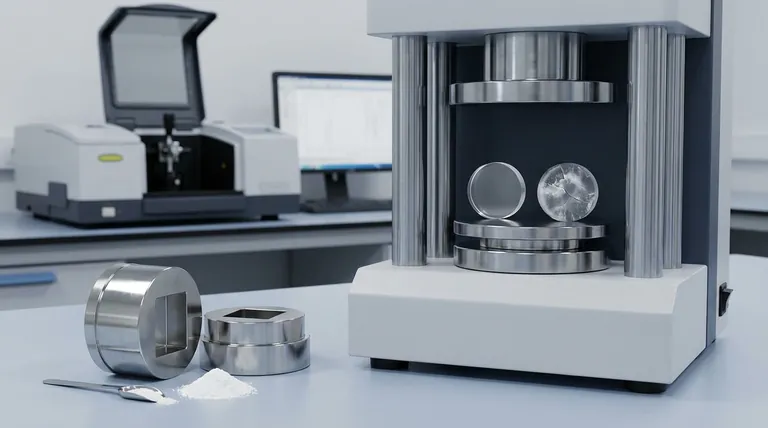
Does this sound familiar? You've meticulously prepared a sample, ground it into a fine powder, mixed it with KBr, and pressed it into a pellet. You place it in your expensive, highly-calibrated FTIR or XRF spectrometer, run the analysis, and wait. The result that comes back is… a mess. A noisy baseline, weak or distorted peaks, and data that is simply not reproducible. You're left wondering: Is the spectrometer malfunctioning? Is the raw material contaminated? Or was it just bad luck?
This single, frustrating moment can trigger a cascade of wasted time and resources, sending you back to square one.
The Vicious Cycle: Chasing Ghosts in the Lab
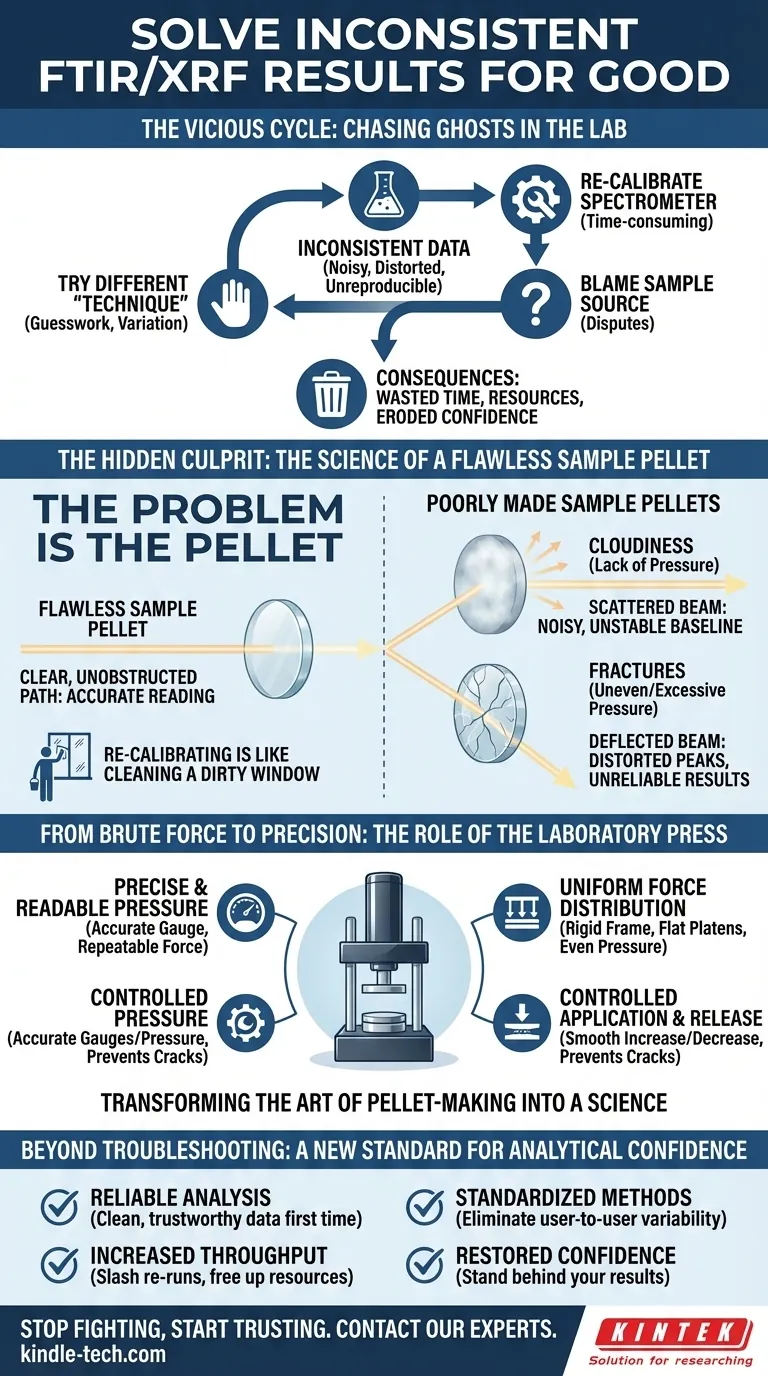
This isn't an isolated incident; it's a chronic headache in countless analytical labs. When faced with inconsistent spectroscopic data, the troubleshooting checklist usually looks like this:
- Re-calibrate the spectrometer: A time-consuming process that often reveals the instrument was perfectly fine all along.
- Blame the sample source: Question the purity or integrity of the material, leading to potential disputes with suppliers or other departments.
- Try a different "technique": You press a little harder, or maybe a little softer. You grind the powder for ten minutes instead of five. You let a different technician try, hoping their "magic touch" will work.
Each of these steps is a shot in the dark. While you're chasing these ghosts, the real consequences are piling up. Projects fall behind schedule, expensive consumables are wasted on failed attempts, and—most critically—confidence in your lab's analytical capabilities erodes. When you can't guarantee the reliability of your data, you can't make firm decisions, whether it's for quality control on a production line or for publishing groundbreaking research.
The Hidden Culprit: The Science of a Flawless Sample Pellet
The turning point comes when you realize you've been looking in the wrong place. In most cases, the problem isn't the spectrometer, the raw material, or your technique. The problem is the pellet.
Spectroscopic analysis, like FTIR or XRF, works by passing a beam of energy (infrared light or X-rays) through your sample. For an accurate reading, that beam needs a clear, unobstructed path.
Think of it like looking through a window. If the glass is cloudy, cracked, or has imperfections, your view of the outside world is distorted. It doesn't matter how perfect your eyesight is.
A poorly made sample pellet acts just like that flawed window:
- Cloudiness (Lack of Pressure): If not enough pressure is applied, the powder (e.g., KBr) doesn't fully fuse into a solid, glass-like disc. This cloudy state scatters the light beam, creating a noisy, unstable baseline.
- Fractures (Uneven or Excessive Pressure): Applying pressure unevenly, or too much force too quickly, creates micro-fractures within the pellet. These cracks also deflect the beam, distorting the analytical peaks and making your results unreliable.
This is why the "common solutions" fail. Re-calibrating your spectrometer is like getting your eyes checked when the window is dirty. Guessing at the right pressure is like randomly tapping the glass, hoping it will magically become clear. You are treating the symptoms, not the underlying cause. The fundamental reason for failure is the inability to apply a precise, uniform, and repeatable amount of force during sample preparation.
From Brute Force to Precision: The Role of the Laboratory Press
To create a perfect, transparent pellet every single time, you don't need luck or a "magic touch." You need a tool designed for the job. You need a tool that transforms the art of pellet-making into a science.
This is precisely where a high-quality laboratory hydraulic press becomes an indispensable instrument, not just a piece of heavy equipment. A well-designed press isn't about brute force; it's about absolute control. It is the physical embodiment of the solution to the problem.
Based on this deep understanding of sample preparation physics, an ideal press must deliver on several key points:
- Precise and Readable Pressure: It must have a clear, accurate pressure gauge. This allows you to move beyond guesswork and apply the exact, documented force required for a given material, ensuring your method is repeatable by anyone, anytime.
- Uniform Force Distribution: The press frame must be rigid and the pressing surfaces (platens) must be perfectly flat and parallel. This ensures pressure is applied evenly across the entire face of the pellet, eliminating the primary cause of internal fractures.
- Controlled Application and Release: The hydraulic system should allow for a smooth, controlled increase and decrease of pressure. This prevents the shock that can crack a pellet during formation or ejection.
A KINTEK laboratory press is not just a machine that squashes things. It is a precision instrument, engineered to give you the control necessary to master the science of sample preparation. It directly addresses the root cause of inconsistent data by replacing random force with measurable, repeatable, and uniform pressure.
Beyond Troubleshooting: A New Standard for Analytical Confidence
Once the persistent problem of inconsistent pellets is solved, the entire dynamic of your lab changes. You are no longer wasting valuable time and mental energy troubleshooting your basic processes. Instead, you unlock new levels of efficiency and confidence.
Imagine a workflow where:
- Every analysis is reliable: The data from your spectrometer is clean, clear, and trustworthy the first time, every time.
- Throughput is dramatically increased: You slash the time spent re-making samples and re-running tests, freeing up your team and instruments for more valuable work.
- Methods are truly standardized: Any technician can follow a simple protocol (e.g., "press to 8 tons for 2 minutes") and produce an identical, perfect pellet, eliminating user-to-user variability.
- Confidence is restored: You can stand behind your quality control reports, your research findings, and your product certifications with absolute certainty.
Solving the pellet problem isn't just a technical fix; it's a strategic upgrade for your entire operation. It elevates your lab from a place of constant troubleshooting to a center of high-confidence, high-efficiency analysis.
It's time to stop fighting with your samples and start trusting your data. If your team is struggling with inconsistent analytical results, the issue might be simpler—and more solvable—than you think. Let's talk about how the right tools can bring clarity and confidence back to your lab. Contact Our Experts to discuss your specific challenges and discover a more reliable way forward.
Visual Guide
Related Products
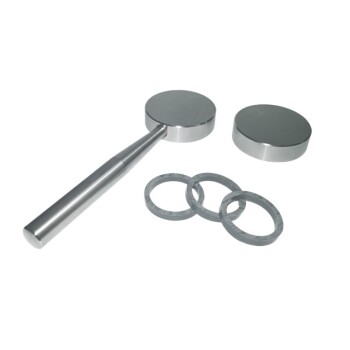
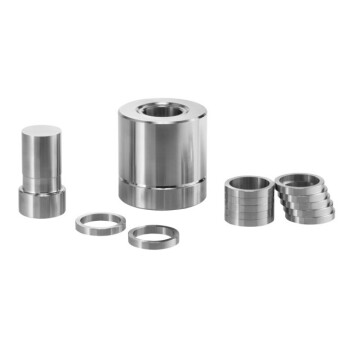
- XRF & KBR plastic ring lab Powder Pellet Pressing Mold for FTIR
- XRF & KBR steel ring lab Powder Pellet Pressing Mold for FTIR
- Laboratory Hydraulic Pellet Press for XRF KBR FTIR Lab Applications
- Automatic Laboratory Hydraulic Press for XRF & KBR Pellet Press
- XRF Boric Acid Lab Powder Pellet Pressing Mold for Laboratory Use
Related Articles
- What is xrf analysis and how to making pressed xrf pellets
- Dilution Ratios for XRF Pelletising Finding the Optimal Balance
- Mastering XRF Sample Preparation: 7 Proven PRESS Strategies for Optimal Results
- Determining Optimal Pressure for XRF Pellet Pressing
- How to Choose the Right XRF Pellet Press for Your Needs