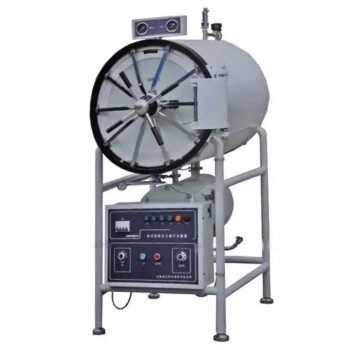
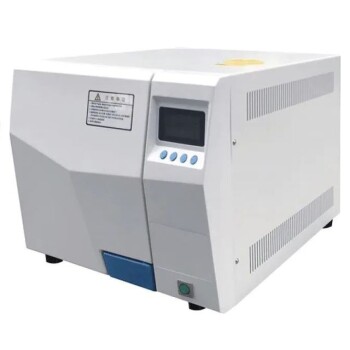
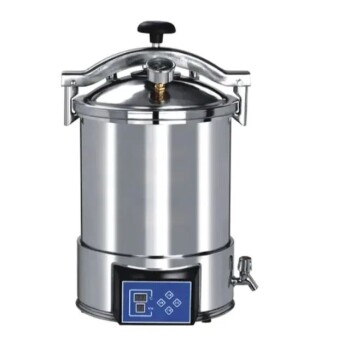
High-temperature and high-pressure autoclaves act as precise environmental replicators for internal structural components within nuclear power plants (NPPs). These devices generate the exact combinations of extreme heat, pressure, and specific water chemistry found in a reactor core. By establishing this controlled environment, engineers can rigorously test materials like 316L stainless steel to predict how they will behave during actual service.
By strictly controlling temperature, pressure, and chemical parameters, autoclaves enable the accelerated study of critical failure modes. This simulation is essential for identifying Intergranular Stress Corrosion Cracking (IGSCC) and grain boundary degradation before components are deployed.
Replicating the Service Environment
Matching Extreme Conditions
To assess material integrity, mere heating is insufficient. Autoclaves simulate the service environment by simultaneously applying high temperature and high pressure.
This dual application mimics the intense physical stressors that internal structural components face daily. It ensures that the test specimen experiences the same thermodynamic reality as a component inside an active nuclear plant.
Controlling Water Chemistry
Beyond physical stress, the chemical environment is a critical variable. Autoclaves allow for the precise regulation of water chemistry surrounding the test specimen.
This is vital because the corrosive nature of the coolant water interacts with the metal surface. Accurately reproducing this chemistry is required to induce realistic degradation patterns in the lab.
Focus on 316L Stainless Steel
The primary reference highlights the use of these autoclaves specifically for testing 316L stainless steel specimens.
This alloy is a standard material for internal structural components. The autoclave provides the necessary conditions to validate whether this specific material can withstand the plant's operational lifecycle.
Investigating Degradation Mechanisms
Identifying Intergranular Stress Corrosion Cracking (IGSCC)
The most critical function of these simulations is to study Intergranular Stress Corrosion Cracking (IGSCC).
IGSCC is a notorious failure mode in nuclear environments. The autoclave creates the specific conditions—heat, stress, and chemistry—required to trigger this cracking mechanism, allowing researchers to observe how and when it initiates.
Analyzing Grain Boundary Degradation
At the microscopic level, materials fail when their internal structure is compromised. Autoclaves facilitate the study of grain boundary degradation.
Under high pressure and temperature, the boundaries between metal grains can weaken. Simulating this environment reveals how the material structure deteriorates over time.
The Role of Uneven Stress Distribution
Failures often occur where stress is not applied uniformly. The simulation helps researchers understand how uneven stress distribution contributes to cracking.
By observing specimens in this environment, engineers can correlate specific stress patterns with the onset of IGSCC.
The Criticality of Environmental Control
Precision is Non-Negotiable
The validity of any corrosion test relies entirely on the stability of the autoclave's environment. Slight deviations in water chemistry or pressure can lead to false negatives regarding material safety.
Limitations of Laboratory Scale
While effective, an autoclave is a controlled laboratory setting, not a full-scale reactor. It isolates specific variables to study degradation mechanisms, often separate from other factors like intense radiation fields found in the actual plant.
Making the Right Choice for Your Goal
To effectively utilize autoclave simulations for nuclear component safety, consider your specific testing objectives.
- If your primary focus is Material Validation: Ensure the autoclave parameters strictly mirror the specific water chemistry of your target reactor design to accurately test 316L stainless steel resilience.
- If your primary focus is Failure Prevention: Use the simulation to map the relationship between uneven stress distribution and the onset of Intergranular Stress Corrosion Cracking (IGSCC).
Ultimately, the autoclave serves as the critical bridge between theoretical material properties and the operational reality of nuclear safety.
Summary Table:
| Simulation Factor | Role in Nuclear Environment Simulation |
|---|---|
| Extreme Heat & Pressure | Replicates thermodynamic stressors of an active reactor core. |
| Water Chemistry Control | Mimics the corrosive nature of coolant water to induce realistic degradation. |
| Material Testing | Specifically validates 316L stainless steel for long-term structural integrity. |
| Failure Analysis | Triggers and monitors Intergranular Stress Corrosion Cracking (IGSCC). |
| Microscopic Insight | Facilitates the study of grain boundary degradation and stress distribution. |
Ensure Nuclear Component Reliability with KINTEK Precision
Don't leave material safety to chance. KINTEK specializes in advanced laboratory solutions designed for the most demanding research environments. Whether you are investigating IGSCC or validating material resilience, our high-temperature high-pressure reactors and autoclaves provide the precise control required for critical nuclear safety simulations.
From our robust autoclaves and crushing systems to high-performance electrolytic cells and ceramics, KINTEK offers the comprehensive tools necessary for energy and battery research.
Ready to elevate your material testing accuracy? Contact KINTEK Today to Consult with Our Experts
References
- Fuqiang Yang, Haibing Zhang. Effects of Crystal Orientation and Grain Boundary Inclination on Stress Distribution in Bicrystal Interface of Austenite Stainless Steel 316L. DOI: 10.1155/2019/2468487
This article is also based on technical information from Kintek Solution Knowledge Base .
Related Products
- Mini SS High Pressure Autoclave Reactor for Laboratory Use
- Laboratory High Pressure Horizontal Autoclave Steam Sterilizer for Lab Use
- Desktop Fast High Pressure Laboratory Autoclave Sterilizer 16L 24L for Lab Use
- Portable High Pressure Laboratory Autoclave Steam Sterilizer for Lab Use
- Stainless High Pressure Autoclave Reactor Laboratory Pressure Reactor
People Also Ask
- Why use high-pressure reactors for molecular sieve synthesis? Unlock Superior Crystallinity and Framework Control
- What is the function of a high-pressure reactor autoclave? Enhancing Cu/N Co-Doped Carbon Catalyst Synthesis
- Why are high-pressure reactors or autoclaves necessary for the synthesis of new functional materials? Unlock Precision.
- What are the advantages of using a high-pressure reactor like an autoclave? Maximize Liquefaction Speed & Yield
- How are high-pressure reactors used to prepare metaphosphate electrocatalysts? Master In-Situ Precursor Growth