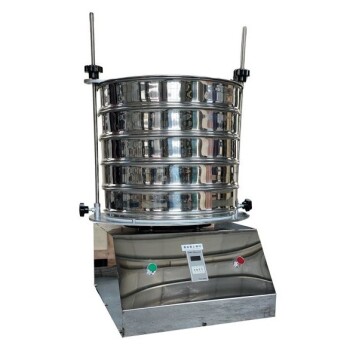
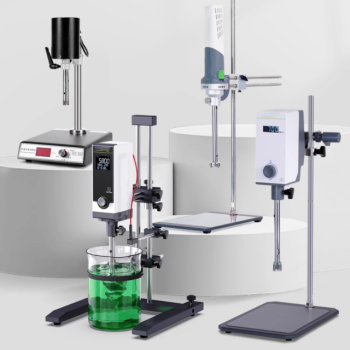
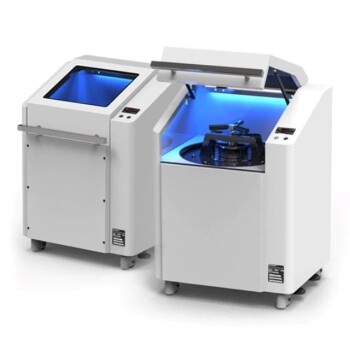
Laboratory shakers and stirring equipment are critical for experimental accuracy because they provide the continuous, uniform mechanical power necessary to maintain full contact between solid adsorbent particles and the solution. By ensuring rigorous mixing, these devices eliminate external mass transfer resistance, guaranteeing that experimental data reflects the true chemical reaction rates and equilibrium states rather than physical diffusion limitations.
The fundamental function of this equipment is to remove physical barriers to reaction through uniform mixing. This allows for the isolation of intrinsic chemical properties, enabling the accurate application of kinetic models (like pseudo-second-order) and isotherm models (like Sips).
The Role of Mechanical Power in Adsorption
Eliminating External Mass Transfer Resistance
The primary obstacle in static adsorption experiments is external mass transfer resistance. Without adequate agitation, a stagnant layer of fluid can form around the adsorbent particle, slowing down the movement of ions or molecules.
Laboratory shakers provide constant mechanical power to disrupt this layer. This ensures that the rate of adsorption is governed by the material's interaction with the solute, rather than how fast the solute can drift through a stagnant liquid.
Preventing Local Concentration Gradients
In a non-mixed or poorly mixed system, the solution near the adsorbent surface becomes depleted of the target substance (solute) faster than the bulk solution. This creates local concentration gradients that distort data.
Uniform mixing homogenizes the solution continuously. It ensures that the concentration of the solute remains consistent throughout the vessel, facilitating efficient diffusion from the liquid phase to both the surface and the interior of the resin or adsorbent particles.
Ensuring Full Particle Contact
For adsorption to occur efficiently, every available active site on the solid particle needs access to the solution.
Stirring equipment ensures the solid particles do not settle at the bottom of the flask. By keeping the solid phase suspended and in thorough contact with the aqueous phase, the equipment maximizes the available surface area for the reaction.
Impact on Data Modeling and Analysis
Validating Kinetic Models
Researchers often use mathematical models, such as the pseudo-second-order model, to describe how fast adsorption happens. These models assume that the rate-limiting step is chemical sorption, not physical transport.
If a shaker fails to eliminate external mass transfer resistance, the data will incorrectly suggest a slower reaction rate. Proper mixing validates the use of these kinetic models by ensuring the data reflects the actual reaction mechanics.
Calculating Theoretical Capacity
To determine the maximum theoretical adsorption capacity of a material, the system must reach a true equilibrium state. This is often analyzed using isotherm models like the Sips model.
Consistent mechanical agitation ensures the system reaches a stable, true equilibrium rather than a false one caused by lack of contact. This allows for the precise calculation of distribution coefficients and the material's total capacity.
Common Pitfalls and Trade-offs
The Risk of Inconsistent Power
The mechanical power applied must be continuous and constant. Intermittent or fluctuating power delivery can lead to periods where mass transfer resistance re-emerges, introducing noise into the data set.
Distinguishing Diffusion Types
While shakers eliminate external resistance, they do not eliminate internal pore diffusion resistance.
It is critical to understand that the equipment solves the problem of getting the solute to the particle surface. Once at the surface, the diffusion into the particle's interior (intraparticle diffusion) is an intrinsic property of the material, though good mixing is a prerequisite for this process to happen efficiently.
Making the Right Choice for Your Goal
To ensure your adsorption study yields publishable, mathematically sound data, align your equipment use with your specific analytical goals:
- If your primary focus is Kinetics Studies: Ensure high, constant RPM to completely negate film diffusion, allowing you to confidently apply pseudo-second-order models.
- If your primary focus is Isotherm/Capacity: Prioritize long-duration, continuous agitation to guarantee the system reaches true thermodynamic equilibrium for accurate Sips model calculations.
Ultimately, the reliability of your theoretical calculations depends entirely on the physical consistency of your mixing environment.
Summary Table:
| Feature | Role in Adsorption Research | Impact on Experimental Data |
|---|---|---|
| Mechanical Power | Eliminates external mass transfer resistance | Ensures rate reflects true chemical kinetics |
| Uniform Mixing | Prevents local concentration gradients | Maintains consistent solute concentration for diffusion |
| Solid Suspension | Ensures full contact between particles & solution | Maximizes active site utilization and surface area |
| Constant Agitation | Facilitates thermodynamic equilibrium | Enables precise calculation of theoretical capacity |
Elevate Your Research Precision with KINTEK Laboratory Solutions
Don't let physical diffusion limitations compromise your adsorption data. KINTEK specializes in high-performance laboratory equipment designed for the most demanding scientific applications. From precision shakers and homogenizers that ensure uniform mixing in kinetics studies to a comprehensive range of high-temperature furnaces, hydraulic presses, and specialized reactors, we provide the tools you need for reproducible results.
Whether you are analyzing resin capacity with the Sips model or validating pseudo-second-order kinetics, our robust stirring solutions and essential laboratory consumables—including PTFE products and ceramics—are engineered to support your breakthrough research.
Ready to optimize your lab's efficiency and accuracy? Contact KINTEK today to discuss your equipment needs!
References
- Florin Matusoiu, Cătălin Ianași. Molybdate Recovery by Adsorption onto Silica Matrix and Iron Oxide Based Composites. DOI: 10.3390/gels8020125
This article is also based on technical information from Kintek Solution Knowledge Base .
Related Products
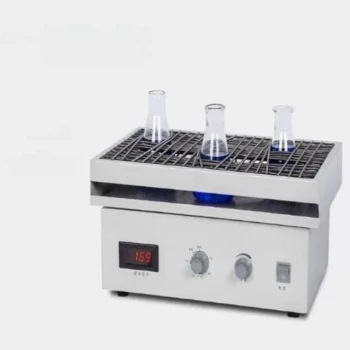
- Laboratory Multifunctional Small Speed-Adjustable Horizontal Mechanical Shaker for Lab
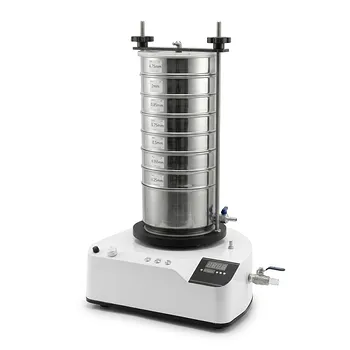
- Laboratory Vibratory Sieve Shaker Machine for Dry and Wet Three-Dimensional Sieving
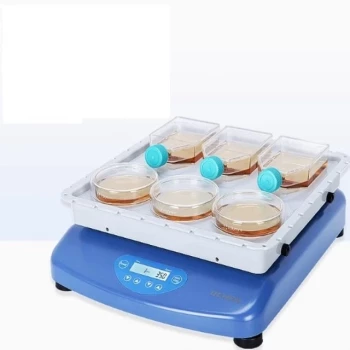
- Laboratory Oscillating Orbital Shaker
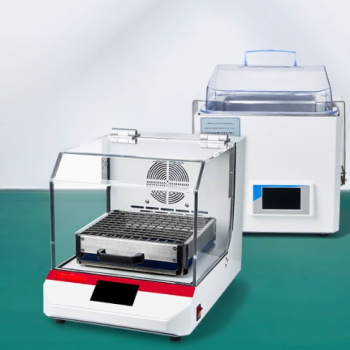
- Shaking Incubators for Diverse Laboratory Applications
- Laboratory Vibratory Sieve Shaker Machine Slap Vibrating Sieve
People Also Ask
- How do static culture and shaking culture affect the morphology of BC? Optimize Lab Shaker Results
- What is the role of a laboratory shaker in silane sol preparation? Master Uniform Aramid Fabric Coating
- Why is a laboratory shaker required for continuous 24-hour catalyst treatment? Achieve Deep Uniform Impregnation
- What is the function of a laboratory shaker in evaluating Fe-C@C nanoparticles? Optimize Methylene Blue Adsorption
- How do laboratory shakers or stirrers influence the efficiency of hydrogen production during dark fermentation?