High-temperature reaction units achieve temperature uniformity through a synergistic combination of distributed heat generation and differential monitoring. Multiple cartridge heaters are embedded into a conductive metal block to create a stable thermal mass, while K-type thermocouples continuously measure the temperature gradient between the inlet and outlet to ensure the central reaction tube remains stable.
By integrating multi-point heating within a high-conductivity metal block and strictly monitoring the inlet-to-outlet temperature differential, these systems ensure liquid samples are exposed to a consistent thermal field throughout their entire residence time.
The Mechanics of Distributed Heating
The Role of Multi-Point Heaters
Relying on a single heat source often results in localized hot spots and uneven gradients. To combat this, reaction units utilize multiple cartridge heaters rather than a single element. This distributes the energy input across a wider surface area.
Precision Positioning
The placement of these heaters is not arbitrary. They are inserted into precisely machined positions surrounding the central reaction tube. This geometric arrangement is critical for enveloping the sample area in heat from all sides.
The Function of the Metal Block
The heaters do not heat the liquid sample directly; they heat a metal block. The high thermal conductivity of this metal block is the engine of uniformity. It absorbs the energy from the multiple cartridges and diffuses it, smoothing out potential irregularities before the heat reaches the central tube.
The Monitoring and Feedback Loop
Utilizing K-Type Thermocouples
To maintain control over this thermal environment, the system employs K-type thermocouples. These sensors provide the real-time feedback data necessary to verify that the target temperatures are being met.
Monitoring the Temperature Delta
Uniformity is defined by the absence of significant gradients. The thermocouples specifically monitor the temperature difference between the inlet and the outlet of the reaction cell. This "delta" measurement reveals whether heat is being lost or gaining excessively as the sample travels through the unit.
Ensuring Sample Consistency
The ultimate goal of this feedback loop is protecting the liquid sample. By stabilizing the environment based on thermocouple data, the system ensures the sample experiences a uniform thermal field for the exact duration of its designated residence time.
Critical Design Dependencies
Dependence on Material Conductivity
The effectiveness of this system relies heavily on the material properties of the block. If the metal block lacks high thermal conductivity, the multiple heaters will create isolated heat zones rather than a unified field. The material selection is as critical as the electronic components.
The Necessity of Machining Precision
This approach is intolerant of mechanical errors. The positions for the cartridge heaters must be precisely machined to ensure symmetry. Poor positioning leads to uneven heat transfer, regardless of how accurate the K-type thermocouples are.
Optimizing Your Thermal Strategy
Achieving a uniform reaction environment requires balancing mechanical precision with rigorous sensing accuracy.
- If your primary focus is Thermal Consistency: Prioritize the thermal conductivity of the metal block and the geometric symmetry of the heater placement to eliminate hot spots.
- If your primary focus is Process Verification: Rely on the K-type thermocouples to minimize the inlet-to-outlet temperature differential, ensuring the sample sees no gradient during flow.
precise integration of distributed heating and differential monitoring transforms a simple heating element into a precision reaction instrument.
Summary Table:
| Feature | Component | Role in Temperature Uniformity |
|---|---|---|
| Heat Source | Multiple Cartridge Heaters | Distributes energy evenly to avoid localized hot spots. |
| Distribution | High-Conductivity Metal Block | Absorbs and diffuses heat to create a stable thermal mass. |
| Sensing | K-Type Thermocouples | Provides real-time feedback and monitors inlet-to-outlet delta. |
| Precision | Machined Positioning | Ensures geometric symmetry for an enveloping thermal field. |
Elevate Your Laboratory Precision with KINTEK
Achieving perfect thermal consistency is critical for high-stakes research and industrial processing. At KINTEK, we specialize in advanced laboratory equipment designed for the most demanding environments. Whether you need high-temperature reaction units, muffle or vacuum furnaces, or precision high-pressure reactors and autoclaves, our engineering ensures unmatched temperature uniformity and reliability.
From crushing and milling systems to specialized battery research tools and consumables, KINTEK provides the comprehensive solutions your lab deserves. Don't let thermal gradients compromise your results.
Ready to optimize your thermal strategy? Contact our experts today to find the perfect high-precision equipment tailored to your specific application.
References
- Kotchaphan Kanjana, J Channuie. Fission product behavior in high-temperature water: CsI vs MoO<sub>4</sub>. DOI: 10.1088/1742-6596/901/1/012147
This article is also based on technical information from Kintek Solution Knowledge Base .
Related Products
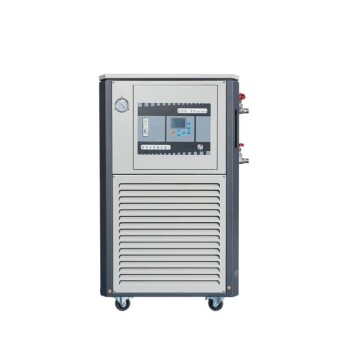
- High Temperature Constant Temperature Heating Circulator Water Bath Chiller Circulator for Reaction Bath
- Customizable Laboratory High Temperature High Pressure Reactors for Diverse Scientific Applications
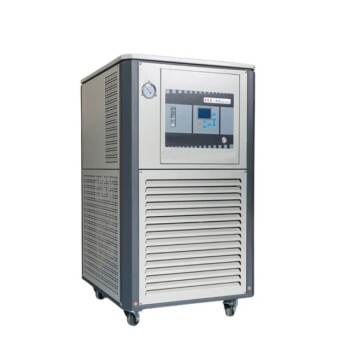
- 5L Heating Chilling Circulator Cooling Water Bath Circulator for High and Low Temperature Constant Temperature Reaction
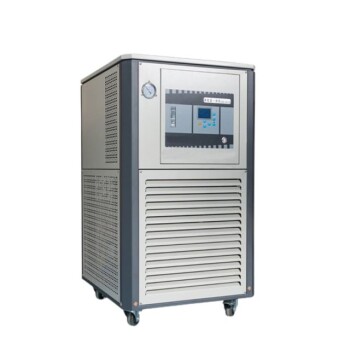
- 10L Heating Chilling Circulator Cooling Water Bath Circulator for High and Low Temperature Constant Temperature Reaction
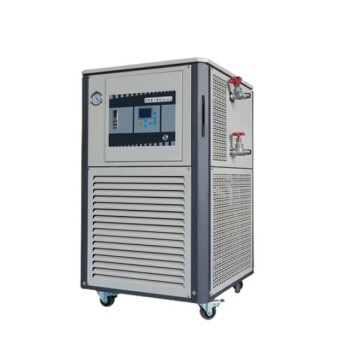
- 20L Heating Chilling Circulator Cooling Water Bath Circulator for High and Low Temperature Constant Temperature Reaction
People Also Ask
- What is the necessity of a circulating water bath in chlorate production? Optimize Yield & Purity with Precision
- How do constant temperature circulators impact weight-loss immersion tests? Ensure Precision in Corrosion Analysis
- How does a constant temperature circulator support the leaching reaction of gold scrap? Optimize Gold Recovery Results
- Why is a constant temperature water bath used for precursor storage in CVD? Achieve Stable Nanocrystalline SiC Deposition
- Why is a high-precision constant temperature water bath necessary for anaerobic digestion? Ensure Success at 37±0.02°C