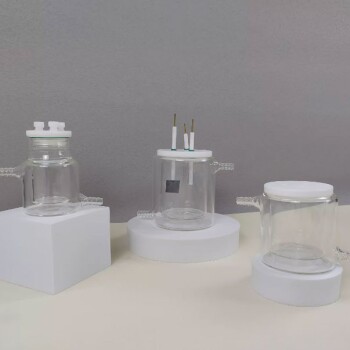
Temperature-controlled reaction systems act as the critical catalyst in the pitchblende crystallization method. by maintaining specific environmental parameters—most notably a reaction temperature of 85°C and precise oxidation-reduction potentials (Eh)—these systems force uranium to precipitate out of wastewater as stable pitchblende, achieving removal efficiencies greater than 99%.
By simulating natural mineralization conditions through precise thermal regulation, these systems significantly accelerate the uranium removal rate while ensuring the resulting crystals are of high structural quality.
The Mechanism of Action
Mimicking Geologic Processes
The fundamental goal of the temperature-controlled system is to replicate nature. By simulating natural mineralization conditions, the system creates an environment where uranium is thermodynamically favored to leave the solution.
Regulating Key Variables
Success relies on the simultaneous control of two factors: temperature and oxidation-reduction potential (Eh). Regulating these inputs is what drives the chemical transformation of soluble uranium into solid precipitate.
The Role of Heat (85°C)
The specific target temperature of typically 85°C is not arbitrary. This thermal energy is required to initiate and sustain the crystallization process at a rate viable for industrial treatment.
Performance Outcomes
Accelerating Removal Rates
Temperature control is directly linked to process speed. By maintaining the optimal 85°C environment, the system significantly accelerates the rate at which uranium is removed from the wastewater compared to ambient or uncontrolled conditions.
Achieving High Efficiency
The precision of this method delivers exceptional results. When the temperature and Eh are strictly maintained, the system consistently achieves uranium removal efficiencies of over 99%.
Improving Crystal Quality
Beyond simple removal, the controlled environment affects the physical properties of the byproduct. The regulation ensures the formation of stable pitchblende crystals, improving the quality of the precipitate for handling or potential recovery.
Understanding the Operational Requirements
The Necessity of Precision
The high efficiency of this method is contingent upon strict parameter adherence. The system effectively relies on a "Goldilocks" zone; failing to maintain the temperature around 85°C or stabilizing the Eh may prevent the simulation of natural mineralization.
System Complexity vs. Outcome
While the output is highly efficient, the process requires active management. You are trading operational simplicity for performance, as the system must constantly regulate the reaction environment to guarantee the high-quality crystallization of pitchblende.
Making the Right Choice for Your Goal
To determine if this specific methodology aligns with your wastewater treatment objectives, consider your primary targets:
- If your primary focus is maximum removal efficiency: Implement strict thermal regulation to achieve the >99% uranium removal benchmark.
- If your primary focus is byproduct stability: Prioritize the precise simulation of natural mineralization conditions to ensure the formation of high-quality pitchblende crystals.
Precision in temperature control is the difference between simple precipitation and high-efficiency mineralization.
Summary Table:
| Parameter | Targeted Value | Impact on Crystallization |
|---|---|---|
| Reaction Temperature | 85°C | Accelerates removal rate & initiates mineralization |
| Removal Efficiency | >99% | Achieved through precise oxidation-reduction (Eh) control |
| Process Simulation | Natural Mineralization | Ensures high structural quality and stable crystal formation |
| System Goal | Thermodynamic Favorability | Forces soluble uranium to precipitate into solid pitchblende |
Elevate Your Wastewater Treatment with KINTEK Precision
Unlock superior mineralization performance for uranium-containing wastewater with KINTEK’s advanced laboratory solutions. Our high-temperature high-pressure reactors and autoclaves are specifically engineered to maintain the precise thermal and Eh parameters required for stable pitchblende crystallization.
Whether you are refining nuclear waste treatment protocols or conducting battery research, KINTEK provides the specialized electrolytic cells, electrodes, and high-temperature furnaces needed to simulate complex geologic processes with industrial accuracy.
Ready to achieve >99% removal efficiency? Contact our technical experts today to find the perfect equipment for your critical research and treatment goals.
References
- Caixiong Yin, Xiangqian Dong. Treatment Method of Radioactive Waste Liquid Containing U and Cs. DOI: 10.54097/ije.v3i3.014
This article is also based on technical information from Kintek Solution Knowledge Base .
Related Products
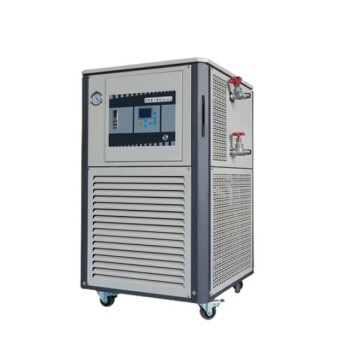
- 5L Heating Chilling Circulator Cooling Water Bath Circulator for High and Low Temperature Constant Temperature Reaction
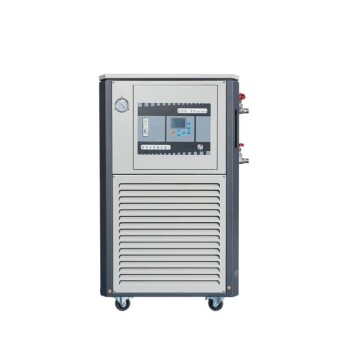
- 50L Heating Chilling Circulator Cooling Water Bath Circulator for High and Low Temperature Constant Temperature Reaction
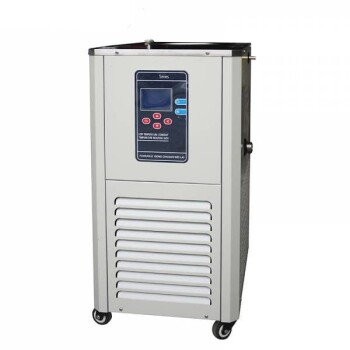
- 100L Heating Chilling Circulator Cooling Water Bath Circulator for High and Low Temperature Constant Temperature Reaction
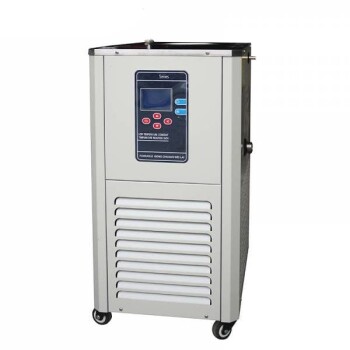
- 20L Heating Chilling Circulator Cooling Water Bath Circulator for High and Low Temperature Constant Temperature Reaction
- 30L Heating Chilling Circulator Cooling Water Bath Circulator for High and Low Temperature Constant Temperature Reaction
People Also Ask
- What is the necessity of a circulating water bath in chlorate production? Optimize Yield & Purity with Precision
- How does a constant temperature circulator support the leaching reaction of gold scrap? Optimize Gold Recovery Results
- How do constant temperature circulators impact weight-loss immersion tests? Ensure Precision in Corrosion Analysis
- What is the importance of a circulating water cooling system? Key to Protecting Your High-Temperature Lab Equipment
- Why is a circulating water chiller required for Prussian Blue nanoparticles? Ensure Stability & Batch Reproducibility