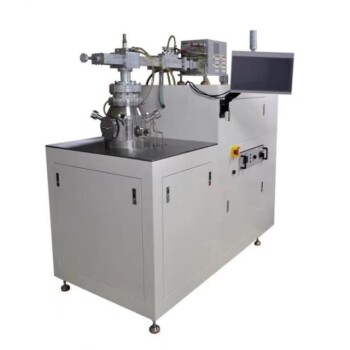
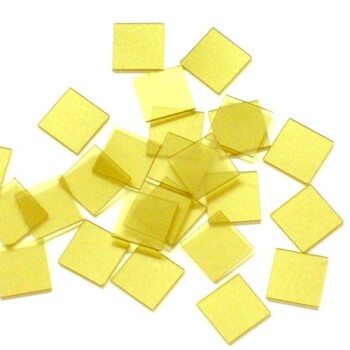
A Hot Filament Chemical Vapor Deposition (HFCVD) reactor functions by utilizing high-temperature tungsten filaments to thermally decompose precursor gases into reactive species. This system directs a mixture of methane and hydrogen over filaments heated to approximately 2000 °C, creating a high-energy environment that converts stable gases into active free radicals. These radicals then settle onto a controlled substrate, such as a titanium alloy, to build polycrystalline diamond structures through gas-phase epitaxy.
The core mechanism of HFCVD is the use of thermal energy—rather than high pressure or plasma—to activate carbon-containing gases. This method offers a streamlined, controllable process for growing diamond films at the atomic level, making it highly effective for industrial applications like tool coating.
The Mechanics of Reaction and Growth
The Thermal Excitation Source
The heart of the HFCVD reactor is the filament array, typically composed of tungsten. These filaments act as the primary excitation source for the chemical process.
During operation, the filaments are heated to extreme temperatures, often around 2000 °C. This intense thermal energy is required to break the strong chemical bonds of the feed gases introduced into the vacuum chamber.
Gas Decomposition and Radical Formation
The process relies on a specific mixture of gases, primarily methane ($CH_4$) and hydrogen ($H_2$).
As these gases pass over the superheated filaments, they undergo thermal decomposition. This reaction splits the stable gas molecules into active free radicals, including hydrocarbon species and, crucially, atomic hydrogen (H•).
The generation of atomic hydrogen is vital. It creates the necessary chemical environment to stabilize the diamond surface and etch away non-diamond carbon phases (graphite) that might form during deposition.
Deposition via Gas-Phase Epitaxy
Once the gases are activated, the high-energy reactive groups migrate toward the substrate.
The substrate, often a titanium alloy, is maintained at a controlled temperature that is significantly lower than the filaments (typically around 1000 °C).
When the carbon-containing radicals reach the substrate surface, they react to form bonds. Carbon atoms stack layer by layer in a process known as gas-phase epitaxy, gradually growing a polycrystalline diamond film.
Understanding the Trade-offs
Advantages of HFCVD
The primary benefit of the HFCVD system is its equipment simplicity. Because it relies on thermal filaments rather than complex wave generators, the process conditions are generally easier to control.
This method typically offers a faster growth rate for diamond films compared to older chemical transport methods. It has matured significantly, making it a standard choice for the industrial production of diamond-coated tools.
Operational Limitations
While effective, HFCVD relies purely on thermal activation. In contrast, methods like Microwave Plasma Enhanced CVD (MWCVD) use microwave fields to create a glow discharge.
The MWCVD method increases electron vibration and collision, leading to a higher ionization rate. This results in a greater concentration of dissociated atomic hydrogen, which can be more effective at etching away impurities to produce higher-quality films than thermal methods alone.
Making the Right Choice for Your Goal
If you are evaluating diamond synthesis methods for a specific application, consider the following:
- If your primary focus is industrial scalability and control: The HFCVD method is ideal due to its simpler equipment requirements and the maturity of the technology for producing polycrystalline films.
- If your primary focus is coating machining tools: HFCVD is the standard solution for depositing diamond films on titanium alloys and other hard materials used for manufacturing auto parts and cutting instruments.
- If your primary focus is maximum film purity: You may want to investigate MWCVD, as the higher ionization rates can provide superior etching of non-diamond phases.
HFCVD remains a dominant technology because it successfully translates the complex chemistry of diamond synthesis into a reliable, thermally driven industrial process.
Summary Table:
| Feature | HFCVD Process Specification |
|---|---|
| Filament Material | Tungsten (typically) |
| Filament Temperature | Approx. 2000 °C |
| Precursor Gases | Methane ($CH_4$) and Hydrogen ($H_2$) |
| Primary Substrates | Titanium alloys, cutting tools, hard metals |
| Key Mechanism | Thermal decomposition & gas-phase epitaxy |
| Main Advantage | Equipment simplicity and industrial scalability |
Elevate Your Material Synthesis with KINTEK Precision
Are you looking to scale your diamond coating production or enhance your thin-film research? KINTEK specializes in high-performance laboratory equipment, providing the advanced tools necessary for precise chemical vapor deposition and material processing.
Our extensive portfolio includes:
- High-Temperature Furnaces: Muffle, tube, and vacuum systems for exacting thermal environments.
- CVD & PECVD Systems: Cutting-edge reactors designed for superior film quality and uniformity.
- High-Pressure Solutions: Specialized autoclaves and reactors for demanding chemical synthesis.
- Material Preparation: Crushing, milling, and hydraulic presses for substrate and sample readiness.
Whether you are coating industrial machining tools or conducting breakthrough battery research, KINTEK delivers the reliability and technical expertise your laboratory demands. Contact us today to find the perfect HFCVD or thermal solution for your application!
References
- William de Melo Silva, Deílson Elgui de Oliveira. Fibroblast and pre-osteoblast cell adhesive behavior on titanium alloy coated with diamond film. DOI: 10.1590/1980-5373-mr-2016-0971
This article is also based on technical information from Kintek Solution Knowledge Base .
Related Products
- HFCVD Machine System Equipment for Drawing Die Nano-Diamond Coating
- Customer Made Versatile CVD Tube Furnace Chemical Vapor Deposition Chamber System Equipment
- Microwave Plasma Chemical Vapor Deposition MPCVD Machine System Reactor for Lab and Diamond Growth
- Split Chamber CVD Tube Furnace with Vacuum Station Chemical Vapor Deposition System Equipment Machine
- Cylindrical Resonator MPCVD Machine System Reactor for Microwave Plasma Chemical Vapor Deposition and Lab Diamond Growth
People Also Ask
- What is the full form of HFCVD? A Guide to Hot Filament Chemical Vapor Deposition
- What are the disadvantages and challenges of the HFCVD method? Overcome Growth Limits and Filament Issues
- What is the function of tungsten filaments in HFCVD? Powering Diamond Film Synthesis with Thermal Excitation
- Why is Chemical Vapor Deposition (CVD) equipment uniquely suited for constructing hierarchical superhydrophobic structures?
- What is the chemical vapor deposition growth process? Build Superior Thin Films from the Atom Up