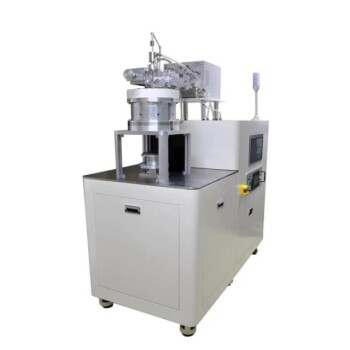
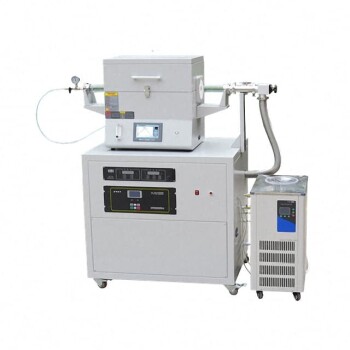
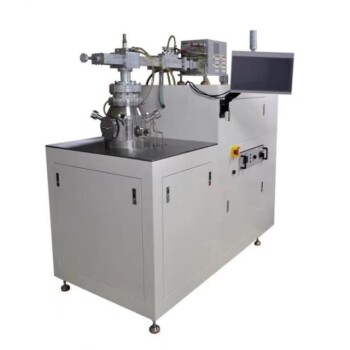
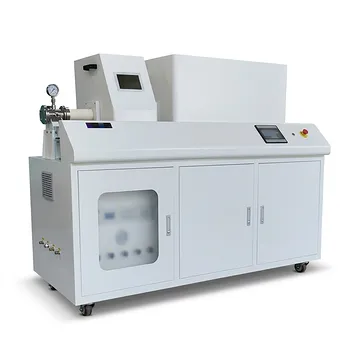
The Hot-Filament Chemical Vapor Deposition (HF-CVD) system serves as the foundational manufacturing platform for creating Boron-Doped Diamond (BDD) electrodes. It functions by generating a precisely controlled, high-temperature gas-phase environment where hot filaments thermally decompose precursor gases to deposit a polycrystalline diamond structure onto a substrate. Crucially, this system manages the introduction of specific dopants, transforming electrically insulating diamond into a highly conductive, electrochemically active material.
Core Takeaway The HF-CVD system is the engine for in-situ doping, integrating boron atoms into the diamond lattice during the growth phase rather than after. By utilizing a simple yet effective thermal excitation method, it enables the cost-effective production of large-area BDD electrodes suitable for industrial applications.
The Mechanism of Film Growth
Thermal Decomposition
The core function of the HF-CVD system is energy excitation. It utilizes metal hot filaments to generate the intense heat necessary to break chemical bonds.
Precursor Gas Management
The system introduces specific gases—primarily methane (a carbon source) and hydrogen—into the reactor. The hot filaments thermally decompose these gases, creating a reactive atmosphere essential for diamond synthesis.
Substrate Deposition
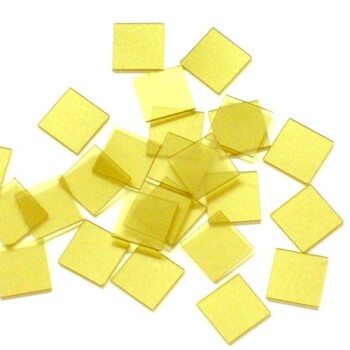
Once decomposed, the gas-phase components deposit onto a foundation, typically a low-resistivity silicon substrate. This process builds the diamond film layer by layer, resulting in a polycrystalline structure.
The Role of Controlled Doping
In-Situ Boron Integration
The defining characteristic of a BDD electrode is its conductivity, which is achieved through doping. The HF-CVD system allows for the precise, simultaneous introduction of dopant gases, such as trimethylboron, during the growth process.
Electrochemical Activation
By controlling the flow of dopants, the system ensures boron atoms are incorporated directly into the diamond lattice. This grants the final electrode excellent electrochemical activity and superior chemical stability compared to non-diamond electrodes.
Equipment Architecture and Scalability
Simplified Hardware Design
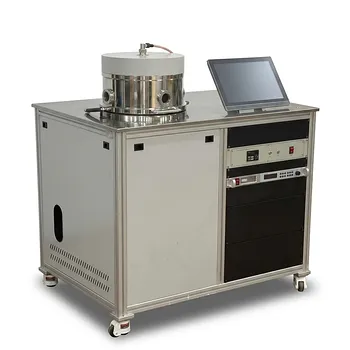
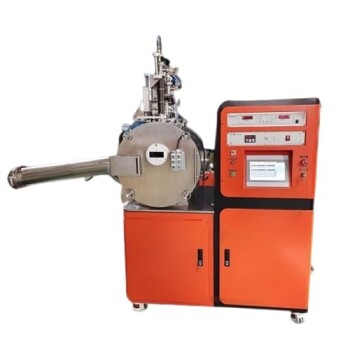
Unlike more complex plasma-based systems, HFCVD equipment features a relatively simple structural design. It typically includes a stainless steel double-wall reactor, a horizontal filament holder with a tensioning system, and a DC power supply.
Large-Scale Production Capability
A distinct role of the HF-CVD system in the market is its ability to scale. It provides a cost-effective solution for preparing large-area BDD thin-film electrodes, making it the preferred method for industrial applications where electrode dimension is a primary requirement.
Understanding the Trade-offs
Operational Complexity
While the structural design is simple, operation requires rigorous control. The system must manage a fine-tuned vacuum environment, precise gas ratios (H2, CH4, N2), and independent cooling circuits to prevent overheating of the reactor walls.
Filament Maintenance
The system relies on physical filaments to drive the reaction. These filaments require a tensioning system to maintain geometry during thermal expansion, a mechanical necessity that distinguishes this method from contactless techniques like microwave plasma CVD.
Making the Right Choice for Your Goal
The HF-CVD system is a tool optimized for specific manufacturing outcomes. Here is how to align its capabilities with your objectives:
- If your primary focus is Industrial Scalability: Rely on HF-CVD for its ability to produce large-area electrodes cost-effectively, which is difficult to achieve with other CVD methods.
- If your primary focus is Material Quality: Focus on the precise control of gas parameters (methane/hydrogen ratios) and dopant introduction (trimethylboron) to ensure high electrochemical activity and stability.
The HF-CVD system bridges the gap between laboratory synthesis and practical application, turning raw chemical precursors into robust, conductive diamond interfaces.
Summary Table:
| Feature | Role of HF-CVD in BDD Preparation |
|---|---|
| Energy Source | Metal hot filaments for thermal decomposition of precursor gases (CH4, H2) |
| Doping Method | In-situ integration of Boron (e.g., trimethylboron) into the diamond lattice |
| Substrate Type | Typically low-resistivity silicon for polycrystalline diamond deposition |
| Scalability | High; optimized for large-area electrode production for industrial use |
| Key Advantage | Cost-effective manufacturing with superior electrochemical stability |
Elevate Your Material Research with KINTEK
Unlock the full potential of diamond-based technologies with KINTEK’s industry-leading Hot-Filament Chemical Vapor Deposition (HF-CVD) systems. Whether you are developing Boron-Doped Diamond (BDD) electrodes for wastewater treatment or advanced sensors, our precision-engineered equipment ensures uniform doping, exceptional material stability, and industrial scalability.
As specialists in laboratory equipment, KINTEK provides more than just hardware; we offer a comprehensive ecosystem of solutions, including:
- High-Temperature Furnaces (Muffle, Tube, Vacuum, and CVD/PECVD systems)
- Electrolytic Cells & Electrodes for electrochemical applications
- Advanced Reactors & Autoclaves for high-pressure research
- Crushing, Milling & Sieving systems for sample preparation
Ready to scale your production or refine your laboratory synthesis? Contact us today to consult with our experts and find the perfect configuration for your specific research goals.
References
- Corneil Quand–Même Gnamba, Lassiné Ouattara. Electrochemical oxidation of amoxicillin in its pharmaceutical formulation at boron doped diamond (BDD) electrode. DOI: 10.5599/jese.186
This article is also based on technical information from Kintek Solution Knowledge Base .
Related Products
- HFCVD Machine System Equipment for Drawing Die Nano-Diamond Coating
- Multi Heating Zones CVD Tube Furnace Machine Chemical Vapor Deposition Chamber System Equipment
- Customer Made Versatile CVD Tube Furnace Chemical Vapor Deposition Chamber System Equipment
- Chemical Vapor Deposition CVD Equipment System Chamber Slide PECVD Tube Furnace with Liquid Gasifier PECVD Machine
- RF PECVD System Radio Frequency Plasma-Enhanced Chemical Vapor Deposition RF PECVD
People Also Ask
- What is the full form of HFCVD? A Guide to Hot Filament Chemical Vapor Deposition
- What are the disadvantages and challenges of the HFCVD method? Overcome Growth Limits and Filament Issues
- What is the function of tungsten filaments in HFCVD? Powering Diamond Film Synthesis with Thermal Excitation
- Why is Chemical Vapor Deposition (CVD) equipment uniquely suited for constructing hierarchical superhydrophobic structures?
- What is the chemical vapor deposition growth process? Build Superior Thin Films from the Atom Up