Non-active Boron-Doped Diamond (BDD) anodes are selected primarily for their ability to achieve complete mineralization of organic pollutants. Their effectiveness stems from an extremely high oxygen evolution potential, which suppresses the generation of oxygen gas and instead favors the formation of powerful, physically adsorbed hydroxyl radicals ($\cdot$OH) on the electrode surface.
Core Takeaway: By inhibiting oxygen evolution side reactions, BDD anodes channel energy directly into generating high concentrations of reactive radicals. This mechanism allows for the non-selective, total destruction of recalcitrant pollutants, solving the issue of incomplete oxidation common with traditional active anodes.
The Mechanism of Non-Active Anodes
High Oxygen Evolution Potential
The fundamental advantage of BDD is its wide electrochemical window.
Unlike traditional materials, BDD requires a significantly higher voltage to decompose water into oxygen gas. This delay in oxygen evolution allows the system to reach potentials where powerful oxidative reactions can occur without being wasted on generating gas bubbles.
Physically Adsorbed Radicals
The specific surface interaction of BDD defines it as a "non-active" anode.
Active anodes interact strongly with oxygen, forming stable higher oxides that result in partial oxidation. In contrast, BDD forms physically adsorbed hydroxyl radicals ($\cdot$OH). These radicals are weakly bound to the surface, making them highly reactive and available to attack pollutants immediately.
Achieving Complete Mineralization
Solving the "Incomplete Oxidation" Problem
A major limitation of standard active anodes is that they often only partially degrade contaminants, leaving behind intermediate byproducts.
Because BDD generates weakly adsorbed radicals, it facilitates complete mineralization. This means organic pollutants are converted entirely into carbon dioxide, water, and inorganic salts, rather than simply being transformed into different organic compounds.
Destroying Recalcitrant Compounds
The high reactivity of the hydroxyl radicals generated by BDD is non-selective.
This allows BDD anodes to break down "recalcitrant" compounds—pollutants that are resistant to biological treatment or standard oxidation—such as estrone (E1) and 17$\beta$-estradiol (E2). This capability leads to superior removal rates for both Chemical Oxygen Demand (COD) and Total Organic Carbon (TOC).
Understanding the Stability Factors
Chemical Resistance
Beyond their electrochemical properties, BDD anodes are selected for their physical robustness.
They exhibit exceptional corrosion resistance and chemical stability, even when operating in harsh environments like strong acids. This durability ensures consistent performance over time, preventing electrode degradation that could contaminate the wastewater or reduce efficiency.
Low Background Current
BDD electrodes maintain an extremely low background current.
This characteristic indicates that very little energy is wasted on non-productive surface reactions. Consequently, the current applied to the system is utilized more efficiently for the target oxidation processes.
Making the Right Choice for Your Goal
When designing an electrochemical oxidation system, BDD is the superior choice for specific treatment objectives.
- If your primary focus is removing Total Organic Carbon (TOC): BDD is required because its non-selective radicals ensure the complete mineralization of pollutants into $CO_2$.
- If your primary focus is treating hard-to-degrade chemicals: BDD is ideal due to its high oxidation potential, which can break down recalcitrant compounds that survive other treatment methods.
- If your primary focus is long-term stability in harsh media: BDD provides the necessary corrosion resistance to operate effectively in aggressive acidic or high-pressure environments.
Select non-active BDD anodes when the objective is not just to modify pollutants, but to completely eliminate them from the water matrix.
Summary Table:
| Feature | Active Anodes (e.g., PbO2, DSA) | Non-Active BDD Anodes |
|---|---|---|
| Adsorption Strength | Strong (Chemical) | Weak (Physical) |
| Reactive Species | Higher Oxides (MOx+1) | Hydroxyl Radicals (·OH) |
| Oxidation Goal | Partial Oxidation / Conversion | Complete Mineralization |
| Oxygen Evolution Potential | Low (Wasteful gas generation) | Extremely High (Efficient) |
| Application | Simple organic modification | Recalcitrant TOC & COD removal |
Revolutionize Your Wastewater Treatment with KINTEK BDD Technology
Don't settle for partial oxidation. KINTEK specializes in advanced electrochemical solutions, providing high-performance Boron-Doped Diamond (BDD) anodes designed for complete mineralization of recalcitrant pollutants. Beyond our industry-leading BDD electrodes, we offer a comprehensive range of electrolytic cells, high-pressure reactors, and lab-scale crushing/milling systems to support your research and industrial scaling needs.
Whether you are targeting 100% TOC removal or need chemical-resistant electrodes for harsh acidic media, our experts are ready to provide the precision equipment your laboratory demands.
Maximize your mineralization efficiency today — Contact KINTEK for a custom quote!
References
- Yasser Bashir, Sovik Das. Critical assessment of advanced oxidation processes and bio-electrochemical integrated systems for removing emerging contaminants from wastewater. DOI: 10.1039/d3su00112a
This article is also based on technical information from Kintek Solution Knowledge Base .
Related Products
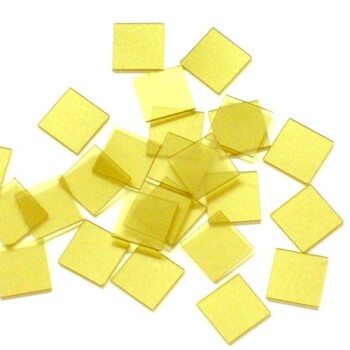
- Laboratory CVD Boron Doped Diamond Materials
- Boron Nitride (BN) Ceramic Plate
- Conductive Boron Nitride BN Ceramics Composite for Advanced Applications
- Boron Nitride (BN) Ceramic Tube
- Boron Nitride (BN) Ceramic Rod for High Temperature Applications
People Also Ask
- What is the purpose of adding a boron source in CVD diamond growth? Master P-Type Semiconductor Conductivity
- What materials are CVD deposition? From Semiconductors to Super-Hard Coatings
- What are the advantages of BDD electrodes? Maximize Wastewater Treatment Efficiency and Durability
- What are the applications of CVD diamonds? From Jewelry to High-Tech Tools
- Are CVD diamonds good? Real Diamonds with Ethical Origins & Better Value