The metal filament serves as the primary source of thermal and chemical activation. In the Hot Filament Chemical Vapor Deposition (HF-CVD) process, this filament is heated to extreme temperatures, typically between 2000 and 2500 degrees Celsius. Its specific function is to thermally decompose stable gas molecules—specifically hydrogen and carbon sources—into the highly reactive atomic species and radicals required to grow diamond films.
Core Takeaway While the filament provides heat, its definitive chemical function is the production of atomic hydrogen (at.H). This reactive hydrogen is essential for driving non-equilibrium reactions and selectively "etching" away graphite, ensuring that only the metastable diamond structure survives and grows on the substrate.
The Mechanism of Gas Activation
The HF-CVD process relies on breaking down stable gases into unstable, reactive fragments. The metal filament facilitates this through extreme thermal energy and catalytic surface effects.
Dissociation of Molecular Hydrogen
The most critical task of the filament is breaking the strong bonds of molecular hydrogen ($H_2$).
When $H_2$ gas comes into contact with the filament heated to 2000-2500°C, it thermally decomposes into atomic hydrogen ($at.H$).
This atomic hydrogen is the workhorse of the process, driving the chemical kinetics necessary for diamond deposition.
Cracking Carbon Precursors
The filament also acts on carbon-containing gases, such as methane ($CH_4$).
The high temperature "cracks" these molecules, stripping away hydrogen atoms to form hydrocarbon active groups (radicals).
These active radicals are the building blocks that eventually diffuse to the substrate to form the solid film.
Regulating Diamond Growth
Once the gases are activated, the filament's influence dictates the quality and structure of the resulting material.
Selective Etching of Impurities
Diamond growth is a competition between forming diamond (sp3 carbon) and graphite (sp2 carbon).
The atomic hydrogen generated by the filament attacks and "etches" (removes) graphite much faster than it removes diamond.
This effectively cleans the growing surface, removing non-diamond carbon and leaving behind only the desired diamond crystal structure.
Promoting Nucleation
The active hydrocarbon groups created near the filament adhere to the substrate surface.
When the substrate is maintained at the correct temperature (typically 600-1000°C), these groups react to form crystal nuclei.
Over time, these nuclei grow into "islands" that eventually merge to form a continuous, cohesive diamond film.
Understanding the Trade-offs
While the hot filament method is effective and requires simpler equipment than other methods, relying on a superheated metal wire introduces specific limitations.
Filament Contamination
The high temperatures required for activation can cause the filament material itself (Tungsten or Tantalum) to evaporate or sublime slightly.
Trace amounts of metal can become incorporated into the growing diamond film.
This is a significant drawback if your application requires ultra-high purity diamond for electronic or optical applications.
Structural Stability and Lifespan
Materials like Tantalum (Ta) are chosen for their high melting points and structural stability.
However, during long-duration processes, the filament is constantly subjected to carbon-rich environments.
This can lead to carburization (the formation of metal carbides), which may alter the filament's electrical resistance, make it brittle, or cause it to sag and break over time.
Making the Right Choice for Your Goal
The role of the filament is a balance between necessary activation energy and material limitations.
- If your primary focus is Film Quality: Monitor filament temperature precisely; too low, and you lack the atomic hydrogen needed to etch away graphite impurities.
- If your primary focus is Electronic Purity: Be aware that HF-CVD may introduce trace metal contamination; consider if the specific filament material (W vs. Ta) poses a risk to your device performance.
- If your primary focus is Process Stability: utilizing Tantalum may offer better structural stability during long growth cycles compared to other refractory metals.
The metal filament is not just a heater; it is a chemical reactor that dictates the purity and structure of the final diamond film.
Summary Table:
| Feature | Primary Function & Impact |
|---|---|
| Thermal Activation | Heats to 2000-2500°C to decompose H2 and carbon precursors. |
| Chemical Role | Generates atomic hydrogen (at.H) for non-equilibrium reactions. |
| Selective Etching | Removes graphite (sp2) faster than diamond (sp3) to ensure film purity. |
| Nucleation Support | Creates hydrocarbon radicals that form crystal nuclei on the substrate. |
| Material Risks | Potential for metal contamination and filament brittleness due to carburization. |
Elevate Your Material Research with KINTEK
Precision in Hot Filament Chemical Vapor Deposition requires reliable equipment and high-purity consumables. At KINTEK, we specialize in providing the advanced laboratory tools needed for high-performance film growth. From specialized CVD and PECVD systems to high-temperature furnace solutions and essential refractory metal consumables, we ensure your lab achieves the structural stability and purity your projects demand.
Whether you are focusing on diamond film synthesis, battery research, or advanced ceramic processing, our comprehensive portfolio—including high-temperature reactors, crushing systems, and vacuum furnaces—is designed to support your most rigorous scientific goals.
Ready to optimize your HF-CVD process? Contact KINTEK today to consult with our experts on the right equipment for your application!
References
- Roland Haubner. Low-pressure diamond: from the unbelievable to technical products. DOI: 10.1007/s40828-021-00136-z
This article is also based on technical information from Kintek Solution Knowledge Base .
Related Products
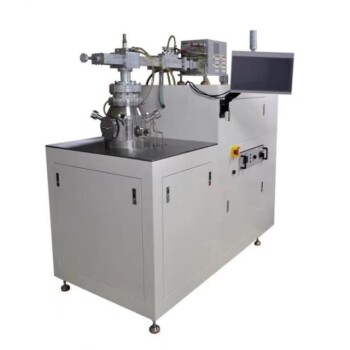
- HFCVD Machine System Equipment for Drawing Die Nano-Diamond Coating
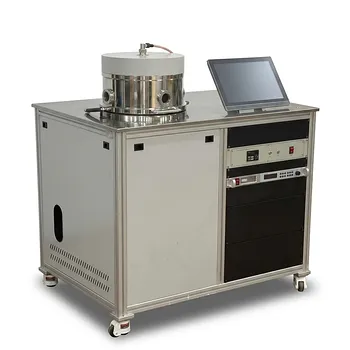
- Chemical Vapor Deposition CVD Equipment System Chamber Slide PECVD Tube Furnace with Liquid Gasifier PECVD Machine
- Multi Heating Zones CVD Tube Furnace Machine Chemical Vapor Deposition Chamber System Equipment
- Customer Made Versatile CVD Tube Furnace Chemical Vapor Deposition Chamber System Equipment
- Microwave Plasma Chemical Vapor Deposition MPCVD Machine System Reactor for Lab and Diamond Growth
People Also Ask
- What is the full form of HFCVD? A Guide to Hot Filament Chemical Vapor Deposition
- What are the disadvantages and challenges of the HFCVD method? Overcome Growth Limits and Filament Issues
- What is the function of tungsten filaments in HFCVD? Powering Diamond Film Synthesis with Thermal Excitation
- Why is Chemical Vapor Deposition (CVD) equipment uniquely suited for constructing hierarchical superhydrophobic structures?
- What is the chemical vapor deposition growth process? Build Superior Thin Films from the Atom Up