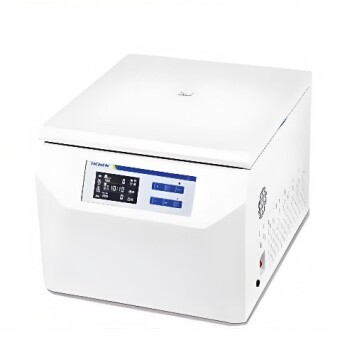
A high-pressure reactor acts as a precision control system that drives the hydrogenation of nitrile compounds by maintaining a stable, elevated pressure environment. Specifically for converting benzonitrile to dibenzylamine, it sustains critical conditions—such as 0.6 MPa of hydrogen pressure at 80°C—while mechanically ensuring that hydrogen gas, liquid reactants, and solid catalysts interact continuously.
The reactor’s primary function is to overcome the kinetic limitations inherent in traditional metal-catalyzed hydrogenation. By strictly regulating pressure, temperature, and agitation, it achieves high catalytic activity and ensures the selective formation of secondary amines rather than primary amines or other byproducts.
The Mechanics of Controlled Hydrogenation
Overcoming Kinetic Barriers
Standard atmospheric conditions often fail to provide the energy required for efficient nitrile hydrogenation. A high-pressure reactor solves this by maintaining a constant elevated pressure (e.g., 0.6 MPa).
This pressure forces hydrogen gas into the reaction mixture, increasing its concentration and availability. Combined with a stable temperature (e.g., 80°C), this environment surmounts the energy barriers that typically slow down the reaction kinetics.
Optimizing Three-Phase Contact
The conversion of benzonitrile is a multiphase reaction involving hydrogen gas, liquid substrates, and a solid metal catalyst. Without intervention, these phases interact poorly, leading to slow or incomplete reactions.
The reactor utilizes mechanical agitation to enforce thorough contact between these three phases. This continuous mixing ensures the catalyst is constantly exposed to both the hydrogen and the nitrile substrate, maximizing reaction efficiency.
Driving Selectivity for Secondary Amines
In nitrile hydrogenation, achieving the correct chemical structure is as important as the conversion rate. The goal in this context is often the formation of dibenzylamine, a secondary amine.
The controlled physical environment of the reactor dictates the reaction pathway. By stabilizing the specific pressure and temperature parameters, the system favors the mechanism that produces secondary amines over other potential products.
Understanding the Trade-offs
The Necessity of Precision
While high-pressure reactors offer superior results, they demand rigorous control. Any fluctuation in the 0.6 MPa pressure setpoint or the 80°C temperature can alter the reaction pathway.
If conditions drift, the system may lose its selectivity. This could result in lower yields of the desired dibenzylamine or the unwanted production of primary amines.
Equipment Complexity
Achieving these results requires a sealed, robust system capable of withstanding significant physical stress. Unlike open-air glassware, high-pressure reactors require careful setup to ensure the seal integrity necessary for sustaining the reaction environment.
Making the Right Choice for Your Goal
To maximize the efficiency of your hydrogenation process, consider the following regarding reactor parameters:
- If your primary focus is Reaction Speed: Prioritize the mechanical agitation settings to ensure the gas-liquid-solid interface is maximized for rapid kinetic turnover.
- If your primary focus is Product Purity (Selectivity): maintain strict adherence to the specific pressure (0.6 MPa) and temperature (80°C) parameters to prevent the formation of byproduct amines.
Ultimately, the high-pressure reactor is not just a vessel, but an active participant that enforces the thermodynamic conditions required for selective chemical synthesis.
Summary Table:
| Feature | Parameter Detail | Impact on Hydrogenation |
|---|---|---|
| Pressure Control | 0.6 MPa (Stable) | Forces H2 into mixture; overcomes kinetic barriers. |
| Temperature | 80°C (Precise) | Surmounts energy barriers for efficient conversion. |
| Agitation | Mechanical Stirring | Maximizes three-phase contact (gas-liquid-solid). |
| Selectivity | Optimized Pathway | Favors secondary amines like dibenzylamine over byproducts. |
Upgrade Your Chemical Synthesis with KINTEK Precision
Achieving perfect selectivity in nitrile hydrogenation requires more than just a vessel—it requires a precision-engineered environment. KINTEK specializes in high-performance laboratory equipment, offering a robust range of high-temperature high-pressure reactors and autoclaves designed to withstand the rigors of advanced catalytic research.
Whether you are focusing on battery research, material science, or complex chemical synthesis, our portfolio—including crushing and milling systems, vacuum furnaces, and hydraulic presses—is built to deliver the stability your lab demands.
Ready to optimize your reaction yields and ensure product purity?
Contact KINTEK today to find the perfect reactor solution for your application.
References
- Hengwei Wang, Junling Lu. Quasi Pd1Ni single-atom surface alloy catalyst enables hydrogenation of nitriles to secondary amines. DOI: 10.1038/s41467-019-12993-x
This article is also based on technical information from Kintek Solution Knowledge Base .
Related Products
- Customizable Laboratory High Temperature High Pressure Reactors for Diverse Scientific Applications
- Customizable High Pressure Reactors for Advanced Scientific and Industrial Applications
- Stainless High Pressure Autoclave Reactor Laboratory Pressure Reactor
- Mini SS High Pressure Autoclave Reactor for Laboratory Use
- High Pressure Laboratory Autoclave Reactor for Hydrothermal Synthesis
People Also Ask
- How do high-pressure and high-temperature reactors ensure the effective treatment of lignocellulosic wastewater in WAO?
- What equipment is required for high-pressure high-temperature reactions? Master Extreme Chemistry Safely
- How do you control high pressure in a reactor? A Guide to Safe & Stable Operation
- Why is argon better than nitrogen for inert atmosphere? Ensure Absolute Reactivity & Stability
- How does initial oxygen pressure affect the wet oxidation of pharmaceutical sludge? Master Your Oxidation Depth