Magnetic stirring is the linchpin of suspension uniformity. It applies high-speed rotational shear forces to alkaline lignin and amphiphilic graphene oxide (GO) in water to break down potential clusters. This mechanical action ensures the molecular-level dispersion necessary to prevent agglomeration before the mixture undergoes directional freezing.
By generating consistent shear forces, magnetic stirring creates a homogenous suspension that allows for regular ice crystal formation. This uniformity is the direct precursor to achieving a defect-free, honeycomb-like pore structure in the final carbon foam.
The Mechanism of Dispersion
Generating Shear Forces
The primary function of the magnetic stirrer is to generate significant shear forces through high-speed rotation.
These forces are required to physically disrupt the interaction between particles in the water.
Without this mechanical energy, the components would likely settle or clump rather than remaining suspended.
Achieving Molecular-Level Homogeneity
The goal is not just a visual mixture, but molecular-level uniform dispersion.
This is particularly critical because the suspension involves complex components: alkaline lignin and amphiphilic graphene oxide (GO).
The stirrer ensures these distinct materials are evenly distributed throughout the aqueous medium.
From Suspension to Structure
Preparing for Directional Freezing
The quality of the suspension directly dictates the success of the subsequent directional freezing process.
If the mixture is not homogeneous, the freezing front will encounter inconsistent material concentrations.
This consistency is the foundational requirement for controlling how the ice grows.
Forming the Honeycomb Template
The uniform suspension allows for the formation of regular ice crystal templates.
As the water freezes, it pushes the lignin and GO into the spaces between the crystals.
If the dispersion is perfect, the resulting ice structure creates a consistent mold, leading to the desired honeycomb-like pore structure.
Understanding the Trade-offs
The Risk of Inadequate Mixing
If the magnetic stirring is insufficient or too slow, the suspension will lack the necessary homogeneity.
This leads to irregular ice crystal growth during the freezing phase.
Consequently, the final carbon foam will suffer from structural defects and inconsistent pore sizes, compromising its mechanical properties.
Ensuring Structural Integrity in Fabrication
To maximize the quality of your honeycomb lignin carbon foam, prioritize the mixing parameters of your suspension.
- If your primary focus is pore regularity: Ensure high-speed rotation is maintained long enough to achieve molecular-level dispersion before freezing begins.
- If your primary focus is minimizing defects: Verify that the shear forces are sufficient to fully disperse the amphiphilic GO, preventing agglomerations that disrupt the ice template.
A consistent, high-quality carbon foam is impossible without first achieving a perfectly homogeneous suspension.
Summary Table:
| Factor | Role of Magnetic Stirring | Impact on Carbon Foam |
|---|---|---|
| Mechanism | High-speed rotational shear forces | Breaks down lignin and GO clusters |
| Dispersion | Molecular-level homogeneity | Prevents agglomeration before freezing |
| Freezing Phase | Enables regular ice crystal formation | Creates a uniform structural template |
| Final Quality | Eliminates structural defects | Produces consistent honeycomb-like pores |
Elevate Your Advanced Material Synthesis with KINTEK
Precision in research begins with the right equipment. Whether you are developing honeycomb lignin carbon foams or pioneering new battery technologies, KINTEK provides the high-performance laboratory tools you need for success. From high-speed homogenizers and shakers for perfect suspensions to freeze dryers for directional freezing and high-temperature vacuum furnaces for carbonization, our comprehensive portfolio is designed to meet the rigorous demands of material science.
Our Expertise Includes:
- Mixing & Dispersion: Advanced homogenizers and magnetic stirring solutions.
- Thermal Processing: Muffle, tube, and vacuum furnaces for precise carbonization.
- Sample Preparation: Hydraulic presses, crushing systems, and specialized ceramics.
Don't let inconsistent dispersion compromise your structural integrity. Contact KINTEK today to discover how our high-quality laboratory equipment and consumables can optimize your fabrication process and ensure repeatable, high-performance results.
References
- Zhihui Zeng, Xuehong Lu. Biomass-based honeycomb-like architectures for preparation of robust carbon foams with high electromagnetic interference shielding performance. DOI: 10.1016/j.carbon.2018.08.061
This article is also based on technical information from Kintek Solution Knowledge Base .
Related Products
- Laboratory Small Constant Temperature Heated Magnetic Stirrer Heater and Stirrer
- Custom PTFE Teflon Parts Manufacturer for Magnetic Stirring Bar
- High Performance Laboratory Stirrers for Diverse Applications
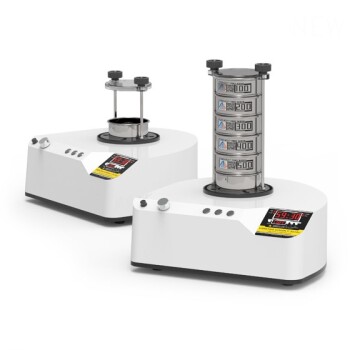
- Three-dimensional electromagnetic sieving instrument
- Custom PTFE Teflon Parts Manufacturer for PTFE Stirring Bar Recovery Rod
People Also Ask
- What role does a magnetic stirrer with heating play in ZnO nanoparticle synthesis? Precision Control for Quality Results
- What role does a constant temperature heating magnetic stirrer play in MFC-HAp synthesis? Achieve Material Homogeneity
- What is the function of a laboratory magnetic stirrer in Ni–Cr–P electrodeposition? Optimize Ion Transport & Coating
- Why is a laboratory magnetic stirrer required for benzoic acid esters? Boost Reaction Speed & Yield with High RPM
- What role does a laboratory magnetic stirrer play in TiO2 and TiO2-Ag sol preparation? Master Chemical Kinetics