Precision in temperature and agitation is not merely operational; it is the defining factor for reaction kinetics and particle morphology. A stirring device with accurate thermal regulation ensures the system reaches the specific activation energy required to reduce Fe2+ ions to zero-valent iron (Fe0), typically around 75°C. Simultaneously, it prevents the localized clustering of reactants that leads to inconsistent particle growth.
The synergy between constant stirring and precise heating controls the rate of nucleation and prevents aggregation. This dual control is the only way to guarantee quasi-spherical nanoparticles within the optimal 80–100 nm size range.
The Role of Temperature in Chemical Reduction
Overcoming the Activation Barrier
In the green synthesis of iron nanoparticles, heat is the catalyst that drives the chemical transformation. The reduction of precursor ions (Fe2+) into zero-valent iron (Fe0) requires a specific threshold of activation energy.
Maintaing the reaction system at a constant temperature, such as 75°C, ensures this energy is continuously available. Without this precise thermal floor, the reduction process may stall or proceed inefficiently.
Ensuring Reaction Uniformity
Precise temperature control does more than just start the reaction; it sustains it at a predictable rate. Fluctuations in heat can lead to uneven reaction rates across the solution.
By regulating the temperature, you ensure that the thermodynamic conditions remain stable throughout the synthesis duration. This stability is essential for producing a consistent yield of nanoparticles.
The Critical Function of Mechanical Stirring
Preventing Localized Concentrations
Without agitation, reactants can pool in specific areas of the vessel, creating "hot spots" of high concentration. These localized pockets lead to rapid, uncontrolled crystal growth in some areas and starvation in others.
Constant stirring homogenizes the solution, ensuring that the reducing agents are evenly distributed. This uniformity is required to promote simultaneous nucleation across the entire volume of the liquid.
Controlling Particle Morphology and Size
The physical movement of the fluid plays a direct role in shaping the final nanoparticle. Stirring inhibits excessive particle aggregation, which is the natural tendency of nanoparticles to clump together.
This mechanical control results in a specific physical outcome: quasi-spherical nanoparticles. Furthermore, it restricts the size distribution to a tight, functional range of typically 80 to 100 nanometers.
Understanding the Trade-offs
The Risk of Thermal Instability
While high temperatures facilitate the reaction, failing to control them precisely can be detrimental. If the temperature drifts too high or fluctuates wildly, it can alter the reaction kinetics unpredictably.
In broader contexts involving metal oxides, extreme heat variances can inadvertently alter crystal structures or cation distributions. Therefore, the device must offer tight regulation, not just high heat output.
Agitation Limitations
Stirring is vital, but the intensity must be calibrated. Inadequate stirring leads to large, irregular aggregates rather than discrete nanoparticles.
Conversely, while not explicitly detailed in the primary data, excessive shear force in some chemical contexts can disrupt delicate formation processes. The goal is consistent, moderate agitation that balances homogeneity with stability.
Making the Right Choice for Your Goal
To achieve high-quality iron nanoparticles, you must align your equipment capabilities with your specific synthesis objectives.
- If your primary focus is particle uniformity: Prioritize a device with high-torque, consistent stirring speeds to prevent aggregation and ensure quasi-spherical shapes.
- If your primary focus is reaction efficiency: Ensure your device has a PID (Proportional-Integral-Derivative) controller or similar technology to lock the temperature at exactly 75°C for optimal Fe2+ reduction.
Success in green synthesis relies on the strict, simultaneous orchestration of thermal energy and mechanical fluid dynamics.
Summary Table:
| Factor | Role in Synthesis | Physical Outcome |
|---|---|---|
| Precise Temperature | Overcomes Fe2+ activation barrier (75°C) | Uniform reaction kinetics & consistent yield |
| Mechanical Stirring | Homogenizes reactants & prevents "hot spots" | Produces discrete, quasi-spherical shapes |
| Dual Control | Regulates nucleation & prevents aggregation | Tight size distribution (80–100 nm) |
| PID Technology | Maintains thermodynamic stability | Prevents thermal drift & crystal defects |
Elevate Your Material Synthesis with KINTEK Precision
Achieving the perfect nanoparticle morphology requires more than just heat—it requires absolute control. KINTEK provides the high-performance laboratory equipment necessary for advanced green synthesis. From homogenizers and shakers that ensure perfect solution homogeneity to high-temperature furnaces and reactors designed for precise thermal regulation, we empower researchers to achieve consistent, high-quality results.
Our laboratory solutions include:
- Advanced Stirring & Mixing: High-torque homogenizers and shakers for uniform dispersion.
- Thermal Excellence: Muffle, tube, and vacuum furnaces, plus high-pressure reactors.
- Sample Preparation: Hydraulic presses, crushing systems, and specialized ceramics/crucibles.
- Cooling Systems: ULT freezers and freeze dryers for post-synthesis stabilization.
Don't let inconsistent equipment compromise your particle morphology. Contact KINTEK today to find the perfect precision tools for your research objectives!
References
- K. A. P. Gaminda, R. Senthilnithy. Degradation of Malachite Green using Green Synthesized Iron Nanoparticles by <em>Coffea arabica</em> Leaf Extracts and its Antibacterial Activity. DOI: 10.4038/kjms.v5i2.76
This article is also based on technical information from Kintek Solution Knowledge Base .
Related Products
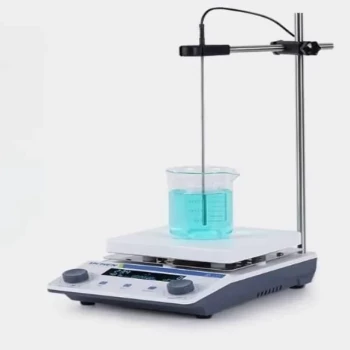
- Laboratory Small Constant Temperature Heated Magnetic Stirrer Heater and Stirrer
- Automatic High Temperature Heated Hydraulic Press Machine with Heated Plates for Lab
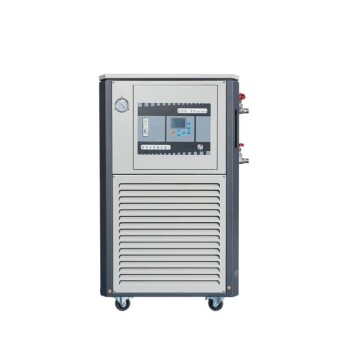
- 5L Heating Chilling Circulator Cooling Water Bath Circulator for High and Low Temperature Constant Temperature Reaction
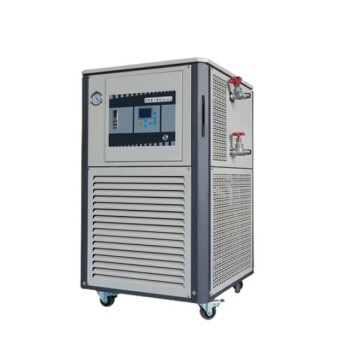
- 100L Heating Chilling Circulator Cooling Water Bath Circulator for High and Low Temperature Constant Temperature Reaction
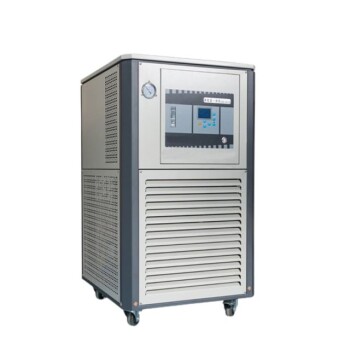
- 10L Heating Chilling Circulator Cooling Water Bath Circulator for High and Low Temperature Constant Temperature Reaction
People Also Ask
- What role does a magnetic stirrer with heating play in ZnO nanoparticle synthesis? Precision Control for Quality Results
- What role does a constant temperature heating magnetic stirrer play in MFC-HAp synthesis? Achieve Material Homogeneity
- What is the function of a laboratory magnetic stirrer in Ni–Cr–P electrodeposition? Optimize Ion Transport & Coating
- Why is a laboratory magnetic stirrer required for benzoic acid esters? Boost Reaction Speed & Yield with High RPM
- What role does a laboratory magnetic stirrer play in TiO2 and TiO2-Ag sol preparation? Master Chemical Kinetics