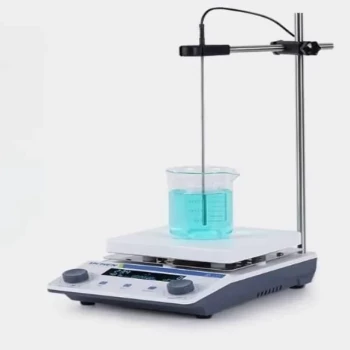
A magnetic stirring system is the primary control mechanism for ensuring safety and uniformity during the synthesis of chlorine dioxide. By utilizing a PTFE-coated magnetic stirrer bar, the system applies a gentle, uniform shear force that rapidly mixes the critical reagents—chlorate solutions, hydrogen peroxide, and concentrated sulfuric acid.
Core Insight The fundamental value of magnetic stirring lies in its ability to generate forced convection. This eliminates local concentration gradients and prevents dangerous heat accumulation, ensuring the reduction reaction remains stable and free from runaway scenarios.
The Mechanics of Effective Mixing
Generating Uniform Shear Force
The system relies on a magnetic stirrer bar coated in PTFE (polytetrafluoroethylene). This specific coating provides chemical resistance against the harsh reaction environment.
The bar generates a consistent shear force throughout the liquid. This mechanical action ensures that the reactants are introduced to one another at a controlled, steady rate.
Facilitating Forced Convection
Static diffusion is insufficient for this chemical process; forced convection is required. The stirring motion actively circulates the fluid, moving reactants from areas of high concentration to low concentration.
This rapid movement ensures that the chlorate solution, hydrogen peroxide, and sulfuric acid are thoroughly integrated.
Why Homogeneity is Critical
Eliminating Concentration Gradients
Without adequate mixing, "pockets" of unreacted, highly concentrated chemicals can form within the vessel. These local concentration gradients create uneven reaction rates.
Magnetic stirring homogenizes the solution instantly. This ensures that the chemical reduction reaction proceeds smoothly across the entire system volume simultaneously.
Managing Thermal Build-up
The synthesis of chlorine dioxide involves significant energy changes. Without movement, heat can accumulate in specific zones, leading to "hot spots."
The forced convection provided by the stirrer dissipates this heat evenly throughout the solution. This thermal management is the key factor in preventing runaway reactions.
Reducing Byproduct Formation
Uniform reaction conditions are essential for product purity. When mixing is uneven, side reactions are more likely to occur.
By maintaining a uniform environment, the system favors the desired reduction pathway. This directly results in minimized formation of unwanted byproducts.
Critical Considerations and Risks
The Consequence of Inadequate Mixing
The primary pitfall in this process is the failure of the convection mechanism. If the stirring is too slow or the bar decouples, heat accumulation becomes immediate and localized.
This loss of control allows the reaction to accelerate unpredictably. The reference highlights that the prevention of these "runaway reactions" is entirely dependent on the continuous elimination of heat and concentration gradients.
The Importance of "Gentle" Force
It is worth noting the requirement for "gentle" shear force. While mixing must be rapid, it must also be controlled.
Excessive or chaotic agitation could introduce new variables or instabilities. The magnetic system is specifically valued for providing force that is both uniform and gentle.
Ensuring Process Stability
How to Apply This to Your Project
To maximize the safety and yield of your chlorine dioxide synthesis, you must align your mixing strategy with your specific goals:
- If your primary focus is Safety: Ensure your magnetic stirring system is calibrated to prevent decoupling, as continuous heat dissipation is required to stop runaway reactions.
- If your primary focus is Product Purity: Prioritize uniform shear force to eliminate concentration gradients, which is the leading cause of byproduct formation.
Consistent, forced convection is not just a mixing method; it is the essential safeguard that keeps this volatile reaction stable and efficient.
Summary Table:
| Feature | Function in Synthesis | Impact on Process |
|---|---|---|
| PTFE-Coated Bar | Chemical-resistant agitation | Prevents contamination and handles harsh reagents |
| Forced Convection | Eliminates concentration gradients | Ensures smooth reduction and uniform reaction rates |
| Thermal Management | Dissipates localized heat | Prevents dangerous "hot spots" and runaway reactions |
| Gentle Shear Force | Controlled reagent integration | Minimizes side reactions and maximizes product purity |
Elevate Your Laboratory Safety and Precision with KINTEK
Maintaining process stability in volatile chemical synthesis requires high-performance equipment you can trust. KINTEK specializes in providing premium laboratory solutions, including high-precision magnetic stirrers, PTFE-coated consumables, and specialized electrolytic cells designed for demanding environments.
Whether you are synthesizing chlorine dioxide or conducting advanced battery research, our comprehensive portfolio—ranging from high-temperature high-pressure reactors to crushing and milling systems—ensures your lab operates at peak efficiency with maximum safety. Don't compromise on the quality of your results.
Ready to optimize your synthesis workflow? Contact KINTEK today for expert guidance and tailored equipment solutions!
References
- Mayra Kerolly Sales Monteiro, Manuel A. Rodrigo. Towards the production of chlorine dioxide from electrochemically <scp><i>in‐situ</i></scp> produced solutions of chlorate. DOI: 10.1002/jctb.7073
This article is also based on technical information from Kintek Solution Knowledge Base .
Related Products
- Laboratory Small Constant Temperature Heated Magnetic Stirrer Heater and Stirrer
- Custom PTFE Teflon Parts Manufacturer for Magnetic Stirring Bar
- Three-dimensional electromagnetic sieving instrument
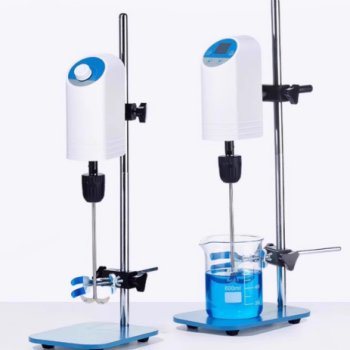
- High Performance Laboratory Stirrers for Diverse Applications
- Custom PTFE Teflon Parts Manufacturer for PTFE Stirring Bar Recovery Rod
People Also Ask
- What role does a magnetic stirrer with heating play in ZnO nanoparticle synthesis? Precision Control for Quality Results
- What role does a constant temperature heating magnetic stirrer play in MFC-HAp synthesis? Achieve Material Homogeneity
- What is the function of a laboratory magnetic stirrer in Ni–Cr–P electrodeposition? Optimize Ion Transport & Coating
- Why is a laboratory magnetic stirrer required for benzoic acid esters? Boost Reaction Speed & Yield with High RPM
- What role does a laboratory magnetic stirrer play in TiO2 and TiO2-Ag sol preparation? Master Chemical Kinetics