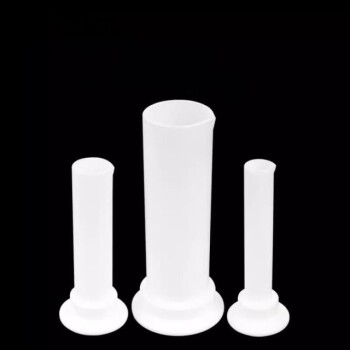
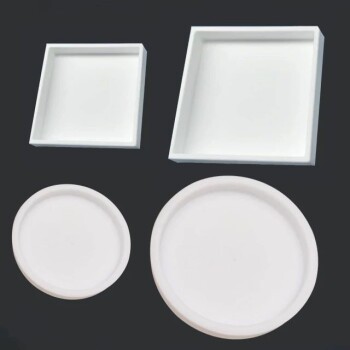
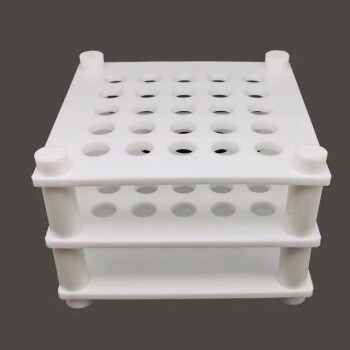
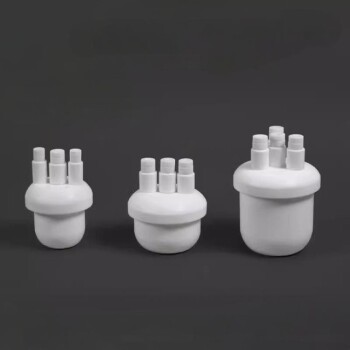
A Teflon-lined high-pressure reactor facilitates the hydrothermal synthesis of MoS2 nanosheets by creating a sealed, subcritical environment where water is heated far beyond its atmospheric boiling point. This closed system generates autogenous pressure, which accelerates reaction kinetics and enables the transformation of molybdenum and sulfur precursors—such as ammonium molybdate and thiourea—into highly ordered, two-dimensional 1T-phase nanosheet arrays that are unattainable under standard conditions.
The core advantage of this reactor is its ability to combine extreme chemical inertness with high-pressure thermal stability, providing the specific energetic environment required to nucleate MoS2 crystals directly onto substrates with precise morphological control.
The Role of Subcritical Water Conditions
Achieving Temperatures Above Boiling Point
By sealing the reaction solution, the reactor allows the liquid to reach temperatures typically between 180°C and 220°C. At these levels, the solvent properties change, significantly increasing the solubility of precursors and the rate of chemical interaction.
Driving Reaction Kinetics via Autogenous Pressure
The pressure generated within the vessel—often referred to as autogenous pressure—is critical for driving the crystallization of MoS2. This pressure promotes the formation of monodisperse nanolayers and ensures the resulting materials achieve a distinct, stable two-dimensional structure.
The Importance of the PTFE Lining
Chemical Inertness and Purity
The Polytetrafluoroethylene (PTFE) or Teflon lining is vital because it is almost entirely non-reactive. This ensures that the high-purity growth of MoS2 is not compromised by metallic ions leaching from the reactor's outer steel shell.
Resistance to Corrosive Precursors
Hydrothermal synthesis often involves acidic environments or sulfur-rich precursors that can be highly corrosive. The Teflon lining protects the structural integrity of the autoclave while preventing metal ion contamination, which is essential for maintaining the accurate stoichiometric ratio of the MoS2.
Morphological Evolution and Phase Control
Promoting Nucleation on Substrates
High-pressure environments facilitate the nucleation of molybdenum sources at oxygen-containing functional groups (like C-O or Ti-OH) on porous substrates. This leads to the formation of strong covalent bonds, preventing the MoS2 nanosheets from detaching or dissolving during subsequent use.
Facilitating the 1T-Phase and 2D Structure
The specific energetic state within the reactor allows for the synthesis of the 1T-phase, a metallic polymorph of MoS2. This phase and its associated ultrathin nanosheet morphology are difficult to stabilize without the controlled, high-energy environment provided by the hydrothermal process.
Understanding the Trade-offs
Thermal and Pressure Limitations
While Teflon is chemically resilient, it has a clear thermal ceiling, typically around 250°C. Exceeding these temperatures can lead to the deformation of the liner, potentially causing leaks or safety hazards as the internal pressure rises exponentially.
Cooling Rates and Structural Integrity
The cooling phase of the reactor is as critical as the heating phase. Rapid cooling can cause internal stresses that lead to the liner cracking or the MoS2 nanosheets delaminating from their growth substrate due to mismatched thermal expansion.
How to Apply This to Your Project
When utilizing a Teflon-lined reactor for MoS2 synthesis, your approach should be dictated by your specific material requirements:
- If your primary focus is Phase Purity (e.g., 1T-phase): Maintain a consistent temperature (e.g., 185°C–200°C) for at least 12 hours to ensure the complete conversion of precursors into the desired metallic phase.
- If your primary focus is Substrate Adhesion: Prioritize the use of substrates with high concentrations of oxygen-containing functional groups to leverage the high-pressure nucleation process.
- If your primary focus is Morphological Uniformity: Ensure the reactor's filling degree (the volume of liquid relative to the liner capacity) is consistent across experiments to maintain repeatable autogenous pressure levels.
By mastering the balance of pressure, temperature, and chemical containment, you can reliably produce high-quality MoS2 nanosheets tailored for advanced electrochemical and catalytic applications.
Summary Table:
| Feature | Benefit for MoS2 Synthesis | Critical Parameter |
|---|---|---|
| PTFE (Teflon) Lining | Prevents metal ion contamination; ensures high chemical purity. | Max Temperature < 250°C |
| Sealed Environment | Creates autogenous pressure and subcritical water conditions. | 180°C – 220°C Range |
| High-Pressure Kinetics | Drives nucleation on substrates and stabilizes the 1T-phase. | Consistent Filling Degree |
| Thermal Stability | Facilitates the transformation of precursors into 2D nanostructures. | Controlled Cooling Rate |
Elevate Your Materials Synthesis with KINTEK Precision
Unlock the full potential of your 2D material research with KINTEK’s industry-leading high-temperature high-pressure reactors and autoclaves. Our precision-engineered Teflon-lined systems are specifically designed to provide the stable autogenous pressure and extreme chemical inertness required for high-purity hydrothermal synthesis of MoS2 nanosheets, catalysts, and advanced nanomaterials.
Beyond reactors, KINTEK offers a comprehensive laboratory portfolio, including:
- Material Processing: Crushing and milling systems, hydraulic presses (pellet, hot, isostatic), and sieving equipment.
- Advanced Furnaces: Muffle, tube, vacuum, CVD, and PECVD systems for precise heat treatment.
- Electrochemical Tools: Electrolytic cells, electrodes, and battery research consumables.
- Lab Essentials: ULT freezers, freeze dryers, and high-purity ceramics or crucibles.
Ready to optimize your lab's performance? Contact our experts today to find the perfect equipment tailored to your specific research requirements and ensure repeatable, world-class results.
References
- Xintong Li, Qi Yang. The Effect of Heat Treatment after Hydrothermal Reaction on the Lithium Storage Performance of a MoS2/Carbon Cloth Composite. DOI: 10.3390/ma16247678
This article is also based on technical information from Kintek Solution Knowledge Base .
Related Products
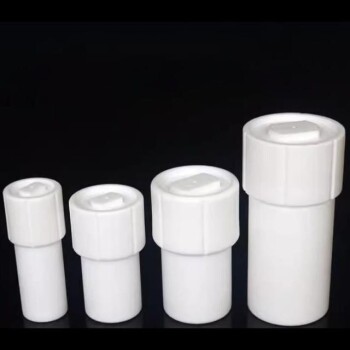
- Custom PTFE Teflon Parts Manufacturer for Reagent Wide Mouth Fine Mouth Sample High Temperature Bottles
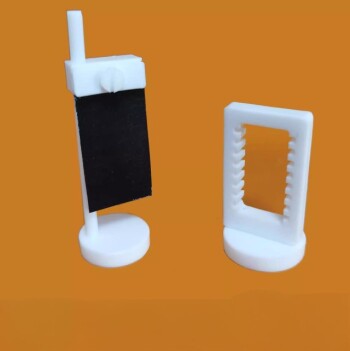
- Custom PTFE Teflon Parts Manufacturer for Hydrothermal Synthesis Reactor Polytetrafluoroethylene Carbon Paper and Carbon Cloth Nano-growth
- Custom PTFE Teflon Parts Manufacturer for Microwave Digestion Tank
- Stainless High Pressure Autoclave Reactor Laboratory Pressure Reactor
- Customizable High Pressure Reactors for Advanced Scientific and Industrial Applications
People Also Ask
- What makes PTFE bottles suitable for static leaching? Ensure Zero-Contamination for Glass Testing
- Why Use PTFE Sample Bottles for Coal Demineralization? Ensure Chemical Stability and Data Integrity
- Why are PTFE containers necessary for selective HF etching of MAX phases? Ensure Safe & Pure MXene Synthesis
- Why use high-quality PTFE containers for CO2 reduction electrolytes? Eliminate silicon contamination and ensure data.
- Why is a PTFE container required for acid leaching of silicon nanosheets? Ensure High Purity and Safety