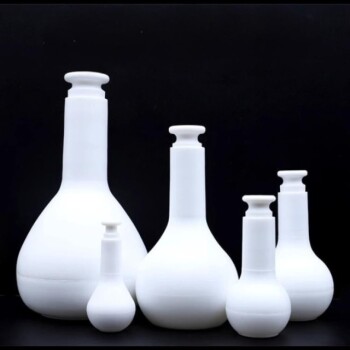
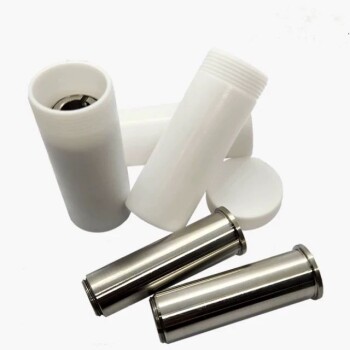
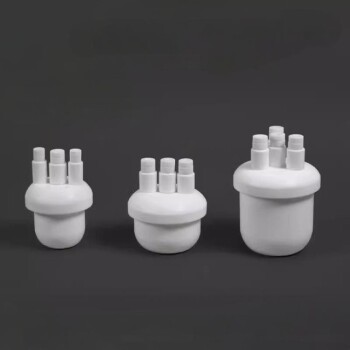
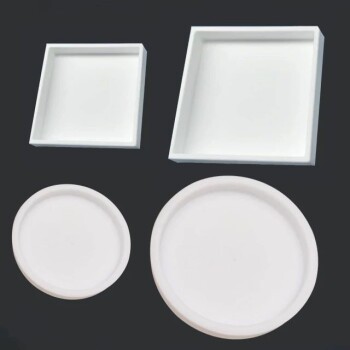
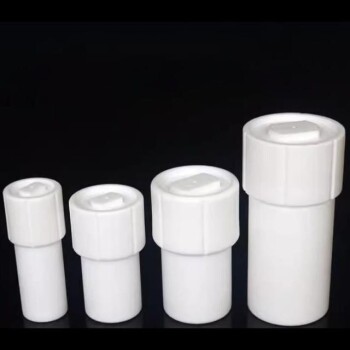
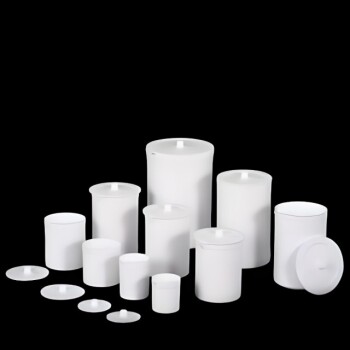
Polytetrafluoroethylene (PTFE) bottles are the industry standard for static leaching experiments primarily due to their extreme chemical inertness and thermal stability. By resisting reaction with alteration solutions, they ensure that the data collected reflects only the dissolution of the glass specimen, without interference from the container itself.
The core value of PTFE lies in its ability to prevent cross-contamination. Because it does not leach impurity ions like silicon or alkali metals, it guarantees that analytical results remain an accurate measure of the glass material's behavior.
Preventing Chemical Interference
Eliminating Ion Release
The primary objective of a static leaching experiment is to measure what dissolves out of a glass specimen.
Common glass components include silicon and alkali metals.
PTFE containers are critical because they do not release these specific impurity ions into the solution. This prevents "false positives" in your data that could arise from using less stable container materials.
Inertness to Alteration Solutions
Glass experiments often involve "alteration solutions"—liquids designed to induce leaching.
PTFE does not react with these solutions. This ensures the chemical composition of the fluid remains constant, acting solely on the glass specimen rather than degrading the vessel walls.
Operational Stability
Temperature Tolerance
Static leaching frequently requires elevated temperatures to accelerate chemical reactions.
PTFE bottles maintain their structural and chemical integrity at temperatures up to 70 °C. This stability allows for consistent testing environments without the risk of the container warping or degrading.
Versatility Across pH Ranges
Leaching environments can vary drastically in acidity or alkalinity.
PTFE remains chemically resistant in corrosive environments with pH levels ranging from 2 to 11. This versatility allows researchers to test glass durability under a wide spectrum of chemical stresses without changing container types.
Operational Boundaries to Consider
Adhering to Tested Limits
While PTFE is highly durable, the specific suitability cited for these experiments is bounded by tested parameters.
Reliability is guaranteed within the pH 2 to 11 range and temperatures up to 70 °C.
The Risk of Deviation
Exceeding these specific thermal or chemical limits could theoretically compromise the "zero-release" environment.
To ensure the absolute accuracy of ion measurements, experiments should remain within these documented operational windows.
Ensuring Experimental Validity
To maximize the accuracy of your static leaching experiments, select your container based on your specific analytical needs.
- If your primary focus is Ion Analysis: Rely on PTFE to eliminate background noise from silicon or alkali metal leaching.
- If your primary focus is Acid/Base Resistance: Ensure your solution falls within the pH 2–11 range to maintain the container's chemical inertness.
- If your primary focus is Thermal Testing: Verify that your experimental design does not exceed the validated 70 °C threshold for these containers.
Using PTFE ensures that the degradation you measure is coming from the glass, and nothing else.
Summary Table:
| Feature | Performance Specification | Benefit for Leaching Experiments |
|---|---|---|
| Chemical Inertness | High resistance to alteration solutions | Prevents container reaction with leaching fluids |
| Ion Release | Zero silicon or alkali metal leaching | Eliminates background noise and false positives |
| Temperature Range | Stable up to 70 °C | Allows for accelerated testing at elevated heat |
| pH Versatility | Resistant from pH 2 to 11 | Suitable for diverse corrosive environments |
| Material Integrity | Non-reactive PTFE polymer | Ensures analytical data reflects only specimen behavior |
Elevate Your Research Precision with KINTEK
Don't let container contamination compromise your analytical results. KINTEK specializes in high-performance laboratory equipment and consumables designed for the most demanding research environments. From our chemically inert PTFE products and ceramics to advanced high-temperature furnaces, autoclaves, and hydraulic presses, we provide the tools you need for absolute accuracy.
Whether you are conducting glass durability studies or advanced battery research, KINTEK offers a comprehensive range of solutions including:
- Consumables: High-purity PTFE bottles, crucibles, and ceramic vessels.
- Thermal Processing: Muffle, tube, and vacuum furnaces for precise heat treatment.
- Sample Preparation: Crushing, milling, and pellet presses for consistent results.
Ready to optimize your experimental setup? Contact our laboratory specialists today to find the perfect equipment for your specific application requirements.
References
- Loryelle Sessegolo, Anne Chabas. Alteration rate of medieval potash-lime silicate glass as a function of pH and temperature: A low pH-dependent dissolution. DOI: 10.1016/j.chemgeo.2020.119704
This article is also based on technical information from Kintek Solution Knowledge Base .
Related Products
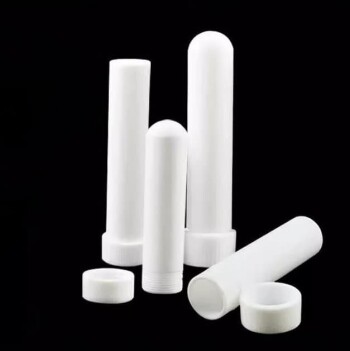
- Custom PTFE Teflon Parts Manufacturer for Reagent Wide Mouth Fine Mouth Sample High Temperature Bottles
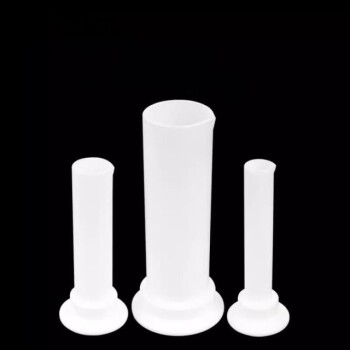
- Custom PTFE Teflon Parts Manufacturer for F4 PTFE Volumetric Bottle
- Custom PTFE Teflon Parts Manufacturer F4 Conical Flask Triangular Flask 50 100 250ml
- Custom PTFE Teflon Parts Manufacturer for PTFE Bottle Oil Fume Sampling Tube
- Custom PTFE Teflon Parts Manufacturer for Three-Necked Round Bottom Flask
People Also Ask
- Why Use PTFE Sample Bottles for Coal Demineralization? Ensure Chemical Stability and Data Integrity
- Why are PTFE containers necessary for selective HF etching of MAX phases? Ensure Safe & Pure MXene Synthesis
- Why use high-quality PTFE containers for CO2 reduction electrolytes? Eliminate silicon contamination and ensure data.
- Why is a PTFE container required for acid leaching of silicon nanosheets? Ensure High Purity and Safety
- Why are polytetrafluoroethylene (PTFE) containers essential for assessing the corrosion resistance of glassified waste?