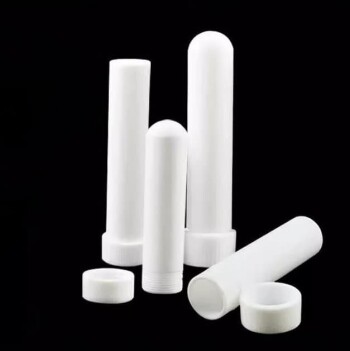
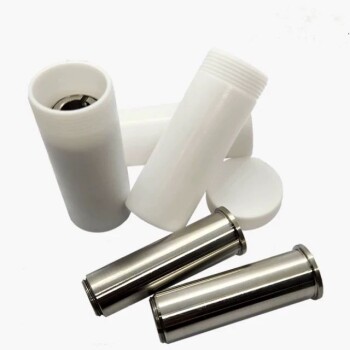
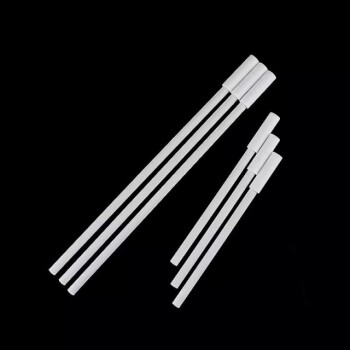
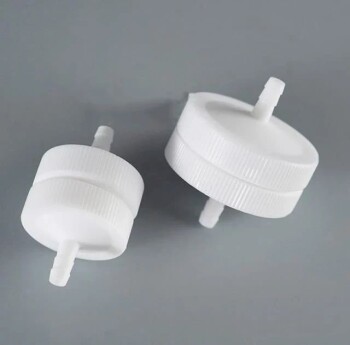
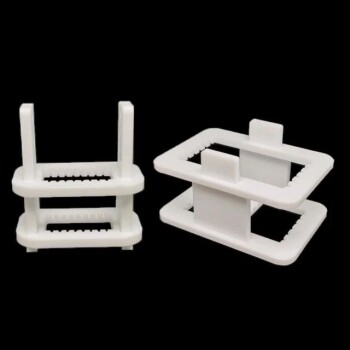
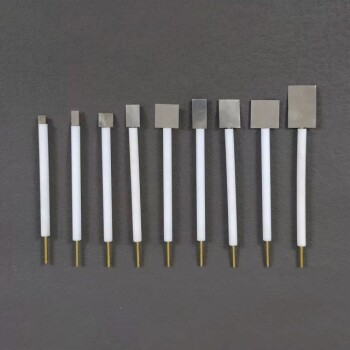
In the construction of Carbon Paste Electrodes (CPE), Polytetrafluoroethylene (PTFE) products serve as the critical structural and insulating housing. Specifically, PTFE tubing acts as a protective sleeve that holds the carbon paste, defining the electrode's geometry and shielding the internal components from the external environment.
Core Insight: PTFE is not merely a container; it is an active component in ensuring data integrity. By providing total electrical insulation and exceptional chemical resistance, PTFE tubing ensures that all electrochemical reactions are strictly confined to the electrode tip, preventing environmental interference from compromising sensor accuracy.
The Functional Role of PTFE
The use of PTFE addresses the specific challenges of electrochemical sensing in complex environments. Its role can be broken down into three critical engineering functions.
Electrical Insulation and Signal Confinement
The primary function of the PTFE tubing is to act as a dielectric (insulating) barrier. By encasing the column of carbon paste, the tubing ensures that electrical current cannot pass through the sides of the electrode.
This strictly confines the electrochemical reaction to the exposed carbon paste surface at the electrode tip. Controlling the active surface area is essential for calculating accurate current densities and obtaining reproducible experimental results.
Chemical Stability in Complex Media
Carbon Paste Electrodes are frequently used to analyze water pollutants, which may contain corrosive or reactive chemical species. PTFE is chosen for its high chemical inertness.
It resists degradation when exposed to aggressive acids, bases, or organic solvents often found in wastewater or industrial samples. This stability ensures the electrode housing retains its structural integrity over repeated uses.
Prevention of Background Interference
To maintain high sensor accuracy, the electrode housing must be "invisible" to the electrochemical measurement.
Because PTFE is corrosion-resistant, it prevents the housing material itself from reacting with water pollutants. This eliminates the risk of generating competing electrochemical signals (noise) that would otherwise obscure the data from the target analyte.
Critical Considerations for Accuracy
While PTFE provides robust protection, understanding its limitations regarding construction is vital for reliable performance.
The Necessity of a Perfect Seal
The benefits of PTFE—specifically confining the reaction to the tip—rely entirely on the interface between the tubing and the paste.
If the carbon paste is not packed tightly against the inner walls of the PTFE tubing, the definition of the surface area is lost. The "protective sleeve" function is only effective when the paste density is uniform, preventing the sample solution from bypassing the active surface.
Making the Right Choice for Your Project
When designing or selecting electrochemical sensors, the housing material dictates the longevity and accuracy of the device.
- If your primary focus is Environmental Analysis: Prioritize PTFE tubing to prevent corrosion from complex water pollutants and ensure the housing does not contaminate the sample.
- If your primary focus is High-Precision Voltammetry: Rely on PTFE’s electrical insulation properties to strictly define the electrode surface area, ensuring that every signal peak is mathematically relevant.
Ultimately, PTFE tubing serves as the guarantor of sensor fidelity, isolating the target reaction from the chaos of the surrounding chemical environment.
Summary Table:
| Feature of PTFE | Functional Benefit in CPE Construction |
|---|---|
| Electrical Insulation | Confines reactions to the electrode tip for accurate current density. |
| Chemical Inertness | Resists degradation from corrosive acids, bases, and organic solvents. |
| Signal Confinement | Prevents background noise and interference from the housing material. |
| Structural Housing | Defines the electrode geometry and protects internal components. |
Elevate Your Electrochemical Research with KINTEK
Precision in sensing begins with high-quality components. At KINTEK, we specialize in providing the high-performance laboratory equipment and consumables essential for your breakthroughs. Whether you are developing Carbon Paste Electrodes or conducting advanced environmental analysis, our premium PTFE products, electrolytic cells, and electrodes provide the chemical resistance and electrical insulation you need.
From high-temperature furnaces and vacuum systems to specialized battery research tools and PTFE consumables, KINTEK is your partner in achieving reliable, reproducible results. Don't let material limitations compromise your data integrity.
Ready to optimize your lab setup? Contact us today to explore our comprehensive range of solutions!
References
- Ricky Lalawmpuia, Diwakar Tiwari. Metal organic framework (MOF): Synthesis and fabrication for the application of electrochemical sensing. DOI: 10.4491/eer.2023.636
This article is also based on technical information from Kintek Solution Knowledge Base .
Related Products
- Custom PTFE Teflon Parts Manufacturer for Centrifuge Tubes
- Custom PTFE Teflon Parts Manufacturer for PTFE Bottle Oil Fume Sampling Tube
- Customizable PTFE Wafer Carriers for Semiconductor and Lab Applications
- Conductive Carbon Cloth Carbon Paper Carbon Felt for Electrodes and Batteries
- Versatile PTFE Solutions for Semiconductor and Medical Wafer Processing
People Also Ask
- Why is slender PTFE tubing necessary for flow control in multi-channel catalyst aging? Ensure Equal Gas Distribution
- Is PTFE corrosion resistant? Discover the Ultimate Chemical Resistance for Your Lab
- What are the specific applications of PTFE in micro-batch slug flow systems? Enhance Your Microfluidic Reaction Purity
- How is PTFE utilized for insulation in Alloy 22 corrosion setups? Ensure Signal Purity & Accuracy
- What is the significance of using PTFE gas tubing for HCl? Ensure Pure, Corrosion-Free Salt Formation