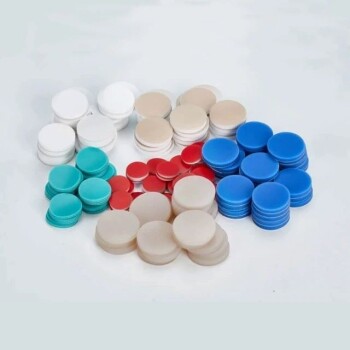
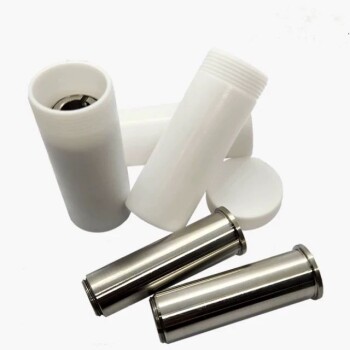
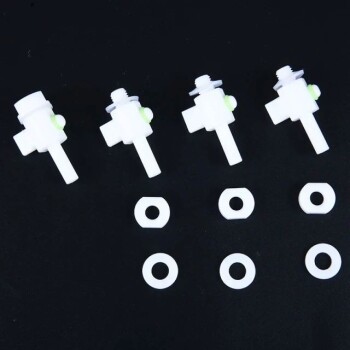
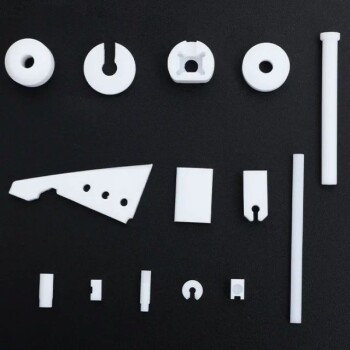
The primary purpose of using PTFE gaskets in fuel cell test fixtures is to establish a reliable, high-purity seal that prevents both the external escape of reactant gases and internal leakage across the membrane. By leveraging the material's chemical stability and elastic properties, these gaskets ensure the test environment remains isolated and controlled under pneumatic fastening pressures.
High-purity PTFE gaskets are the first line of defense against data contamination in fuel cell testing. They prevent gas cross-over to ensure that measurements of Open Circuit Voltage (OCV) and polarization curves reflect the true performance of the cell, rather than mechanical failures.
Ensuring Test Integrity and Safety
The use of Polytetrafluoroethylene (PTFE) goes beyond simple containment; it is a critical component for validating fuel cell performance.
Prevention of Internal Leaks
The most critical function of these gaskets is preventing cross-membrane leakage.
If the seal fails internally, hydrogen and oxidant gases can mix. This "short-circuiting" of the gas flow alters the chemical reaction, rendering test data useless.
Elimination of External Leaks
PTFE seals are responsible for containing hydrogen and oxidants within the fixture.
Preventing external leaks is vital not only for maintaining steady pressure but also for ensuring the safety of the laboratory environment given the flammable nature of hydrogen.
Guaranteeing Measurement Accuracy
Data validity is directly tied to sealing integrity.
Key performance metrics, specifically Polarization curves and Open Circuit Voltage (OCV), rely on the distinct separation of gases. Without a perfect seal, OCV readings will be artificially low, masking the true potential of the fuel cell stack.
Material Properties and Operating Conditions
PTFE is selected for this application because its physical characteristics align with the specific demands of fuel cell hardware.
Chemical Stability
High-purity PTFE offers excellent chemical stability.
This ensures that the gasket material does not degrade or react with the reactants (hydrogen and oxygen/air) or the byproducts (water/heat) generated during operation.
Elasticity Under Pressure
The material is chosen for its elastic sealing properties.
To function correctly, these gaskets require a specific pneumatic fastening pressure range of 2 to 5 bar. Within this range, the PTFE compresses sufficiently to fill microscopic imperfections in the mating surfaces without sustaining damage.
Operational Constraints and Trade-offs
While PTFE is highly effective, its performance is strictly bound by the mechanical parameters of the test fixture.
Sensitivity to Fastening Pressure
The effectiveness of the seal is contingent on maintaining the specified pressure window (2 to 5 bar).
If the pneumatic pressure drops below 2 bar, the gasket may not deform enough to create an airtight seal, leading to leaks. Conversely, pressures exceeding 5 bar could potentially over-compress or distort the material, compromising its elastic recovery.
Making the Right Choice for Your Testing
When designing or assembling fuel cell test fixtures, the application of PTFE gaskets should be driven by your specific data requirements.
- If your primary focus is Data Accuracy: Ensure your pneumatic fastening system can consistently maintain 2 to 5 bar of pressure to guarantee valid OCV and polarization readings.
- If your primary focus is Durability: Prioritize high-purity PTFE to prevent chemical degradation over repeated test cycles or long-term exposure to reactants.
By maintaining strict control over fastening pressures and material purity, you ensure that your test results measure the fuel cell's performance, not the fixture's limitations.
Summary Table:
| Feature | Function in Fuel Cell Testing | Benefit |
|---|---|---|
| Chemical Stability | Resists reaction with H2, O2, and water | Long-term durability and high purity |
| Elastic Properties | Compresses under 2 to 5 bar pressure | Creates airtight seals on mating surfaces |
| Leak Prevention | Blocks internal cross-over and external escape | Protects data validity and lab safety |
| Data Accuracy | Maintains gas separation | Ensures reliable OCV and polarization curves |
Elevate Your Fuel Cell Research with KINTEK Precision Consumables
Don't let mechanical failures compromise your research data. KINTEK specializes in high-performance laboratory solutions, providing the high-purity PTFE products and consumables essential for maintaining leak-free environments in fuel cell test fixtures.
Our extensive portfolio—from crushing and milling systems to high-temperature high-pressure reactors and battery research tools—is designed to meet the rigorous demands of modern material science. Whether you are conducting polarization studies or long-term durability tests, KINTEK offers the reliability your lab deserves.
Ready to optimize your test integrity? Contact our technical experts today to find the perfect sealing solutions and laboratory equipment for your specific applications.
References
- Süleyman Çelebi. Carbon nanofiber electrodes for PEM fuel cells. DOI: 10.6100/ir734616
This article is also based on technical information from Kintek Solution Knowledge Base .
Related Products
- Custom PTFE Teflon Parts Manufacturer for Gaskets and More
- Custom PTFE Teflon Parts Manufacturer for Hollow Cleaning Basket and Rack Carrier
- Custom PTFE Teflon Parts Manufacturer for PTFE Bottle Oil Fume Sampling Tube
- Custom PTFE Teflon Parts Manufacturer for Air Valve Applications
- Custom PTFE Teflon Parts Manufacturer for Non-Standard Insulator Customization
People Also Ask
- What technical advantages do PTFE seals provide in high-pressure CO2? Optimize Your Seal Integrity
- What are the critical functions of Polytetrafluoroethylene (PTFE) gaskets within a glow discharge unit? Enhance Precision
- How are PTFE gaskets utilized for POEGMA electrolyte conductivity? Ensure Precision in Electrochemical Measurements
- What protective roles do Sealing Gaskets and Support Grids play in oil-water separation? Ensure High-Pressure Integrity
- What is the function of Polytetrafluoroethylene (PTFE) sleeves and gaskets? Ensure Precise Corrosion Testing Accuracy