Electrolytic cell design is the primary factor in controlling product selectivity and measurement accuracy during CO2 reduction. It directly governs the ion conduction path and gas diffusion efficiency while physically isolating the cathode and anode. By preventing product cross-reactions and the re-oxidation of reduction products at the counter electrode, specialized cell architectures ensure that the measured Faradaic efficiency reflects the catalyst's true performance rather than systemic losses.
An optimized electrolytic cell design—specifically a multi-chamber configuration utilizing an ion exchange membrane—is essential for maximizing Faradaic efficiency. It achieves this by suppressing the competing hydrogen evolution reaction and preventing the re-oxidation of cathodic products, such as carbon monoxide or ethanol, at the anode.
The Impact of Compartmentalization on Product Integrity
Preventing Anodic Re-oxidation
In a single-chamber cell, reduction products like ethanol or carbon monoxide can easily diffuse to the anode and be re-oxidized. An H-type cell uses an ion exchange membrane to physically separate the cathode and anode chambers, ensuring these products remain in the catholyte for accurate quantification.
Eliminating Oxygen Interference
Oxygen generated at the anode during the water oxidation reaction can migrate to the cathode if the chambers are not properly separated. This oxygen can then be reduced at the cathode, competing with $CO_2$ for electrons and significantly lowering the Faradaic efficiency of the target products.
Ensuring Chemical Isolation
The use of a proton exchange membrane or an anion exchange membrane provides a barrier that prevents cross-interference between reactants and products. This isolation is critical for the precise analysis of multi-carbon ($C_2+$) product selectivity and ensuring the stability of the electrochemical environment.
Optimizing Transport and Reaction Kinetics
Proton and Electron Delivery
An efficient cell structure optimizes the transport of protons and electrons to the catalyst surface. Proper design ensures the catalyst is fully wetted by the electrolyte, which facilitates the necessary charge transfer to increase the production of target molecules like formic acid or ethanol.
Carbon Dioxide Saturation
The design must include precise gas inlets and outlets to maintain carbon dioxide saturation within the electrolyte. Without a consistent supply of $CO_2$ to the cathode surface, the system will naturally favor the hydrogen evolution reaction (HER) as a side reaction, wasting current.
Uniform Current Distribution
Proper cell geometry ensures a uniform current distribution across the electrode surface. This prevents localized potential drops and "shielding effects," allowing the catalyst to work at its maximum intrinsic activity and ensuring that measurements like the Tafel slope are objective.
Understanding the Trade-offs and Pitfalls
Resistance and Ohmic Loss
While membranes are necessary for product separation, they introduce internal resistance to the system. This can lead to significant Ohmic losses (iR drop), which may skew the perceived overpotential required for the reaction if not properly compensated during testing.
Electrolyte Crossover
No membrane is perfectly selective; over time, ions or even small neutral product molecules may cross the membrane. This "crossover" can lead to a gradual loss of product concentration in the catholyte, potentially resulting in an underestimation of Faradaic efficiency during long-term stability tests.
Pressure Imbalances
Highly airtight cells can suffer from pressure imbalances between the gas and liquid phases. If gas diffusion is not carefully managed, bubbles can accumulate on the catalyst surface, blocking active sites and causing fluctuations in the current density.
Making the Right Choice for Your Goal
To achieve reliable results in electrochemical $CO_2$ reduction, the cell design must align with your specific analytical priorities.
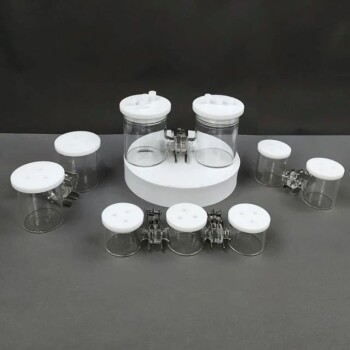
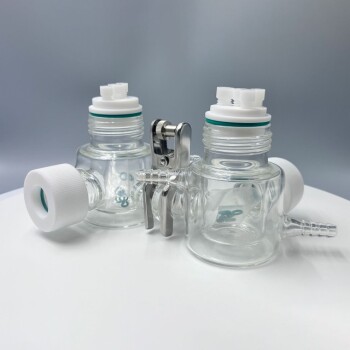
- If your primary focus is high-purity product analysis: Utilize a high-airtightness H-type electrolytic cell with a dedicated ion exchange membrane to prevent any product re-oxidation at the anode.
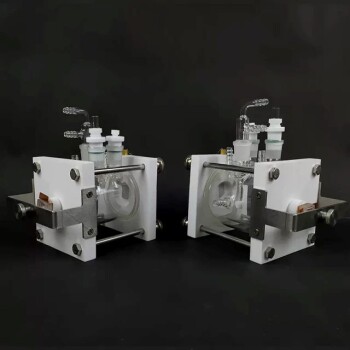
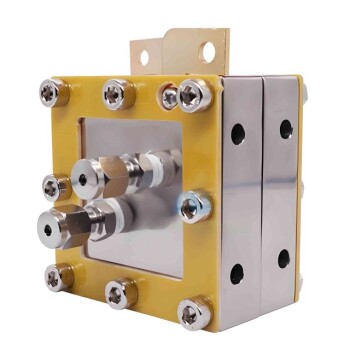
- If your primary focus is industrial scalability: Explore flow cell designs that optimize gas diffusion and minimize the distance between electrodes to reduce Ohmic losses and handle higher current densities.
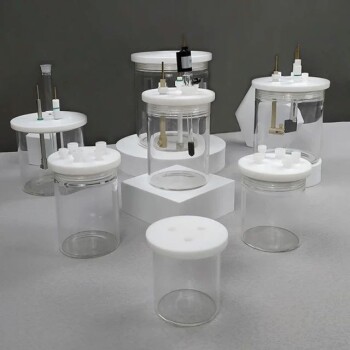
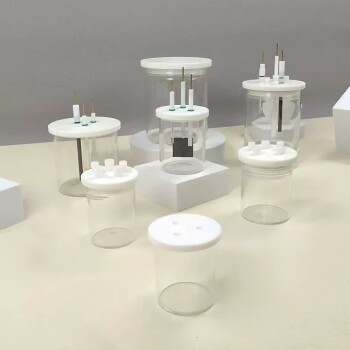
- If your primary focus is catalyst screening: Use a standardized three-electrode glass cell to ensure repeatable potential measurements and clear observation of the reaction environment.
A well-engineered electrolytic cell transforms a simple chemical container into a precise analytical tool, ensuring that every electron delivered is accurately accounted for in the final product yield.
Summary Table:
| Design Feature | Impact on Faradaic Efficiency (FE) | Key Benefit |
|---|---|---|
| Compartmentalization (H-Type) | Prevents reduction products from reaching the anode | Ensures accurate quantification by stopping re-oxidation |
| Ion Exchange Membrane | Blocks anodic oxygen from migrating to the cathode | Suppresses the competing Hydrogen Evolution Reaction (HER) |
| Gas Inlet Precision | Maintains constant CO2 saturation at the catalyst surface | Maximizes target product selectivity over side reactions |
| Cell Geometry | Ensures uniform current and potential distribution | Provides objective kinetic data and prevents localized losses |
Achieve Unmatched Precision in Your Electrochemical Research
Maximize your CO2 reduction efficiency and ensure data integrity with KINTEK’s precision-engineered electrolytic cells and electrodes. Our specialized designs are built to eliminate systemic errors, providing you with the true performance metrics of your catalysts.
As a leader in laboratory equipment, KINTEK offers a comprehensive range of tools to support your entire workflow, including:
- High-temperature high-pressure reactors and autoclaves for advanced material synthesis.
- Professional crushing, milling, and sieving systems for catalyst preparation.
- Advanced cooling solutions (ULT freezers, freeze dryers) and shakers.
- Essential consumables like PTFE products, ceramics, and crucibles.
Whether you are screening catalysts or scaling up to industrial flow cells, our expert team is ready to provide the reliable equipment and technical support you need to succeed.
Ready to elevate your lab's performance? Contact us today to find the perfect solution for your research!
References
- V. S. K. Yadav, Anand Kumar. Understanding the progress and challenges in the fields of thermo-catalysis and electro-catalysis for the CO2 conversion to fuels. DOI: 10.1007/s42247-023-00606-9
This article is also based on technical information from Kintek Solution Knowledge Base .
Related Products
- PTFE Electrolytic Cell Electrochemical Cell Corrosion-Resistant Sealed and Non-Sealed
- Super Sealed Electrolytic Electrochemical Cell
- Electrolytic Electrochemical Cell with Five-Port
- H Type Electrolytic Cell Triple Electrochemical Cell
- Electrolytic Electrochemical Cell Gas Diffusion Liquid Flow Reaction Cell
People Also Ask
- What is the necessity of selecting a PTFE electrolytic cell? Ensure Precise Graphene Corrosion Testing Accuracy
- What is the proper method for cleaning the surface of an all-PTFE electrolytic cell? Ensure Accurate Results with a Pristine Surface
- How should an all-PTFE electrolytic cell be stored after use? Expert Maintenance Tips for Long-Lasting Performance
- What is the proper cleaning method for an all-PTFE electrolytic cell? Essential Tips for Surface Integrity
- What are the standard opening specifications for all-PTFE electrolytic cells? A Guide to Sealed vs. Non-Sealed Ports