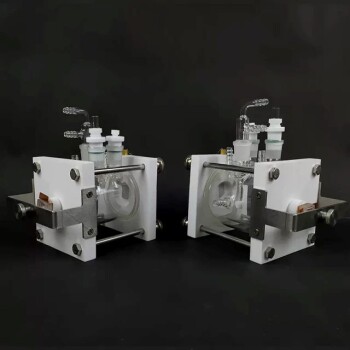
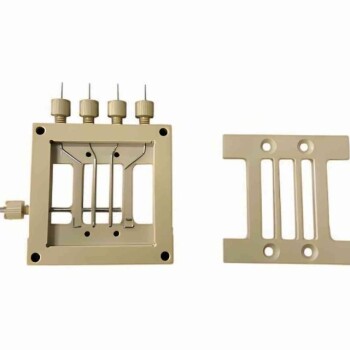
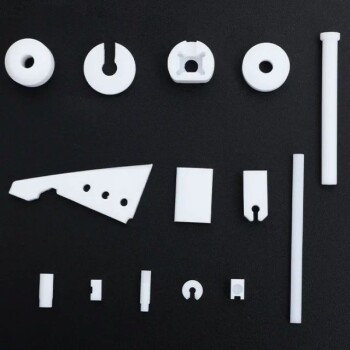
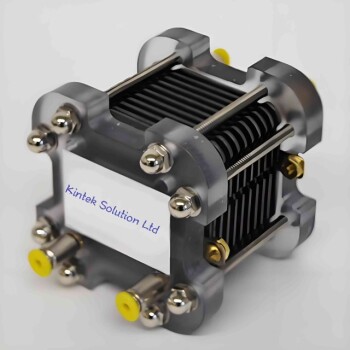
The necessity of selecting a Polytetrafluoroethylene (PTFE) electrolytic cell lies in its superior chemical stability and electrical insulation properties. Using PTFE ensures that the testing environment remains free of impurity ions and electrical interference, allowing for precise evaluation of the graphene coating's corrosion resistance without data distortion from the container itself.
Core Insight: In high-precision electrochemical testing, the container is an active variable. Using PTFE eliminates the risk of the cell participating in the reaction, ensuring that measured polarization curves and impedance data reflect only the protective performance of the graphene coating.
Ensuring Chemical Integrity
To accurately test graphene-coated copper foils, the chemical environment must remain static and pure. PTFE is uniquely suited to maintain this baseline.
Resistance to Corrosive Media
Electrochemical tests frequently utilize aggressive electrolytes, such as high-salinity 3.5% NaCl solutions, to simulate harsh environments.
PTFE provides a robust barrier against these media. Its chemical inertness allows it to withstand long-term exposure to these solutions without degrading or leaching material into the test chamber.
Elimination of Impurity Ions
A critical failure mode in corrosion testing is the introduction of foreign elements. If the cell material reacts with the electrolyte, it introduces impurity ions.
These impurities can alter the conductivity of the solution and skew the electrochemical behavior of the copper foil. PTFE prevents this contamination, ensuring the purity of the testing environment.
Electrical Isolation and Data Accuracy
Beyond chemical resistance, the physical properties of the cell directly impact the validity of the electrical measurements taken during the test.
Preventing Electrical Interference
Electrochemical testing relies on measuring minute currents and voltages. PTFE is an excellent electrical insulator.
This insulation prevents the cell walls from acting as a conductive path or a secondary electrode. This ensures that the current flows exclusively between the working electrode (the graphene-coated foil) and the counter electrode.
Validating Coating Performance
The ultimate goal is to generate accurate polarization curves and electrochemical impedance spectroscopy (EIS) data.
By using a PTFE cell, you eliminate external variables. This guarantees that the resulting data provides a true reflection of the graphene coating's protective capabilities, rather than artifacts caused by equipment interference.
Common Pitfalls and Trade-offs
While PTFE is the standard for accuracy, understanding the risks of not using it helps clarify its value.
The Risk of Crevice Corrosion
Using inferior materials or improper cell designs can lead to crevice corrosion—localized corrosion in gaps between the sample and the holder.
According to supplementary data, PTFE components (such as covers or sample holders) help seal the environment and isolate the sample. This reduces the interference of crevice corrosion, which can otherwise generate false positives in corrosion rate calculations.
Visibility vs. Stability
A trade-off in cell design is often between visibility (glass) and inertness (PTFE).
While glass allows you to see the electrolyte, standard glass may not offer the same level of long-term resistance to specific aggressive chemistries or high temperatures. A common hybrid approach involves using a glass cell with a PTFE cover to secure electrodes and gas tubes, balancing visibility with the chemical stability required for the critical connection points.
Making the Right Choice for Your Experiment
Selecting the correct cell material is a decision dictated by your data requirements.
- If your primary focus is Data Purity: Choose PTFE to ensure that absolutely no impurity ions from the container affect your polarization and impedance readings.
- If your primary focus is Long-Term Durability: Rely on PTFE to withstand extended exposure to 3.5% NaCl or other high-salinity solutions without degradation.
Ultimately, the use of PTFE is not just a preference but a technical requirement to isolate the graphene coating as the sole variable in your corrosion study.
Summary Table:
| Feature | PTFE Electrolytic Cell | Standard Glass/Alternative Cells |
|---|---|---|
| Chemical Stability | Extremely High; inert to aggressive electrolytes | Variable; risk of leaching or ion contamination |
| Electrical Insulation | Superior; prevents stray current interference | Moderate; may require additional isolation |
| Contamination Risk | Zero impurity ion introduction | Risk of material degradation in harsh media |
| Application Focus | High-precision EIS and Polarization data | General purpose or visual monitoring |
| Durability | High resistance to corrosion & impact | Fragile and susceptible to specific chemical attack |
Elevate Your Electrochemical Research with KINTEK
Maximize the precision of your corrosion studies and material characterization with KINTEK’s premium PTFE electrolytic cells and high-performance laboratory equipment. Whether you are testing graphene coatings or developing next-generation batteries, our specialized solutions ensure your data is never compromised by impurity ions or electrical interference.
Our comprehensive portfolio includes:
- Electrochemical Excellence: High-purity electrolytic cells, electrodes, and battery research tools.
- Thermal Processing: Muffle, vacuum, and CVD furnaces for advanced material synthesis.
- Sample Preparation: Precision crushing, milling, and hydraulic pellet presses.
- Fluid Management: Durable PTFE consumables, high-pressure reactors, and cooling solutions.
Ready to eliminate variables and achieve superior data integrity? Contact KINTEK today for expert guidance and tailored equipment solutions!
References
- Xiaohang Zheng, Wei Cai. In Situ Grown Vertically Oriented Graphene Coating on Copper by Plasma-Enhanced CVD to Form Superhydrophobic Surface and Effectively Protect Corrosion. DOI: 10.3390/nano12183202
This article is also based on technical information from Kintek Solution Knowledge Base .
Related Products
- PTFE Electrolytic Cell Electrochemical Cell Corrosion-Resistant Sealed and Non-Sealed
- Thin-Layer Spectral Electrolysis Electrochemical Cell
- Double Layer Five-Port Water Bath Electrolytic Electrochemical Cell
- Electrolytic Electrochemical Cell with Five-Port
- Flat Corrosion Electrolytic Electrochemical Cell
People Also Ask
- What is the proper method for cleaning the surface of an all-PTFE electrolytic cell? Ensure Accurate Results with a Pristine Surface
- How should an all-PTFE electrolytic cell be stored after use? Expert Maintenance Tips for Long-Lasting Performance
- What is the proper cleaning method for an all-PTFE electrolytic cell? Essential Tips for Surface Integrity
- What are the standard opening specifications for all-PTFE electrolytic cells? A Guide to Sealed vs. Non-Sealed Ports
- What is the correct shutdown and disassembly procedure after an experiment? Ensure Safety and Protect Your Equipment