The selection of grinding media is a critical variable that dictates reaction pathways through two distinct mechanisms: physical energy transfer and chemical interaction. Choosing between materials like stainless steel and zirconia changes not only the impact energy delivered but can also alter the final crystal structure or actively catalyze specific chemical transformations.
Core Takeaway Grinding media functions as more than a passive tool; its density drives the kinetic energy available for overcoming activation barriers, while its chemical composition can actively participate in the reaction mechanism. Inappropriate selection can lead to unintended polymorphs, contamination, or insufficient energy for the desired transformation.
The Physics of Impact Energy
Density Determines Impact
The physical impact energy generated during milling is directly proportional to the density of the grinding media. Heavier materials deliver more kinetic energy per collision.
High-density media, such as stainless steel or Tungsten Carbide, are essential for reactions requiring significant energy input. This physical force is often the prerequisite for breaking chemical bonds or inducing phase changes.
Matching Hardness to Activation Energy
The hardness of the media correlates with the intensity of the processing environment.
For chemical reactions with high activation energy, you require high-hardness materials like Tungsten Carbide to generate sufficiently intense impact energy. Conversely, low-hardness materials like polytetrafluoroethylene (PTFE) generate lower impact energy, making them suitable for mild transformations.
Chemical Influence and Reaction Pathways
Altering Crystal Structures
Beyond simple energy transfer, the material type can dictate the structural outcome of the product.
In the polymorphic transformation of yttrium oxides, the choice of media is decisive. Using high-hardness zirconia grinding balls versus stainless steel balls can result in entirely different crystal structures. This proves that the media influences the mechanism of phase transition, not just the rate.
The "Mechanical Catalyst" Effect
Certain metallic grinding media can act as active reagents rather than inert tools.
Copper media, for example, can function as a mechanical catalyst. As the surface wears down during the milling process, it continuously exposes high-activity sites. These sites can promote specific transformations, such as coupling reactions, which would not occur with inert media.
Understanding the Trade-offs
The Reality of Media Wear
The "catalytic" effect described above is a double-edged sword. While copper wear promotes specific reactions, wear in other contexts introduces metallic impurities.
If maintaining high purity is critical, metallic media may be unsuitable due to this contamination.
Balancing Energy and Sensitivity
High-energy impact is not always beneficial. Intense processing can degrade heat-sensitive compounds.
Using softer materials like PTFE is ideal for energy-sensitive reactants. This approach prevents the introduction of metallic impurities and avoids the thermal degradation associated with high-impact collisions.
Making the Right Choice for Your Goal
Selecting the correct media requires aligning the material's properties with your reaction's specific needs.
- If your primary focus is High Activation Energy: Select high-density, high-hardness materials like Tungsten Carbide to generate the intense impact required to drive the reaction.
- If your primary focus is Chemical Specificity: Investigate reactive media like copper that can act as mechanical catalysts to promote specific coupling reactions or phase changes.
- If your primary focus is Purity and Sensitivity: Choose low-hardness materials like PTFE to minimize heat generation and prevent metallic contamination in the final product.
Ultimately, you must view your grinding media not as simple hardware, but as an active participant in the chemical equation.
Summary Table:
| Media Material | Density/Hardness | Primary Influence | Best Used For |
|---|---|---|---|
| Tungsten Carbide | High / Very High | Maximum kinetic energy | Reactions with high activation barriers |
| Stainless Steel | High / High | Strong impact energy | General-purpose high-energy milling |
| Zirconia (ZrO2) | Moderate / High | Structural specificity | Controlling polymorphs and phase transitions |
| Copper | Moderate | Mechanical catalysis | Promoting coupling reactions via active sites |
| PTFE | Low / Low | Gentle processing | Heat-sensitive compounds and purity focus |
Elevate Your Material Research with KINTEK Precision Solutions
Choosing the right grinding media is more than a technicality—it’s the difference between a successful transformation and a contaminated sample. At KINTEK, we specialize in providing high-performance laboratory equipment tailored for the most demanding mechanochemical and material science applications.
From high-density Tungsten Carbide and Zirconia milling media to our robust crushing and milling systems, we ensure your lab has the tools to achieve precise energy transfer and chemical purity. Beyond milling, explore our comprehensive range of high-temperature furnaces, hydraulic presses, and high-pressure reactors designed for advanced research and industrial excellence.
Ready to optimize your reaction outcomes? Contact our technical experts today to find the perfect media and equipment match for your specific research goals!
References
- Adam A.L. Michalchuk, Vladimir V. Boldyrev. Tribochemistry, Mechanical Alloying, Mechanochemistry: What is in a Name?. DOI: 10.3389/fchem.2021.685789
This article is also based on technical information from Kintek Solution Knowledge Base .
Related Products
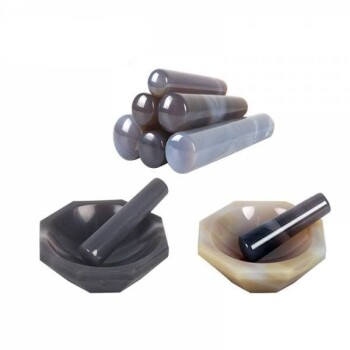
- Nature Agate Mortar and Pestle for Grinding and Mixing
- Laboratory High Throughput Tissue Grinding Mill Grinder
- Three-dimensional electromagnetic sieving instrument
- Vibrating Disc Mill Small Laboratory Grinding Machine
- Laboratory Disc Cup Vibratory Mill for Sample Grinding
People Also Ask
- Why are agate mortars and pestles used for grinding iron oxide? Ensure Sample Purity for XRD Analysis
- What is the function of an agate mortar and pestle? Ensure Purity in Halide Solid-State Electrolyte Synthesis
- What is the primary function of an agate mortar and pestle? Optimize VO2+ CaZn2(PO4)2 Nanopowder Pre-Treatment
- Why is an agate mortar and pestle required for grinding Zr3(Al1-xSix)C2? Ensure Maximum Sample Purity
- Why is an agate mortar and pestle preferred for grinding MAX phase? Ensure Sample Purity & Zero Contamination