Ultrasonic homogenization fundamentally alters the synthesis process of coal fly ash-derived zeolites by delivering superior energy transfer compared to traditional magnetic stirring. This method results in materials with significantly smaller particle sizes, a higher proportion of micropores, and a drastic increase in specific surface area.
Core Takeaway While magnetic stirring provides basic mixing, ultrasonic homogenization utilizes the cavitation effect to accelerate the release of aluminosilicate components. This creates a more refined microstructure, directly translating to superior adsorption capacity and catalytic performance.
The Mechanism: Cavitation vs. Mechanical Agitation
To understand the difference in material properties, you must first understand the difference in energy delivery.
The Power of the Cavitation Effect
Ultrasonic equipment functions by generating high-frequency sound waves in the liquid mixture.
This creates microscopic bubbles that grow and violently collapse, a phenomenon known as cavitation.
Superior Dispersion Capabilities
The energy released by cavitation impacts the coal fly ash at a microscopic level.
Unlike magnetic stirring, which relies on macroscopic fluid motion, cavitation breaks apart agglomerates and accelerates the release of aluminosilicate components from the fly ash.
Limitations of Magnetic Stirring
Traditional magnetic stirring provides low-shear mixing.
It is effective for general homogeneity but lacks the intensive energy required to physically alter the precursor materials or disperse them to the same degree as ultrasonic waves.
Impact on Structural Properties
The shift from magnetic stirring to ultrasonic homogenization produces measurable changes in the physical architecture of the zeolite.
Reduction in Particle Size
The intense physical force of ultrasonic dispersion prevents particle agglomeration.
This results in zeolites that exhibit significantly smaller particle sizes compared to those synthesized via stirring.
Increase in Specific Surface Area
The most notable improvement is the expansion of the available surface area.
Data indicates that specific surface area can increase from 396 m²/g (using magnetic stirring) to 486 m²/g (using ultrasonic homogenization).
Refined Pore Structure
Beyond just surface area, the quality of the porosity changes.
Ultrasonic treatment fosters the formation of a higher proportion of micropores, which is critical for applications requiring high selectivity.
Functional Implications
The structural changes described above directly dictate how the material performs in practical applications.
Enhanced Adsorption Capacity
The increase in specific surface area and micropore volume creates more "traps" for target molecules.
This allows the ultrasonic-derived zeolites to hold a larger quantity of adsorbates compared to their stirred counterparts.
Improved Catalytic Activity
Smaller particles mean a higher surface-to-volume ratio.
This makes active sites more accessible, thereby significantly enhancing the catalytic activity of the material.
Understanding the Trade-offs
While the performance benefits are clear, utilizing ultrasonic equipment introduces operational variables that must be managed.
Energy and Heat Management
The cavitation effect generates significant local heat.
Unlike simple stirring, ultrasonic processing may require active temperature control to prevent thermal spikes that could alter the reaction kinetics unintentionally.
Equipment Complexity
Ultrasonic homogenizers are more complex to operate and maintain than magnetic stirrers.
Scaling this process from a lab bench to an industrial volume often presents greater engineering challenges than scaling a mechanical stirring process.
Making the Right Choice for Your Goal
When deciding between these two synthesis methods, consider your end-use requirements.
- If your primary focus is High Performance: Choose ultrasonic homogenization to maximize surface area (up to 486 m²/g) and optimize microporosity for demanding catalytic or adsorption tasks.
- If your primary focus is Simplicity and Cost: Choose magnetic stirring if the baseline surface area (approx. 396 m²/g) is sufficient and you wish to minimize equipment complexity and energy input.
Ultimately, ultrasonic homogenization is the superior choice when material efficiency and structural refinement are the critical success factors.
Summary Table:
| Feature | Magnetic Stirring | Ultrasonic Homogenization |
|---|---|---|
| Mechanism | Mechanical Agitation | Cavitation Effect |
| Particle Size | Larger / Agglomerated | Significantly Smaller |
| Specific Surface Area | ~396 m²/g | ~486 m²/g |
| Pore Structure | Standard Porosity | High Micropore Proportion |
| Key Outcome | Basic Mixing | Superior Adsorption & Catalysis |
Elevate Your Material Research with KINTEK Precision
Are you looking to optimize the surface area and catalytic performance of your zeolites or nanomaterials? KINTEK specializes in advanced laboratory equipment designed for the most demanding research environments. From high-performance ultrasonic homogenizers that leverage cavitation for superior dispersion to our comprehensive range of high-temperature furnaces, hydraulic presses, and crushing systems, we provide the tools necessary to refine your material properties.
Why choose KINTEK?
- Unmatched Precision: Achieve specific surface areas of 480+ m²/g with our homogenization solutions.
- Comprehensive Portfolio: One-stop shop for autoclaves, high-pressure reactors, and battery research tools.
- Reliability: Durable consumables including PTFE, ceramics, and crucibles for seamless operation.
Ready to transform your synthesis process? Contact our technical experts today to find the perfect equipment solution for your lab!
References
- Silviya Boycheva, Margarita Popova. Progress in the Utilization of Coal Fly Ash by Conversion to Zeolites with Green Energy Applications. DOI: 10.3390/ma13092014
This article is also based on technical information from Kintek Solution Knowledge Base .
Related Products
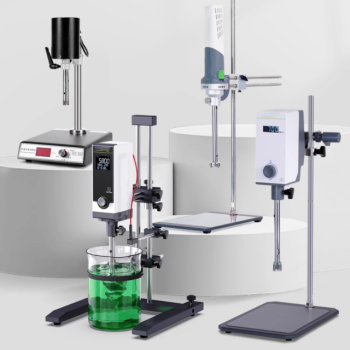
- High Shear Homogenizer for Pharmaceutical and Cosmetic Applications
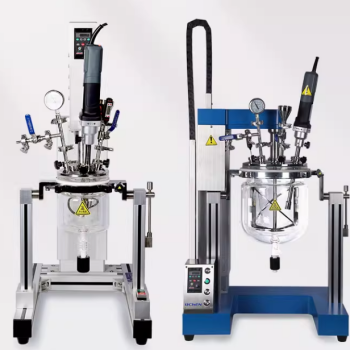
- High Performance Lab Homogenizer for Pharma Cosmetics and Food R&D
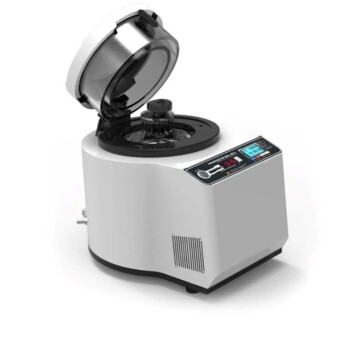
- Lab Sterile Slapping Type Homogenizer for Tissue Mashing and Dispersing
- Laboratory High Throughput Tissue Grinding Mill Grinder
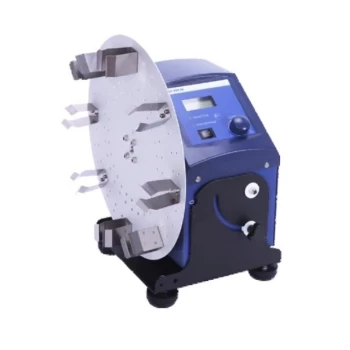
- Laboratory Disc Rotary Mixer for Efficient Sample Mixing and Homogenization
People Also Ask
- Why Use a High Shear Homogenizer for Cathode Slurries? Optimize Double-Layer Solid-State Battery Production
- What is the function of high-shear dispersion equipment in corona-resistant nanocomposites? Elevate Your Insulation
- What is the necessity of using an industrial-grade high-shear homogenizer for biomass washing? Ensure Process Efficiency
- What are the advantages of using a high-shear homogenizer for BED/GMA coatings? Achieve Superior Nano-Dispersion
- What role does a high-shear homogenizer play in ODC catalyst suspensions? Unlock Superior Electrochemical Efficiency