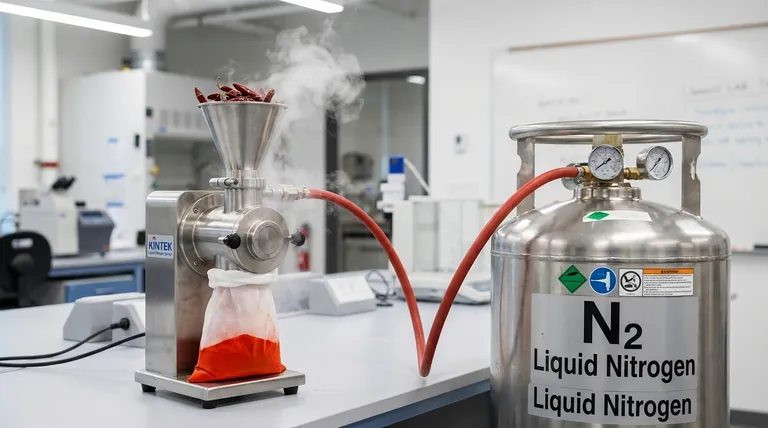
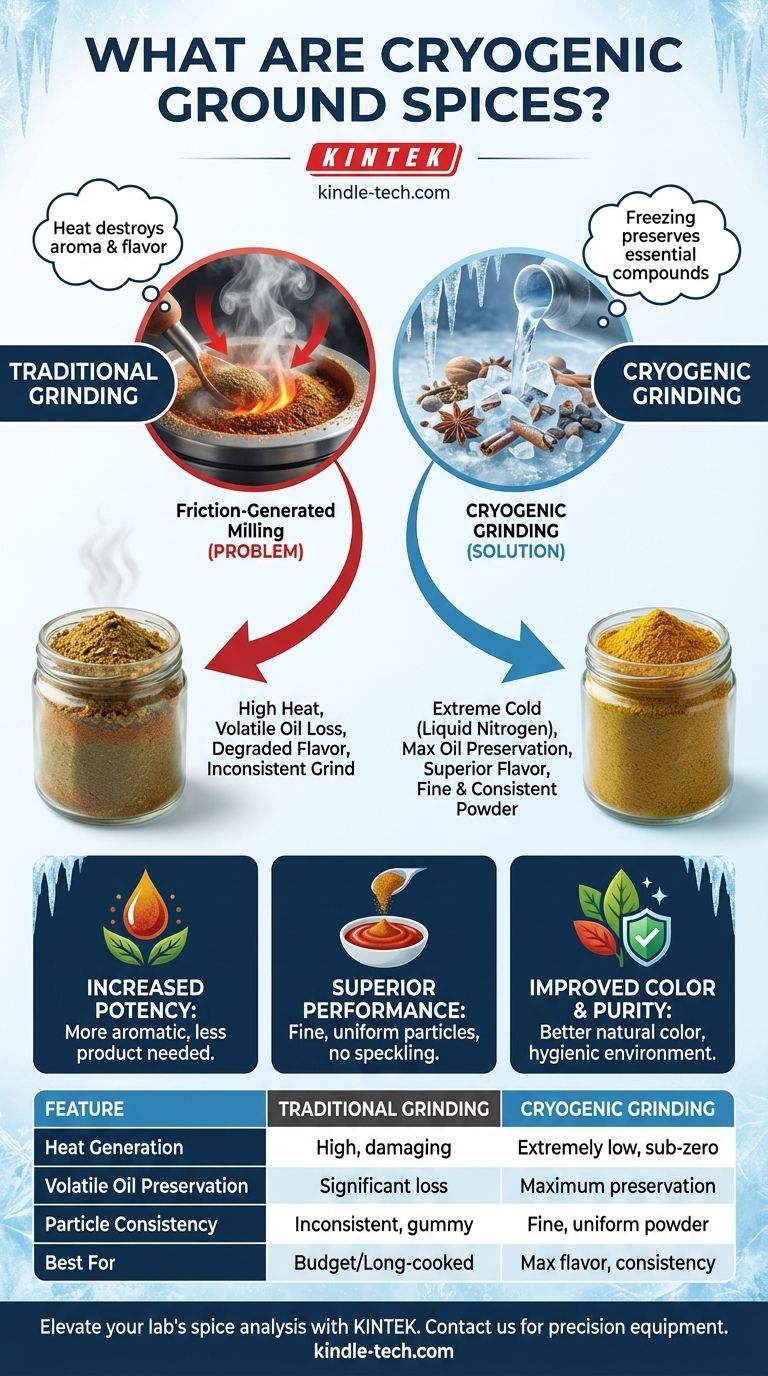
In short, cryogenic grinding is a process that uses extreme cold, typically from liquid nitrogen, to pulverize spices at sub-zero temperatures. This technique prevents the heat generated by conventional grinding from destroying the delicate volatile oils that give spices their distinct aroma and flavor, resulting in a more potent and true-to-source final product.
The core problem with traditional spice grinding is heat. Cryogenic grinding solves this by freezing the spice, making it brittle and easy to shatter into a fine, consistent powder while locking in the essential compounds that are otherwise lost to evaporation.
The Problem with Traditional Grinding
Conventional grinding methods, which rely on friction and mechanical force, fundamentally work against the quality of the final product. The process itself generates significant heat.
The Impact of Heat on Volatile Oils
Heat is the primary enemy of a spice's character. Most of the aroma and flavor in a spice is contained in its volatile oils, which are highly sensitive and evaporate easily when warmed.
Degraded Aroma and Flavor
As these oils are lost during the high-heat grinding process, the resulting spice powder is a less potent, less complex version of its original whole form.
Inconsistent Grinding
Spices with high oil or moisture content can become gummy when heated, leading to an inconsistent grind with large, undesirable specks.
How Cryogenic Grinding Delivers Superior Quality
Cryogenic grinding is an engineering solution designed specifically to counteract the damaging effects of heat. It fundamentally changes the physical state of the spice to allow for a gentler, more effective milling process.
The Role of Extreme Cold
Spices are flash-frozen with liquid nitrogen, which cools them to sub-zero temperatures. This makes the spice incredibly brittle and glass-like, removing any gumminess.
Maximum Preservation of Volatiles
Because the entire process occurs in an inert, super-cooled environment, there is a negligible loss of volatile oils. The aroma and flavor are locked into the spice powder, not lost to the air.
Finer, More Consistent Particle Size
The brittle nature of the frozen spice allows it to be shattered into a fine and remarkably consistent powder. This ensures uniform flavor distribution when added to a food product and a smoother mouthfeel.
Improved Color and Purity
The cold process has also been shown to better preserve the natural color of the spice. The inert nitrogen atmosphere also provides a more hygienic grinding environment.
Understanding the Practical Implications
While the quality benefits are clear, adopting cryogenically ground spices requires understanding their application and value proposition.
Increased Potency
These spices are significantly more aromatic and flavorful. This means you may be able to use less product to achieve the same or a greater flavor impact, which can have an effect on recipe formulation.
Superior Performance in Production
For commercial food producers, the fine, uniform particle size is a major advantage. It prevents speckling in products like sauces or dressings and ensures consistent flavor from batch to batch.
The Cost-to-Quality Ratio
This is a more technologically advanced and energy-intensive process. As a result, cryogenically ground spices are typically more expensive than their conventional counterparts. The trade-off is paying a premium for a demonstrably higher-quality product.
Making the Right Choice for Your Application
Selecting the right spice depends entirely on your performance requirements and the specific application.
- If your primary focus is maximum flavor impact: Use cryogenically ground spices in finishing applications or for dishes where the spice is the central component.
- If your primary focus is large-scale production consistency: The uniform particle size and potency make cryogenic spices ideal for ensuring quality control in manufactured food products.
- If your primary focus is a long-cooked application or budget constraints: Traditionally ground spices are often sufficient for stews, braises, or other dishes where subtle aromatic notes are less critical.
Ultimately, cryogenic grinding is a precise tool for preserving the authentic essence of a spice.
Summary Table:
| Feature | Traditional Grinding | Cryogenic Grinding |
|---|---|---|
| Heat Generation | High, damaging heat | Extremely low, sub-zero temperatures |
| Volatile Oil Preservation | Significant loss due to evaporation | Maximum preservation, locking in aroma and flavor |
| Particle Consistency | Inconsistent, can be gummy | Fine, uniform, and consistent powder |
| Color & Purity | May degrade due to heat | Better preserved, hygienic inert environment |
| Best For | Budget-conscious or long-cooked applications | Maximum flavor impact and production consistency |
Elevate your lab's spice analysis and food product development with KINTEK's precision equipment.
Cryogenic grinding is essential for preserving the delicate volatile oils that define spice quality. Whether you're in R&D or quality control, our advanced lab equipment ensures you achieve the finest, most consistent results.
KINTEK specializes in lab equipment and consumables, serving all your laboratory needs. Let us help you enhance your spice testing and production processes with reliable, high-performance solutions.
Contact us today to discuss how our cryogenic grinding systems can bring superior flavor and consistency to your work!
Visual Guide
Related Products
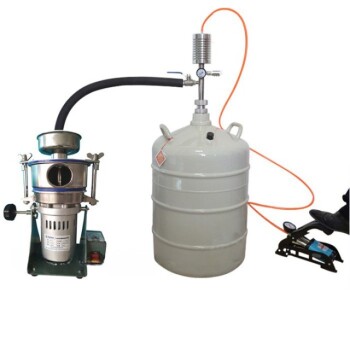
- lab cryogenic grinding use liquid-nitrogen for pulverizing plastic raw materials and heat sensitive materials
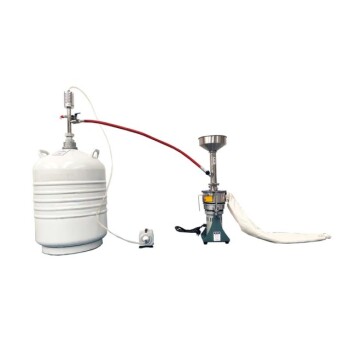
- Small Cryogenic Grinder Cryomill Cryogrinder with Liquid Nitrogen for Laboratory Use
- Liquid Nitrogen Cryogenic Grinder Mill Cryomill Airflow Ultrafine Pulverizer
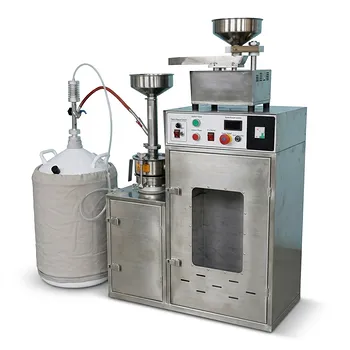
- Liquid Nitrogen Cryogenic Grinder Mill Cryomill with Screw Feeder
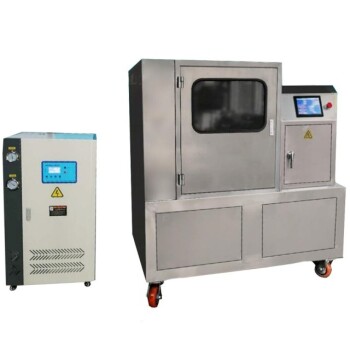
- Low-Temperature Water-Cooled Touchscreen Vibratory Ultrafine Pulverizer
People Also Ask
- What food is cryogenic grinding? The Ultimate Guide to Preserving Flavor & Aroma
- What is the role of a cryogenic grinder in PET recycling? Transform Waste into High-Reactive Micron Powders
- What are the advantages of using a cryogenic grinder? Achieve Nanoscale Precision for All-Solid-State Battery Cathodes
- Why is a cryogenic grinder required for cured alkyd resin HRMAS NMR? Ensure Structural Integrity & Sample Precision
- What is cryogenic grinding of crumb rubber? Achieve Fine, High-Quality Rubber Powder