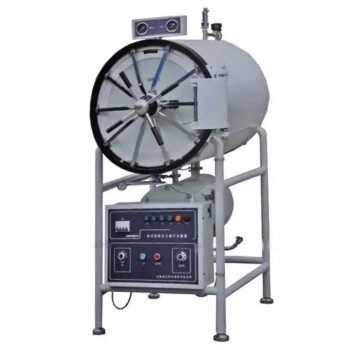
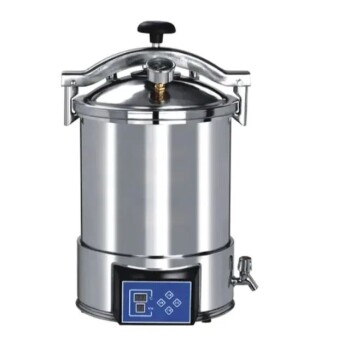
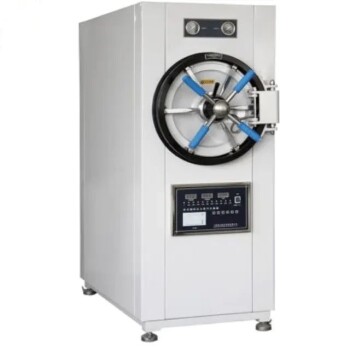
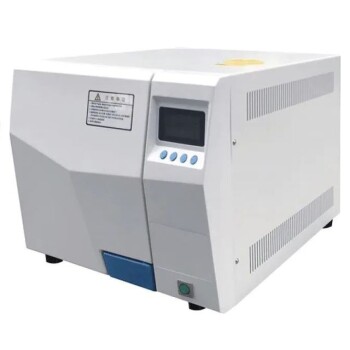
Laboratory high-pressure reactors (autoclaves) fundamentally alter the reaction environment by allowing organic solvents to remain in a liquid state at temperatures significantly exceeding their atmospheric boiling points. This capability dramatically enhances diffusion kinetics and provides the energy necessary to overcome barriers for atomic rearrangement directly within the liquid phase. Consequently, this enables the direct synthesis of highly ordered intermetallic nanocrystals, eliminating the need for conventional post-synthesis high-temperature drying or annealing.
By decoupling reaction temperature from atmospheric boiling limits, autoclaves create a unique kinetic environment. This allows for the single-step synthesis of complex, highly ordered materials with improved yields and selectivity, while significantly condensing the overall processing workflow.
The Thermodynamic Advantage
The primary constraint in standard wet chemical synthesis is the boiling point of the solvent. A high-pressure reactor removes this ceiling.
Exceeding Normal Boiling Points
In an open system (like a reflux setup), the maximum temperature is capped at the solvent's boiling point. An autoclave seals the system, allowing pressure to build as temperature rises.
Maintaining the Liquid State
Crucially, this pressure forces the solvent to remain liquid even at temperatures that would normally result in vaporization. This allows "wet" chemical reactions to proceed at temperatures typically reserved for solid-state or gas-phase processes.
Kinetic Enhancements and Material Quality
The ability to sustain high temperatures within a liquid medium directly impacts the movement and organization of atoms.
Enhanced Diffusion Kinetics
High-temperature conditions significantly accelerate the diffusion of metal atoms within the solvent. Faster diffusion ensures that reactants meet and interact more frequently and effectively.
Overcoming Energy Barriers
Atomic rearrangement—the process required to form crystalline structures—requires energy. The high thermal energy available in a pressurized autoclave allows the system to surmount these energy barriers easily.
Direct Synthesis of Ordered Structures
Because the system overcomes these barriers in situ, highly ordered intermetallic nanocrystals are formed directly during the reaction. This results in superior crystallinity without requiring a secondary heating step.
Efficiency and Process Intensification
Beyond material quality, high-pressure reactors offer significant improvements in process efficiency and workflow.
Elimination of Post-Processing
Traditional methods often produce amorphous or poorly ordered particles that require high-temperature drying and annealing to crystallize. Solvothermal synthesis in an autoclave renders these energy-intensive steps obsolete.
Improved Yield and Selectivity
Pressure can alter reaction pathways. This shift often leads to higher yields and better selectivity, minimizing the formation of unwanted by-products compared to standard pressure reactions.
Process Intensification
The combination of high pressure and temperature encourages faster reaction kinetics. This allows for "process intensification," meaning reactions can be completed in smaller reactors or over shorter timeframes, reducing overall energy usage.
Understanding the Trade-offs
While the advantages are significant, using high-pressure reactors introduces specific challenges that must be managed.
Safety and Equipment Costs
Operating at high pressure and temperature requires robust, rated stainless steel vessels rather than standard laboratory glassware. This increases upfront equipment costs and necessitates strict safety protocols regarding pressure limits.
"Black Box" Synthesis
Unlike glass reactors where color changes or precipitation can be visually monitored, autoclaves are closed systems. Monitoring reaction progress in real-time is difficult without specialized, expensive in-situ probes.
Making the Right Choice for Your Synthesis
To determine if a high-pressure reactor is the correct tool for your wet chemical synthesis, consider your specific material goals.
- If your primary focus is crystallinity: Use an autoclave to achieve highly ordered intermetallic structures directly in the liquid phase, bypassing the need for annealing.
- If your primary focus is reaction speed: Leverage the high-pressure environment to accelerate kinetics and reduce total reaction time.
- If your primary focus is process efficiency: Choose this method to combine synthesis and crystallization into a single step, reducing energy consumption and handling steps.
High-pressure solvothermal synthesis bridges the gap between the versatility of solution chemistry and the quality of high-temperature processing.
Summary Table:
| Feature | Standard Reflux Synthesis | High-Pressure Reactor (Autoclave) |
|---|---|---|
| Max Temperature | Limited to solvent boiling point | Significantly exceeds boiling point |
| Phase State | Liquid (limited by evaporation) | Maintains liquid state at high T/P |
| Diffusion Kinetics | Standard | Significantly accelerated |
| Material Order | Often requires post-annealing | Directly synthesized ordered structures |
| Process Steps | Multiple (Synthesis + Annealing) | Single-step (In-situ crystallization) |
| Monitoring | Visual observation possible | Closed system (Internal monitoring) |
Elevate Your Material Research with KINTEK Precision
Unlock the full potential of solvothermal synthesis with KINTEK’s high-temperature high-pressure reactors and autoclaves. Designed for researchers who demand superior crystallinity and process intensification, our equipment empowers you to bypass energy-intensive annealing steps and achieve highly ordered intermetallic nanocrystals in a single step.
From high-performance crushing systems and hydraulic presses to specialized electrolytic cells and battery research tools, KINTEK provides the comprehensive laboratory solutions needed to drive innovation in chemistry and material science.
Ready to optimize your synthesis workflow? Contact our laboratory specialists today to find the perfect reactor or consumable for your specific application.
References
- Jiawei Liu, Qingyu Yan. Recent progress in intermetallic nanocrystals for electrocatalysis: From binary to ternary to high‐entropy intermetallics. DOI: 10.1002/smm2.1210
This article is also based on technical information from Kintek Solution Knowledge Base .
Related Products
- High Pressure Laboratory Autoclave Reactor for Hydrothermal Synthesis
- Stainless High Pressure Autoclave Reactor Laboratory Pressure Reactor
- Mini SS High Pressure Autoclave Reactor for Laboratory Use
- Customizable High Pressure Reactors for Advanced Scientific and Industrial Applications
- Laboratory High Pressure Horizontal Autoclave Steam Sterilizer for Lab Use
People Also Ask
- What role does a high-pressure reactor (autoclave) play in the synthesis of NiCuFe-LDH? Master Hydrothermal Growth
- What Role Does a High-Pressure Reactor or Autoclave Play in HA Catalyst Synthesis? Achieve High Surface Area Materials
- What equipment is required for hydrothermal synthesis of Ga0.25Zn4.67S5.08? Optimize Your Semiconductor Production
- What is the function of a high-pressure reactor in the hydrothermal synthesis of boehmite? Expert Process Insights
- What role does an autoclave play in the synthesis of MnO2 nanofibers? Mastering Hydrothermal Growth