Combining a stainless steel shell with a PTFE (polytetrafluoroethylene) liner creates the definitive vessel for high-performance hydrothermal synthesis. This configuration creates a sealed system that allows reactions to proceed safely at temperatures well above the atmospheric boiling point of water while strictly maintaining chemical purity.
The Core Takeaway This reactor design solves the dual challenge of containment and contamination. It leverages stainless steel to withstand the immense pressure generated by superheated solvents, while the PTFE liner acts as an inert barrier that prevents corrosion and ensures zero metal ion leaching into your synthesized material.
Creating the Ideal Reaction Environment
Surpassing the Boiling Point
The primary function of the stainless steel shell is to maintain a sealed, high-pressure environment.
This allows water or organic solvents to exist as liquids at temperatures significantly exceeding their atmospheric boiling points (often above 100°C for water).
Enhancing Solubility and Kinetics
Under these high-pressure conditions, the physical properties of the solvent change.
The density and solvation capacity of the fluid increase, significantly enhancing the solubility of solid precursors. This environment accelerates chemical reaction kinetics, allowing materials to crystallize at much lower temperatures than those required by traditional solid-state methods.
Self-Catalyzing Water Properties
In specific applications like biomass processing, the reactor creates subcritical or supercritical conditions.
This increases the ion product of water, effectively turning the water itself into an acid-base catalytic medium. This allows for complex processes, such as the hydrolysis of polysaccharides, to occur without adding external catalysts.
The Critical Role of the PTFE Liner
Ensuring Chemical Inertness
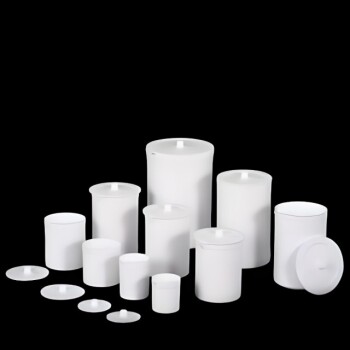
While the steel provides strength, the PTFE liner provides a chemically neutral reaction zone.
PTFE is renowned for its excellent chemical inertness, meaning it will not react with aggressive solvents or precursors even at elevated temperatures.
Preventing Sample Contamination
For sensitive applications like the reduction of graphene oxide or MOF synthesis, purity is paramount.
The liner acts as a shield, preventing metal ions from the stainless steel wall from leaching into the solution. This ensures the high purity of the final product and prevents unwanted side reactions catalyzed by iron or other metals.
Protecting the Vessel Integrity
Hydrothermal synthesis often involves corrosive reactants that would rapidly degrade a bare metal vessel.
The PTFE liner protects the stainless steel shell from damage, significantly extending the lifespan of your reactor and ensuring safety during high-pressure operations.
Controlling Material Properties
Precision Morphology Control
The stable environment provided by this reactor type allows for "in situ" growth and precise control over crystal structures.
By manipulating the pressure and temperature within the lined vessel, researchers can direct the morphology of the material, creating specific shapes like nanorods, nanoparticles, or specific crystal facets.
Enabling Complex Structures
The sealed high-pressure conditions facilitate coordination reactions that are difficult to achieve otherwise.
This setup allows for the rapid crystallization of complex frameworks, such as Metal-Organic Frameworks (MOFs) or the anchoring of nanoparticles onto substrates (like FeS2 on TiO2), resulting in materials with high porosity and stability.
Understanding the Trade-offs
Temperature Limitations of PTFE
While PTFE is robust, it has a lower thermal limit compared to the stainless steel shell or other liners like PBO.
You must ensure your reaction temperature does not exceed the deformation point of PTFE (typically around 220°C to 250°C). For supercritical water experiments requiring extremely high temperatures ($>374^\circ$C), a PTFE liner is not suitable.
Pressure vs. Seal Integrity
The stainless steel bears the pressure load, but the seal often relies on the deformation of the PTFE liner against the lid.
Over-tightening can deform the liner permanently, while under-tightening can lead to dangerous leaks. Proper assembly is critical to maintaining the sealed environment necessary for the reaction to function.
Making the Right Choice for Your Goal
To maximize the utility of a PTFE-lined stainless steel reactor, align the equipment's capabilities with your specific synthesis targets:
- If your primary focus is High Purity: Rely on the PTFE liner to prevent metal ion leaching, which is critical for optical or electronic materials like graphene or semi-conductors.
- If your primary focus is Reaction Kinetics: Utilize the high-pressure capability to superheat solvents, increasing solubility and speeding up reactions that would be too slow at atmospheric pressure.
- If your primary focus is Green Chemistry: Leverage the subcritical water properties to hydrolyze biomass or catalyze reactions without using harsh external acids or bases.
By balancing the structural strength of steel with the chemical resistance of PTFE, you unlock a precise, contamination-free pathway to advanced material synthesis.
Summary Table:
| Feature | Benefit for Hydrothermal Synthesis |
|---|---|
| Stainless Steel Shell | Provides structural strength to safely contain extreme pressure. |
| PTFE Liner | Offers chemical inertness and prevents metal ion leaching/contamination. |
| Sealed Environment | Enables reactions at temperatures well above boiling point ($>100^{\circ}$C). |
| Enhanced Solubility | Superheated solvents accelerate reaction kinetics and crystal growth. |
| Morphology Control | Allows for precise tuning of crystal structures and nanoparticle shapes. |
Elevate Your Material Synthesis with KINTEK
At KINTEK, we understand that chemical purity and structural integrity are non-negotiable in laboratory research. Our high-performance high-temperature high-pressure reactors and autoclaves are designed to meet the rigorous demands of hydrothermal synthesis, graphene research, and MOF development.
Whether you need precision-engineered PTFE-lined vessels, advanced crushing and milling systems, or specialized high-temperature furnaces, KINTEK provides the reliable tools you need to achieve breakthrough results. Our expertise in laboratory equipment and consumables ensures your synthesis is consistent, safe, and contamination-free.
Ready to optimize your lab's performance? Contact KINTEK Today to discuss your specific requirements with our technical experts!
References
- Youwei Guo, Yi He. One-Step Method for Preparing Dispersive Tea Polyphenol/Graphene Nanosheets Enhanced with Anticorrosion Performance. DOI: 10.3390/coatings9110731
This article is also based on technical information from Kintek Solution Knowledge Base .
Related Products
- Stainless High Pressure Autoclave Reactor Laboratory Pressure Reactor
- Custom PTFE Teflon Parts Manufacturer for Hydrothermal Synthesis Reactor Polytetrafluoroethylene Carbon Paper and Carbon Cloth Nano-growth
- Mini SS High Pressure Autoclave Reactor for Laboratory Use
- Custom PTFE Teflon Parts Manufacturer for Microwave Digestion Tank
- Customizable High Pressure Reactors for Advanced Scientific and Industrial Applications
People Also Ask
- Why is a laboratory high-pressure reactor used in the hydrothermal synthesis of hydroxyapatite catalysts?
- Why is a laboratory high-pressure reactor necessary for synthesizing fly ash-based zeolite? Achieve Pure Crystallization
- What role does a laboratory high-pressure reactor play in the leaching process of spent cathode materials? Optimize Recovery
- What conditions do laboratory high-pressure reactors provide for HTC? Optimize Your Biochar Production Processes
- How are high-pressure reactors used to prepare metaphosphate electrocatalysts? Master In-Situ Precursor Growth