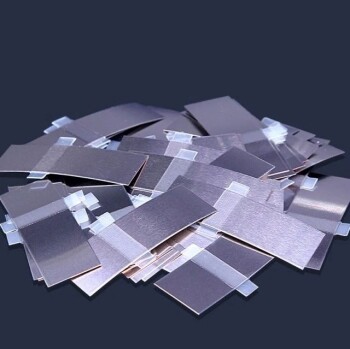
Coated titanium mesh functions as a superior Dimensionally Stable Anode (DSA) by combining a robust titanium substrate with a specialized iridium and tantalum oxide coating. This configuration offers exceptional chemical stability and high electrical conductivity, ensuring the electrolytic process remains consistent even in harsh environments. Unlike traditional soluble anodes, this specific DSA prevents electrolyte contamination, which is critical for depositing high-purity nickel-rhenium alloys.
The primary value of using coated titanium mesh lies in its ability to maintain structural and chemical integrity during electrolysis. By eliminating anode dissolution, it guarantees a contaminant-free plating solution and precise current distribution, leading to superior alloy quality.
Preserving Chemical Integrity
Eliminating Contamination Risks
The most critical advantage of this anode configuration is the prevention of anode dissolution. In standard electrolytic cells, the anode can degrade over time, releasing unwanted metallic impurities into the plating solution.
Titanium mesh coated with iridium and tantalum oxides acts as an inert barrier. This chemical stability ensures that no foreign substances enter the bath, maintaining the strict purity required for high-quality nickel-rhenium electrodeposition.
Withstanding Harsh Environments
Nickel-rhenium plating often requires aggressive electrolyte environments to achieve the desired alloy composition.
The oxide coating allows the anode to resist corrosion and chemical attack effectively. This durability extends the operational lifespan of the cell components compared to less stable anode materials.
Enhancing Electrical Performance
Optimizing Current Distribution
Uniformity is essential when plating complex alloys like nickel-rhenium. Variations in current can lead to uneven thickness or inconsistent alloy ratios.
The mesh structure of the anode facilitates a stable and uniform current distribution across the surface of the cathode. This geometric advantage helps ensure that the electrodeposited layer is consistent across the entire part.
Leveraging High Conductivity
Efficiency in electrolysis is driven by how well the system conducts electricity.
The titanium base, combined with the conductive oxide coating, provides a low-resistance path for the electrical current. This high electrical conductivity minimizes energy loss and supports the precise control needed for sensitive alloy plating.
Understanding the Operational Trade-offs
Coating Integrity is Critical
While the titanium core is robust, the performance of the DSA relies entirely on the quality of the iridium and tantalum oxide coating.
If this coating is damaged by mechanical scratching or extreme voltage spikes, the underlying titanium can passivate (become non-conductive) or corrode. Therefore, these anodes require careful handling and strict adherence to voltage parameters to prevent premature failure.
Making the Right Choice for Your Goal
To maximize the benefits of coated titanium mesh in your electrolytic cells, align your choice with your specific process requirements:
- If your primary focus is alloy purity: Prioritize this DSA to eliminate the risk of metallic impurities caused by anode breakdown.
- If your primary focus is coating uniformity: Rely on the mesh geometry to provide the stable current distribution necessary for consistent layer thickness.
By utilizing coated titanium mesh, you convert the variable of anode degradation into a constant, ensuring a predictable and high-purity plating process.
Summary Table:
| Feature | Advantage of Coated Titanium Mesh (DSA) | Benefit to Nickel-Rhenium Plating |
|---|---|---|
| Material Base | High-strength Titanium Substrate | Long-term structural integrity in harsh baths |
| Coating Type | Iridium and Tantalum Oxide | Prevents corrosion and anode dissolution |
| Structure | Mesh Geometry | Ensures uniform current distribution and coating thickness |
| Stability | Dimensionally Stable Anode (DSA) | Eliminates electrolyte contamination for high-purity alloys |
| Efficiency | High Electrical Conductivity | Lowers energy consumption and improves process control |
Elevate Your Electrochemical Precision with KINTEK
Achieve uncompromising purity and consistency in your alloy deposition processes with KINTEK’s advanced solutions. As specialists in high-performance laboratory equipment, KINTEK provides the essential tools required for sophisticated research and production, including electrolytic cells and electrodes, high-temperature furnaces, and precision hydraulic presses.
Whether you are developing next-generation nickel-rhenium alloys or optimizing battery research, our premium coated titanium mesh anodes and comprehensive range of consumables—from PTFE products and ceramics to cooling solutions—are designed to withstand the most aggressive chemical environments.
Ready to eliminate contamination and optimize your current distribution? Contact KINTEK today to discuss your custom laboratory requirements.
References
- J. Niedbała, Izabela Matuła. Electrolytic production and characterization of nickel–rhenium alloy coatings. DOI: 10.1515/rams-2021-0058
This article is also based on technical information from Kintek Solution Knowledge Base .
Related Products
- PTFE Electrolytic Cell Electrochemical Cell Corrosion-Resistant Sealed and Non-Sealed
- Electrolytic Electrochemical Cell for Coating Evaluation
- Electrolytic Electrochemical Cell with Five-Port
- Super Sealed Electrolytic Electrochemical Cell
- Flat Corrosion Electrolytic Electrochemical Cell
People Also Ask
- What is the necessity of selecting a PTFE electrolytic cell? Ensure Precise Graphene Corrosion Testing Accuracy
- What is the proper method for cleaning the surface of an all-PTFE electrolytic cell? Ensure Accurate Results with a Pristine Surface
- How should an all-PTFE electrolytic cell be stored after use? Expert Maintenance Tips for Long-Lasting Performance
- What is the proper cleaning method for an all-PTFE electrolytic cell? Essential Tips for Surface Integrity
- What are the standard opening specifications for all-PTFE electrolytic cells? A Guide to Sealed vs. Non-Sealed Ports