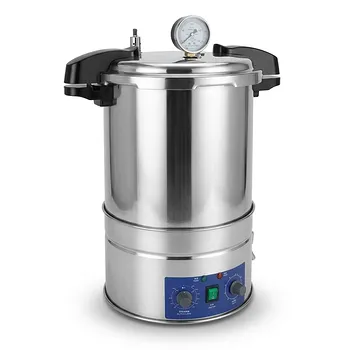
High-pressure reactors designed for polyamide depolymerization must be engineered to withstand operating temperatures between 302 and 400°C and internal pressures up to 35 MPa. These vessels require a high safety factor for pressure resistance and must feature corrosion-resistant internal components to survive aggressive acid-base environments without contaminating the resulting monomers.
The viability of polyamide recycling relies on a reactor’s ability to balance extreme structural durability with chemical inertness. Your equipment must simultaneously contain high-energy hydrothermal states and resist the corrosive nature of the degradation process to ensure both operator safety and product purity.
Critical Operating Parameters
Thermal & Pressure Specifications
The primary technical hurdle is the extreme operational range required for hydrothermal reactions. Reactors must reliably reach and maintain temperatures between 302 and 400°C.
To support these temperatures in a closed system, the vessel must be rated for pressures up to 35 MPa. It is essential that the autoclave design incorporates a high safety factor to handle potential pressure spikes during operation.
Precision Control Systems
Achieving the correct depolymerization kinetics requires more than just high heat. The system must include a precise temperature control mechanism.
Accurate thermal regulation prevents thermal runaway and ensures the reaction stays within the specific window required for efficient monomer recovery.
Material Compatibility and Durability
Combating Corrosion
Acid-base assisted degradation processes are inherently corrosive to standard reactor metals. The internal components of the reactor must be constructed from, or lined with, specialized corrosion-resistant materials.
Failure to use chemically inert materials will lead to rapid equipment degradation and potential containment failure.
Ensuring Product Purity
Beyond equipment longevity, material selection is critical for the chemistry itself. Using non-reactive linings prevents metal ions from leaching into the reaction mixture.
This prevents metal ion contamination of the recovered monomers, ensuring the recycled product meets quality standards for reuse.
Process-Specific Functional Requirements
Sealing for Hydrogenolysis
If your process involves hydrogenolysis, the reactor requires specific sealing capabilities to manage hydrogen gas, typically around 10 bar.
The vessel must feature excellent sealing integrity to prevent hydrogen leakage, which poses a significant safety hazard and leads to process inefficiency.
Multiphase Mixing Efficiency
Depolymerization is often a multiphase reaction involving hydrogen gas, liquid solvents, solid polyamides, and noble metal catalysts (e.g., ruthenium complexes).
To facilitate this, the reactor must be equipped with a precision stirring system. This ensures efficient contact between all phases, which is necessary to break amide bonds effectively and produce alcohols and amines.
Understanding the Trade-offs
Safety Margins vs. Operational Flexibility
Prioritizing a high safety factor for pressure resistance often results in heavier, thicker-walled vessels.
While this ensures safety at 35 MPa, it can increase the thermal mass of the reactor, potentially slowing down heating and cooling cycles which affects throughput.
Corrosion Resistance vs. Mechanical Strength
Materials that offer the highest corrosion resistance against acid-base attacks are not always the materials with the highest tensile strength at 400°C.
You may need to rely on composite designs, such as high-strength steel outer shells with inert internal liners, to satisfy both structural and chemical requirements.
Making the Right Choice for Your Project
Selecting the correct reactor depends heavily on the specific chemical pathway you intend to utilize for depolymerization.
- If your primary focus is Hydrothermal/Acid-Base Degradation: Prioritize a reactor with a confirmed pressure rating of 35 MPa and high-grade corrosion-resistant linings to prevent acid damage.
- If your primary focus is Hydrogenolysis: Ensure the reactor features a certified gas-tight sealing system for hydrogen and a high-torque precision stirrer for multiphase mixing.
Ultimately, the success of your depolymerization process is defined by the reactor's ability to maintain a chemically inert environment under extreme physical stress.
Summary Table:
| Technical Requirement | Specification / Detail | Purpose |
|---|---|---|
| Temperature Range | 302°C to 400°C | Enables hydrothermal & chemical degradation |
| Pressure Rating | Up to 35 MPa | Contains high-energy hydrothermal states |
| Material Design | Corrosion-resistant liners | Prevents acid-base damage & monomer contamination |
| Sealing System | Hydrogen-certified gas-tight | Ensures safety during hydrogenolysis (approx. 10 bar) |
| Agitation | Precision stirring system | Facilitates multiphase mixing (gas, liquid, solid) |
| Safety Feature | High safety factor design | Handles pressure spikes and ensures operator safety |
Optimize Your Polyamide Recycling with KINTEK
Transitioning from lab-scale research to industrial-grade depolymerization requires equipment that never compromises on safety or purity. KINTEK specializes in advanced high-temperature high-pressure reactors and autoclaves engineered to withstand the most aggressive acid-base environments and extreme thermal demands.
Whether your process involves hydrothermal degradation or complex hydrogenolysis, our reactors offer the precision control and chemical inertness needed to recover high-quality monomers. Beyond reactors, we provide a full suite of laboratory solutions—from crushing and milling systems to PTFE consumables and ceramics—tailored for materials science and battery research.
Ready to elevate your chemical processing? Contact our technical experts today to find the perfect high-pressure solution for your laboratory.
References
- Lin Zheng, Chonggang Wu. Recycling and Degradation of Polyamides. DOI: 10.3390/molecules29081742
This article is also based on technical information from Kintek Solution Knowledge Base .
Related Products
- Mini SS High Pressure Autoclave Reactor for Laboratory Use
- Stainless High Pressure Autoclave Reactor Laboratory Pressure Reactor
- Customizable High Pressure Reactors for Advanced Scientific and Industrial Applications
- Customizable Laboratory High Temperature High Pressure Reactors for Diverse Scientific Applications
- High Pressure Laboratory Autoclave Reactor for Hydrothermal Synthesis
People Also Ask
- Why use high-pressure reactors for molecular sieve synthesis? Unlock Superior Crystallinity and Framework Control
- What are the advantages of using a high-pressure reactor like an autoclave? Maximize Liquefaction Speed & Yield
- Why are high-pressure reactors or autoclaves necessary for the synthesis of new functional materials? Unlock Precision.
- What is the function of a high-pressure reactor autoclave? Enhancing Cu/N Co-Doped Carbon Catalyst Synthesis
- How are high-pressure reactors used to prepare metaphosphate electrocatalysts? Master In-Situ Precursor Growth