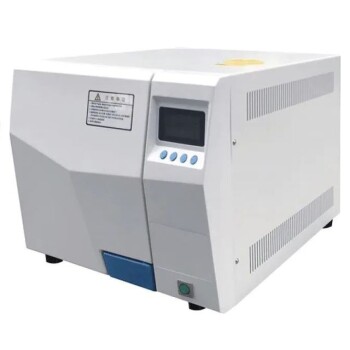
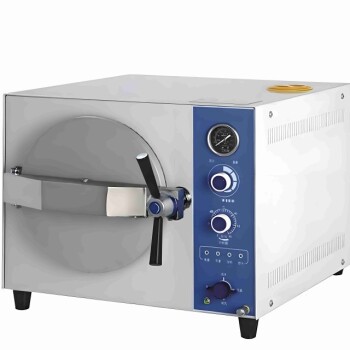
High-pressure autoclaves and circulating loop systems serve as critical environmental simulators for studying nuclear material degradation. Their primary function is to replicate the harsh physical conditions of a reactor core—specifically temperatures between 270–340°C and high pressures—while maintaining precise control over water chemistry to facilitate Irradiation Assisted Stress Corrosion Cracking (IASCC) studies.
By stabilizing extreme physical conditions and regulating chemical parameters, these systems determine the specific electrochemical corrosion potential at a material's surface, bridging the gap between theoretical models and actual reactor performance.
Replicating the Reactor Environment
Thermal and Pressure Stability
The fundamental role of these systems is to create a test environment that mirrors the interior of a nuclear reactor.
They must maintain stable, high temperatures, typically ranging from 270°C to 340°C.
Simultaneously, they sustain high pressures to prevent water from boiling, ensuring the coolant remains in the liquid phase required for valid stress corrosion testing.
The Role of Circulating Loops
While the autoclave holds the specimen, the circulating loop system ensures the environment is dynamic rather than static.
This flow mimics the movement of cooling water in a reactor, preventing local stagnation that could skew test results.
It allows for continuous monitoring and adjustment of the environmental conditions surrounding the irradiated material.
Controlling Chemical Parameters
regulating Dissolved Gases
Beyond heat and pressure, these systems allow for the precise manipulation of cooling water chemistry.
Operators can strictly control levels of dissolved oxygen and dissolved hydrogen.
These gas concentrations are critical variables that dictate how aggressive the corrosive environment will be toward the metal components.
Managing Conductivity and Potential
The systems also regulate electrical conductivity within the water loop.
Together with dissolved gas levels, these parameters determine the electrochemical corrosion potential (ECP) at the material surface.
Controlling the ECP is essential, as it directly influences the rate and likelihood of IASCC degradation mechanisms.
Operational Constraints and Trade-offs
The Complexity of Precision
While these systems offer high control, maintaining stability across all variables simultaneously is technically demanding.
A fluctuation in temperature or pressure can inadvertently alter gas solubility, impacting the accuracy of the chemical simulation.
Simulation Limits
It is important to recognize that these systems are fundamental platforms for simulation, not exact duplications of a reactor core.
They isolate specific environmental factors to study degradation, but they may not capture every synergistic effect present in a live nuclear facility.
Defining Your Research Approach
To effectively utilize high-pressure autoclaves and circulating loops, you must align the system's capabilities with your specific testing goals.
- If your primary focus is mechanical integrity: Ensure the system allows for the necessary mechanical loading while maintaining thermal stability between 270–340°C.
- If your primary focus is chemical corrosion mechanisms: Prioritize systems with advanced sensors for real-time monitoring of dissolved oxygen and electrochemical corrosion potential.
By precisely controlling the electrochemical environment, these systems allow researchers to isolate the specific environmental triggers that lead to material failure.
Summary Table:
| System Component | Primary Function | Key Parameters Controlled |
|---|---|---|
| High-Pressure Autoclave | Environment Containment | Temperature (270-340°C), High Pressure |
| Circulating Loop | Dynamic Simulation | Fluid Velocity, Coolant Homogeneity |
| Chemical Control Unit | Corrosion Simulation | Dissolved O2/H2, Conductivity, ECP |
| Monitoring Sensors | Data Acquisition | Electrochemical Corrosion Potential (ECP) |
Advance Your Nuclear Material Research with KINTEK
Precise simulation of IASCC requires uncompromising environmental control. KINTEK specializes in providing high-performance high-temperature high-pressure reactors and autoclaves designed to meet the rigorous demands of nuclear and material science labs.
Our comprehensive range of laboratory equipment—from high-temperature furnaces and electrolytic cells to specialized cooling solutions and PTFE consumables—ensures your research is backed by accuracy and durability.
Ready to replicate extreme reactor conditions with precision? Contact KINTEK experts today to find the perfect system for your lab.
References
- Gary S. Was, Peter L. Andresen. Irradiation-assisted stress corrosion cracking. DOI: 10.1515/corrrev.2011.020
This article is also based on technical information from Kintek Solution Knowledge Base .
Related Products
- Mini SS High Pressure Autoclave Reactor for Laboratory Use
- Laboratory High Pressure Horizontal Autoclave Steam Sterilizer for Lab Use
- Desktop Fast High Pressure Laboratory Autoclave Sterilizer 16L 24L for Lab Use
- High Pressure Laboratory Autoclave Reactor for Hydrothermal Synthesis
- Stainless High Pressure Autoclave Reactor Laboratory Pressure Reactor
People Also Ask
- Why use high-pressure reactors for molecular sieve synthesis? Unlock Superior Crystallinity and Framework Control
- What are the advantages of using a high-pressure reactor like an autoclave? Maximize Liquefaction Speed & Yield
- What is the function of a high-pressure reactor autoclave? Enhancing Cu/N Co-Doped Carbon Catalyst Synthesis
- Why are high-pressure reactors or autoclaves necessary for the synthesis of new functional materials? Unlock Precision.
- How are high-pressure reactors used to prepare metaphosphate electrocatalysts? Master In-Situ Precursor Growth