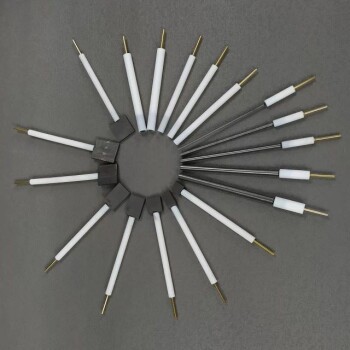
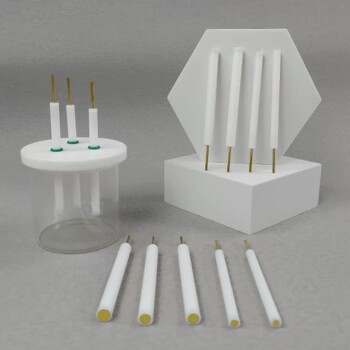
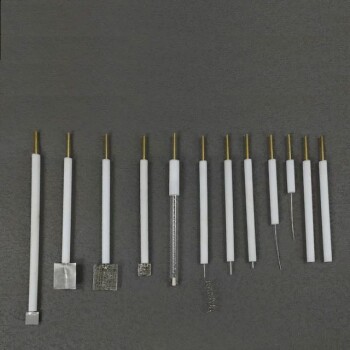
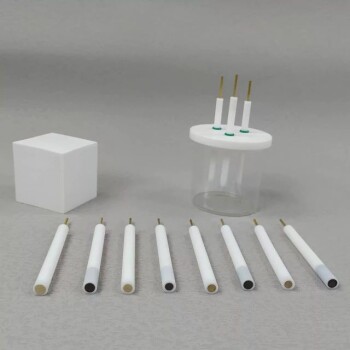
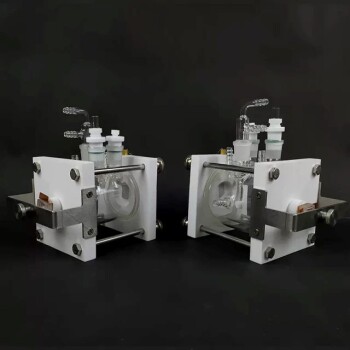
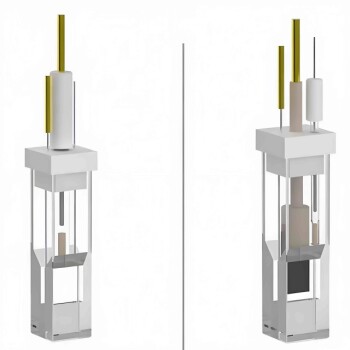
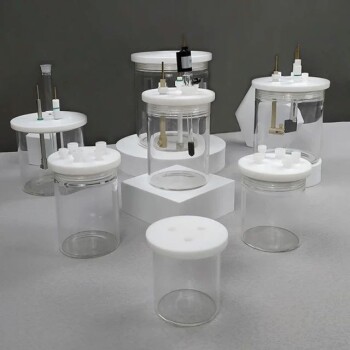
The Ag/AgCl reference electrode provides a stable potential benchmark for precise voltage control, while the Platinum (Pt) counter electrode completes the electrical circuit and supports balancing reactions without contaminating the electrolyte. In a three-electrode system, these components work together to isolate the potential measurement from the current flow. This ensures that the electrochemical data collected at the working electrode is accurate, reproducible, and free from interference caused by electrode polarization.
The Ag/AgCl electrode acts as a constant "voltage anchor" to ensure measurement accuracy, while the Platinum counter electrode serves as a chemically inert "current sink" to maintain charge balance throughout the system.
The Ag/AgCl Reference Electrode: The Potential Benchmark
Providing a Stable Equilibrium Potential
The primary role of the Ag/AgCl electrode is to serve as a constant potential reference point. Because it maintains a stable equilibrium potential, researchers can accurately determine the exact reduction or oxidation potential applied to the working electrode.
Ensuring Precise Potential Control
By acting as a baseline, the reference electrode allows the electrochemical analyzer to execute accurate potential scanning. This is critical for identifying characteristic oxidation potentials of metal ions or determining the overpotentials of new catalysts.
Facilitating Standardized Comparisons
Using a standardized Ag/AgCl reference allows data to be converted to other scales, such as the Reversible Hydrogen Electrode (RHE). This portability of data is essential for analyzing photo-to-electric conversion efficiency and energy storage characteristics.
The Platinum Counter Electrode: The Current Facilitator
Completing the Electrical Circuit
The Platinum (Pt) counter electrode provides the necessary path for charge transfer to complete the electrical circuit with the working electrode. It receives or provides the electrons required to balance the reaction occurring at the working electrode surface.
Maintaining Chemical Inertness
Platinum is selected for its extreme chemical stability, preventing it from dissolving in strong alkaline electrolytes. Its inert nature ensures that no metallic impurities are introduced into the system, which could otherwise interfere with cathode reactions.
Minimizing Polarization and Resistance
High-purity Platinum offers excellent electrical conductivity and catalytic activity for reactions like oxygen or hydrogen evolution. By using a high surface area (such as a Pt mesh or wire), the system minimizes electrolytic polarization, ensuring the measured signals reflect the working electrode's behavior rather than cell resistance.
Understanding the Trade-offs
Reference Electrode Leaching and Contamination
While stable, Ag/AgCl electrodes can occasionally leach chloride ions into the electrolyte. In certain sensitive electrochemical reactions, these ions may poison the catalyst or alter the chemical environment, requiring the use of a double-junction bridge.
Material Cost and Resource Intensity
Platinum is an expensive precious metal, which can be a significant factor in large-scale testing or industrial applications. While its performance is superior, the high cost often leads researchers to seek cheaper alternatives like carbon-based counter electrodes for less demanding applications.
Counter Electrode Surface Area Limits
If the surface area of the Platinum counter electrode is too small, it can become a bottleneck for the current flow. This limitation can cause unwanted polarization, potentially skewing the data and masking the true kinetic properties of the material being studied.
Applying This Setup to Your Research
When configuring your three-electrode system, your choice of materials should align with the specific requirements of your electrolyte and the sensitivity of your measurements.
- If your primary focus is high-precision catalyst characterization: Use a high-purity Platinum mesh counter electrode to maximize surface area and ensure the lowest possible overpotential.
- If your primary focus is long-term stability in alkaline media: Ensure your Ag/AgCl reference is properly maintained and that your Platinum electrode is cleaned regularly to prevent the accumulation of surface oxides.
- If your primary focus is avoiding chloride contamination: Consider using a different reference electrode, such as Saturated Calomel (SCE) or Mercury/Mercurous Sulfate, if your specific system is sensitive to chloride ions.
Choosing the correct electrode configuration is the most fundamental step in ensuring your electrochemical measurements are both accurate and scientifically defensible.
Summary Table:
| Electrode Type | Primary Role | Key Advantage | Major Consideration |
|---|---|---|---|
| Ag/AgCl Reference | Potential Benchmark | Stable equilibrium potential for precise control | Potential chloride leaching into electrolyte |
| Platinum (Pt) Counter | Current Facilitator | Chemical inertness and high catalytic activity | High material cost and surface area limits |
| Three-Electrode Setup | System Integration | Eliminates interference from electrode polarization | Requires precise alignment of all components |
Elevate Your Electrochemical Research with KINTEK
Achieve unparalleled precision and reproducibility in your laboratory with KINTEK’s high-performance electrolytic cells and electrodes. Our premium Ag/AgCl reference electrodes provide the stable 'voltage anchor' your research demands, while our high-purity Platinum (Pt) counter electrodes ensure a clean, inert current path for reliable data collection.
At KINTEK, we specialize in comprehensive laboratory solutions, including:
- Advanced Electrochemical Tools: High-quality electrolytic cells, electrodes, and battery research consumables.
- High-Pressure Systems: High-temperature high-pressure reactors and autoclaves for demanding environments.
- Material Processing: Precision hydraulic presses (pellet, hot, isostatic), crushing/milling systems, and high-temperature furnaces.
- Lab Essentials: ULT freezers, freeze dryers, and high-purity ceramics or crucibles.
Don’t let electrode polarization or contamination compromise your scientific breakthroughs. Contact KINTEK today to find the perfect equipment tailored to your specific application and ensure your results are both accurate and defensible!
References
- Xiaoyu Li, Wei Wang. Multi-layer core–shell metal oxide/nitride/carbon and its high-rate electroreduction of nitrate to ammonia. DOI: 10.1039/d3nr02972g
This article is also based on technical information from Kintek Solution Knowledge Base .
Related Products
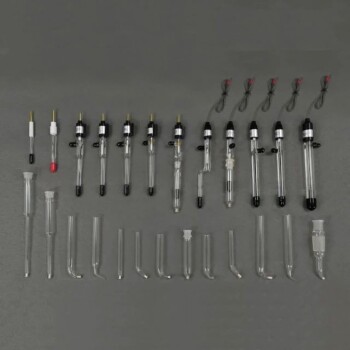
- Reference Electrode Calomel Silver Chloride Mercury Sulfate for Laboratory Use
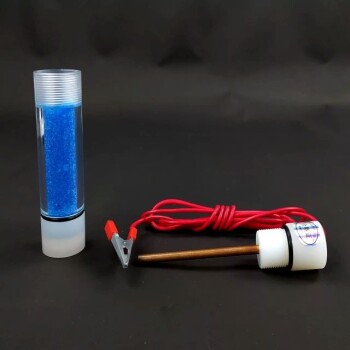
- Copper Sulfate Reference Electrode for Laboratory Use
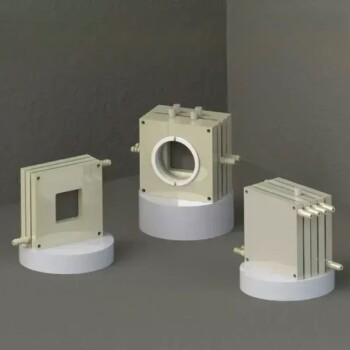
- Electrolytic Electrochemical Cell Gas Diffusion Liquid Flow Reaction Cell
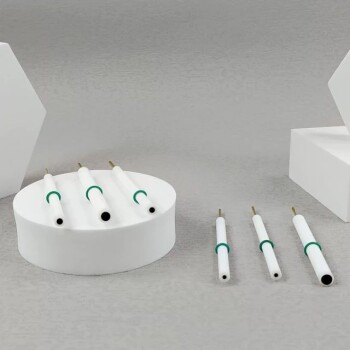
- Glassy Carbon Electrochemical Electrode
- Graphite Disc Rod and Sheet Electrode Electrochemical Graphite Electrode
People Also Ask
- What is the function of a reference electrode? Master Precision in Three-Electrode Reactor Reconstruction
- What is the recommended maintenance for the filling solution of a reference electrode? A Guide to Stable & Accurate Readings
- Which electrode is used as a ground reference? Master the Key to Accurate Electrochemical Measurements
- What is the reference electrode in potentiometry? The Key to Stable & Accurate Measurements
- Which electrode is used as a reference? A Guide to Accurate Electrochemical Measurements