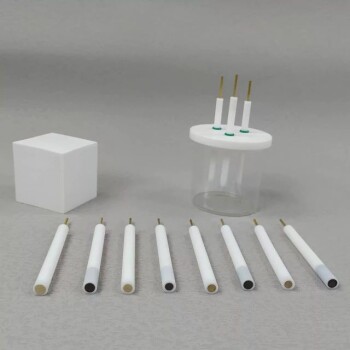
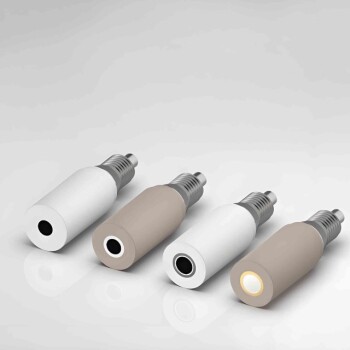
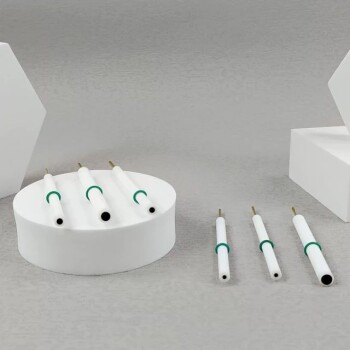
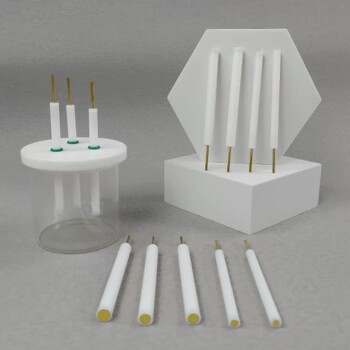
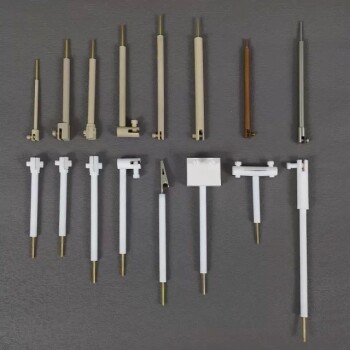
The fundamental function of a reference electrode in the reconstruction of laboratory electrochemical reactors is to provide a constant, known potential standard that isolates the performance of the working electrode. By establishing a stable baseline—typically using a saturated KCl silver/silver chloride (Ag/AgCl) electrode—researchers can precisely set the potential of the anode without interference from the cathode's reactions.
In a three-electrode system, the reference electrode acts as a stable anchor that enables the isolation of half-cell reactions. This allows for the quantitative measurement of the current-producing capacity of enriched microbial consortia while ensuring experimental accuracy.
The Mechanics of Potential Control
Establishing a Stable Standard
To reconstruct a reactor effectively, you need a fixed point of comparison. A reference electrode, such as the Ag/AgCl type, maintains a potential that does not fluctuate.
The Role of the Potentiostat
For the reference electrode to remain accurate, it must stay at equilibrium. The potentiostat is designed to ensure that almost no current passes between the working and reference electrodes.
Maintaining Potential Constancy
If current were allowed to flow through the reference electrode, its potential would shift (polarize), rendering the data useless. By blocking current flow, the system preserves the constancy of the reference potential throughout the experiment.
Enabling Precise Validation
Setting the Working Potential
During laboratory validation, the primary goal is often to analyze the anode (the working electrode). The reference electrode allows you to strictly define and control the anode's operating potential.
Removing Cathode Interference
In a two-electrode system, the anode and cathode are coupled, making it difficult to tell which electrode is limiting performance. The reference electrode eliminates interference from the cathode, allowing you to observe the anode's behavior in isolation.
Quantifying Microbial Performance
This isolation is critical when studying biological components. It enables the use of chronoamperometry to measure the exact current-producing capacity of enriched microbial consortia.
Understanding the Trade-offs
The Risk of Impedance
While the reference electrode enables precision, it introduces complexity regarding impedance. High impedance in the reference line can lead to instability in the potentiostat's control loop.
Placement Sensitivity
The physical location of the reference electrode matters. Placing it too far from the working electrode can introduce uncompensated resistance (IR drop), skewing the potential reading you are trying to control.
Making the Right Choice for Your Goal
To ensure your laboratory reconstruction yields valid data, consider your specific analytical objectives:
- If your primary focus is analyzing microbial efficiency: Use the reference electrode to isolate the anode and perform chronoamperometry to quantify current capacity.
- If your primary focus is reactor stability: Ensure your potentiostat is correctly calibrated to prevent current leakage into the reference leg, preserving the integrity of your voltage standard.
Precision in electrochemical reconstruction relies entirely on the stability of your reference point.
Summary Table:
| Feature | Function in Three-Electrode System | Benefit to Researcher |
|---|---|---|
| Potential Standard | Provides a constant, known baseline (e.g., Ag/AgCl) | Enables precise half-cell potential setting |
| Current Blocking | Potentiostat ensures zero current flow through the electrode | Prevents polarization and maintains voltage stability |
| Anode Isolation | Decouples the anode from cathode interference | Allows for accurate quantification of microbial consortia |
| Chronoamperometry | Facilitates measurement of current-producing capacity | Validates reactor performance and material efficiency |
Elevate Your Electrochemical Research with KINTEK
Precision starts with the right equipment. Whether you are reconstructing complex three-electrode reactors or analyzing microbial efficiency, KINTEK provides the high-performance electrolytic cells, electrodes, and potentiostat-compatible tools you need for repeatable results.
Our specialized portfolio includes:
- Advanced Electrolytic Cells & Reference Electrodes for stable potential control.
- High-Temperature & High-Pressure Autoclaves for demanding reaction environments.
- Precision Crushing, Milling, and Pellet Presses for superior material preparation.
Don't let cathode interference or potential drift compromise your data. Partner with KINTEK to access premium laboratory consumables and cooling solutions tailored for electrochemical excellence.
Contact KINTEK Today to Optimize Your Lab Setup
References
- Akihiro Okamoto, Kenneth H. Nealson. Self-standing Electrochemical Set-up to Enrich Anode-respiring Bacteria On-site. DOI: 10.3791/57632
This article is also based on technical information from Kintek Solution Knowledge Base .
Related Products
- Reference Electrode Calomel Silver Chloride Mercury Sulfate for Laboratory Use
- Copper Sulfate Reference Electrode for Laboratory Use
- Metal Disc Electrode Electrochemical Electrode
- Gold Electrochemical Sheet Electrode Gold Electrode
- Platinum Sheet Electrode for Battery Lab Applications
People Also Ask
- What is the recommended maintenance for the filling solution of a reference electrode? A Guide to Stable & Accurate Readings
- Which electrode is used as a ground reference? Master the Key to Accurate Electrochemical Measurements
- What is the reference electrode in potentiometry? The Key to Stable & Accurate Measurements
- Which electrode is used as a reference? A Guide to Accurate Electrochemical Measurements
- Which type of electrode can be used as a reference point? Select the Right One for Accurate Measurements