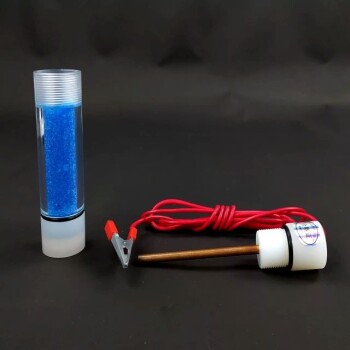
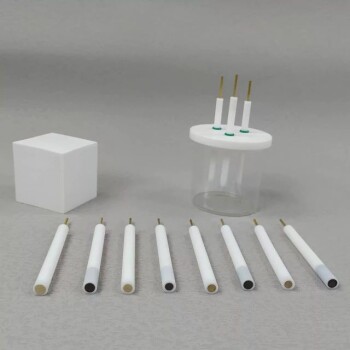
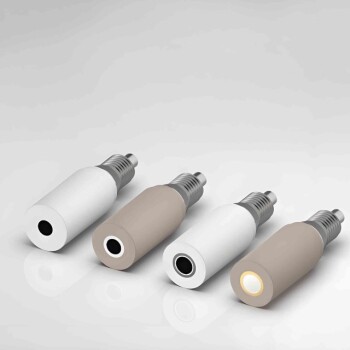
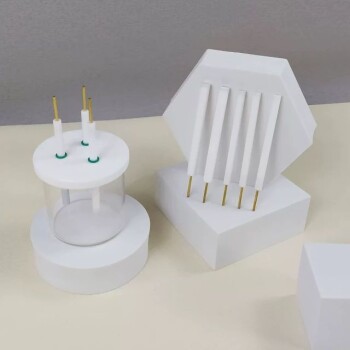
The selection of a reference electrode in Hydrogen Evolution Reaction (HER) testing is directly dictated by the pH of the bulk electrolyte. To ensure valid experimental results, you must use a Silver/Silver Chloride (Ag/AgCl) electrode for acidic environments and a Mercury/Mercury Oxide (Hg/HgO) electrode for alkaline environments.
Core Takeaway Matching the reference electrode to the electrolyte’s pH is not merely a procedural preference; it is a requirement for thermodynamic stability. Failing to align these components introduces potential drift, which leads to erroneous overpotential calculations and invalidates the assessment of your catalyst's activity.
The Principles of Electrode Selection
Matching Chemistry to Environment
The internal chemistry of your reference electrode must be compatible with the external electrolyte to function correctly.
For acidic electrolytes, the Ag/AgCl electrode is the standard choice. It remains chemically stable in low pH solutions, ensuring the reference potential does not fluctuate due to environmental incompatibility.
For alkaline electrolytes, the Hg/HgO electrode is the required standard. It is designed to withstand high pH environments where other electrodes might degrade or exhibit unstable potentials.
Ensuring Measurement Stability
The primary function of a reference electrode is to provide a constant, known potential against which the working electrode is measured.
By matching the electrode to the pH (Ag/AgCl for acid, Hg/HgO for base), you minimize the risk of chemical interference at the electrode junction. This specific pairing is essential for maintaining a stable reference potential throughout the duration of the test.
Understanding the Trade-offs and Risks
The Consequence of Potential Drift
If you select a reference electrode that opposes the electrolyte's pH, you risk introducing potential drift.
Drift occurs when the reference potential changes over time rather than remaining constant. This instability makes it impossible to distinguish between changes in the catalyst's performance and artifacts caused by the reference electrode itself.
Errors in Overpotential Calculation
HER performance is primarily judged by overpotential—the extra voltage required to drive the reaction.
Overpotential is a calculated value derived relative to the reference potential. If the reference potential drifts due to a pH mismatch, your overpotential calculations will contain significant errors, leading to false conclusions about the catalyst's efficiency.
Standardization of Assessment
Reliable science relies on reproducibility and standardization.
Using the correct electrode-electrolyte pairing (Ag/AgCl in acid; Hg/HgO in alkali) allows for the standardized assessment of electrocatalytic activity. This ensures your data can be accurately compared against literature values and other standardized benchmarks.
Making the Right Choice for Your Goal
To guarantee the integrity of your HER testing data, apply the following selection criteria:
- If your primary focus is Acidic Electrolytes: Select the Ag/AgCl electrode to ensure chemical stability and prevent potential drift.
- If your primary focus is Alkaline Electrolytes: Select the Hg/HgO electrode to maintain a stable reference potential in high pH conditions.
Correct electrode selection is the non-negotiable foundation of accurate electrochemical analysis.
Summary Table:
| Electrolyte pH | Recommended Reference Electrode | Chemical Stability | Key Benefit |
|---|---|---|---|
| Acidic (Low pH) | Silver/Silver Chloride (Ag/AgCl) | High in Acidic Media | Prevents junction potential fluctuations |
| Alkaline (High pH) | Mercury/Mercury Oxide (Hg/HgO) | High in Basic Media | Ensures stable potential in high pH |
| Mismatch Risk | Any Incompatible Pair | Unstable / Drifting | Leads to erroneous overpotential data |
Elevate Your Electrochemical Research with KINTEK
Precise results in Hydrogen Evolution Reaction (HER) testing depend on more than just high-performance catalysts—they require the right tools. KINTEK specializes in providing the industry’s most reliable electrolytic cells, electrodes (including Ag/AgCl and Hg/HgO), and comprehensive battery research consumables designed for thermodynamic stability.
Whether you are working in acidic or alkaline environments, our laboratory solutions ensure zero potential drift and accurate overpotential calculations. From high-temperature reactors to precision crushing systems and cooling solutions, we empower researchers with the precision they need.
Ready to optimize your lab’s accuracy? Contact our technical experts today to find the perfect reference electrodes and electrolytic components for your specific pH requirements!
References
- Abdulsattar H. Ghanim, Syed Mubeen. Low-Loading of Pt Nanoparticles on 3D Carbon Foam Support for Highly Active and Stable Hydrogen Production. DOI: 10.3389/fchem.2018.00523
This article is also based on technical information from Kintek Solution Knowledge Base .
Related Products
- Reference Electrode Calomel Silver Chloride Mercury Sulfate for Laboratory Use
- Copper Sulfate Reference Electrode for Laboratory Use
- Metal Disc Electrode Electrochemical Electrode
- Gold Electrochemical Sheet Electrode Gold Electrode
- Platinum Sheet Electrode for Battery Lab Applications
People Also Ask
- What is the function of a reference electrode? Master Precision in Three-Electrode Reactor Reconstruction
- What is the recommended maintenance for the filling solution of a reference electrode? A Guide to Stable & Accurate Readings
- Which electrode is used as a ground reference? Master the Key to Accurate Electrochemical Measurements
- What is the reference electrode in potentiometry? The Key to Stable & Accurate Measurements
- Which electrode is used as a reference? A Guide to Accurate Electrochemical Measurements