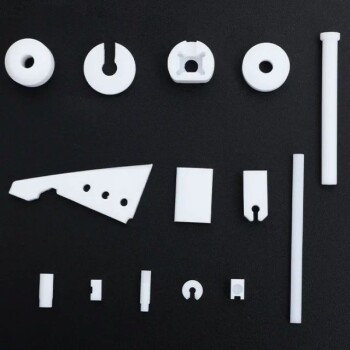
Standard opening configurations for all-PTFE electrolytic cells vary depending on whether the system requires atmospheric isolation. A standard non-sealed cell features three openings with a diameter of 6.2mm, while a sealed cell retains these three 6.2mm openings and adds two smaller openings with a diameter of 3.2mm.
Core Takeaway The primary difference between the configurations is the addition of gas-purging capabilities in the sealed version. While both models provide standard ports for electrodes, the sealed cell includes smaller auxiliary ports specifically designed to support gas inlet and outlet lines.
The Non-Sealed Configuration
Primary Aperture Layout
For general electrochemical applications where atmospheric isolation is not a priority, the standard non-sealed cell utilizes a simplified design.
Specifications
This configuration consists of three openings, each with a diameter of 6.2mm. These identical ports are typically used to accommodate the working electrode, counter electrode, and reference electrode.
The Sealed Configuration
Electrode Ports
The sealed all-PTFE cell builds upon the foundation of the non-sealed design. It retains the standard three openings with a diameter of 6.2mm to house the primary electrode system.
Gas Exchange Ports
To facilitate a sealed environment, this configuration adds two openings with a diameter of 3.2mm.
These smaller ports are generally utilized for inserting gas inlet and outlet tubing, allowing researchers to purge the cell with inert gas or collect gaseous products during the experiment.
Understanding Flexibility and Limitations
The Limits of Standardization
While the dimensions listed above (6.2mm and 3.2mm) are the industry standards, they may not fit every piece of equipment. Using electrodes or tubing that do not match these specific diameters can compromise the seal or damage the PTFE cell lid.
Customization Options
It is critical to note that you are not strictly bound to these off-the-shelf configurations. Custom aperture configurations are available upon request. If your specific electrode shafts or gas lines deviate from the standard sizes, requesting a custom lid is often safer than attempting to modify a standard unit.
Making the Right Choice for Your Goal
Select the configuration that aligns with your experimental requirements and hardware dimensions.
- If your primary focus is general electrochemistry in ambient air: The non-sealed configuration with three 6.2mm ports provides the necessary access for your electrodes without unnecessary complexity.
- If your primary focus is air-sensitive reactions or gas analysis: The sealed configuration is required, as the two additional 3.2mm ports allow for proper gas purging and isolation.
- If your primary focus involves non-standard electrode sizes: You should disregard the standard configurations and request a custom fabrication to ensure a proper fit and seal.
Ensure your electrode shaft diameters match the cell openings precisely to maintain the integrity of your electrochemical setup.
Summary Table:
| Feature | Non-Sealed PTFE Cell | Sealed PTFE Cell |
|---|---|---|
| Total Openings | 3 | 5 |
| Electrode Ports | 3 x 6.2mm | 3 x 6.2mm |
| Gas Exchange Ports | None | 2 x 3.2mm |
| Best Used For | Ambient air electrochemistry | Air-sensitive or gas-purging reactions |
| Customization | Available upon request | Available upon request |
Precision Solutions for Your Electrochemical Research
Maximize the integrity of your air-sensitive experiments with KINTEK’s premium all-PTFE electrolytic cells. Whether you need standard 6.2mm electrode configurations or custom-designed port sizes to match your specific hardware, KINTEK provides the durability and chemical resistance required for high-performance laboratory work.
Our extensive portfolio supports every facet of your research, featuring:
- Electrochemical Excellence: High-precision electrolytic cells, electrodes, and battery research tools.
- Material Processing: Advanced crushing, milling, and high-temperature furnaces (CVD, PECVD, Vacuum).
- Laboratory Essentials: Durable PTFE products, ceramics, crucibles, and high-pressure autoclaves.
Don't compromise on your experimental setup. Contact our technical specialists today to find the perfect cell configuration or to request a custom fabrication tailored to your laboratory's unique requirements.
Related Products
- PTFE Electrolytic Cell Electrochemical Cell Corrosion-Resistant Sealed and Non-Sealed
- Electrolytic Electrochemical Cell with Five-Port
- Double Layer Five-Port Water Bath Electrolytic Electrochemical Cell
- Thin-Layer Spectral Electrolysis Electrochemical Cell
- Optical Water Bath Electrolytic Electrochemical Cell
People Also Ask
- What is the necessity of selecting a PTFE electrolytic cell? Ensure Precise Graphene Corrosion Testing Accuracy
- What is the proper method for cleaning the surface of an all-PTFE electrolytic cell? Ensure Accurate Results with a Pristine Surface
- How should an all-PTFE electrolytic cell be stored after use? Expert Maintenance Tips for Long-Lasting Performance
- What is the proper cleaning method for an all-PTFE electrolytic cell? Essential Tips for Surface Integrity
- What are the standard opening specifications for all-PTFE electrolytic cells? A Guide to Sealed vs. Non-Sealed Ports