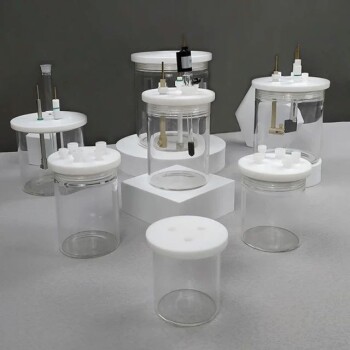
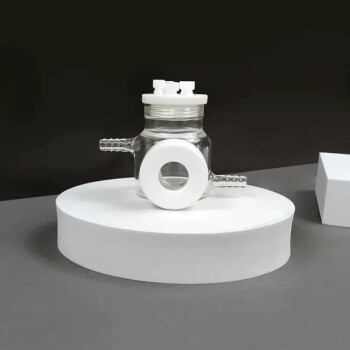
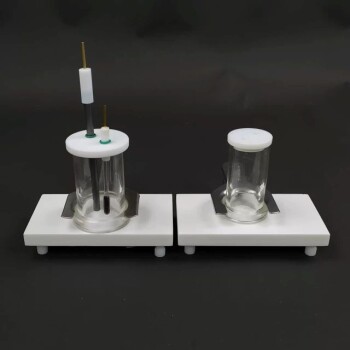
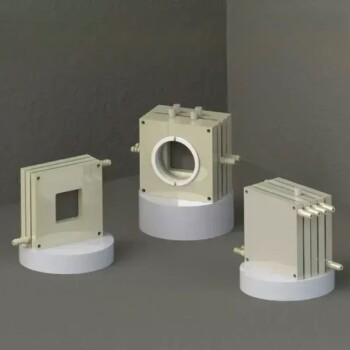
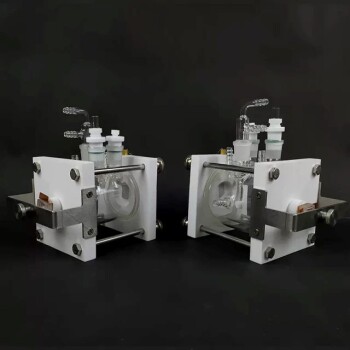
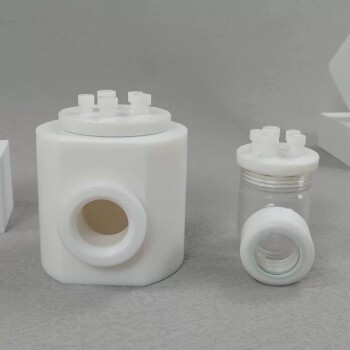
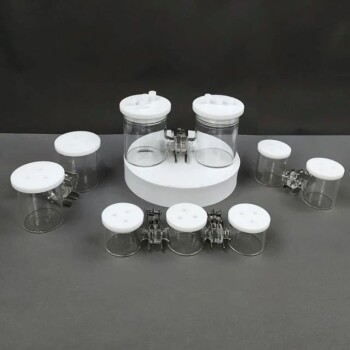
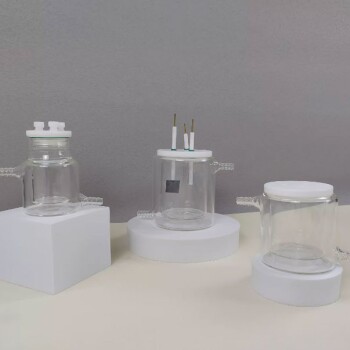
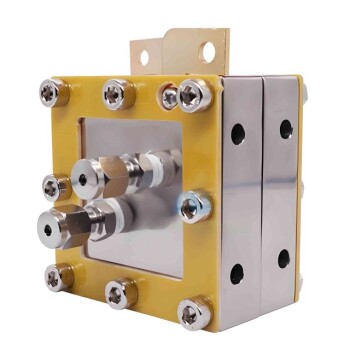
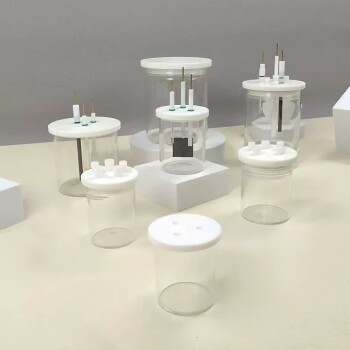
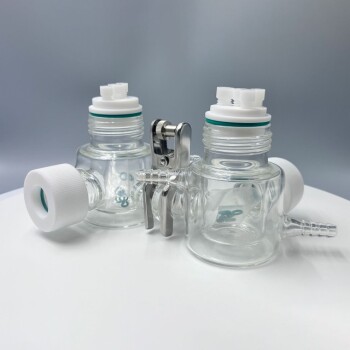
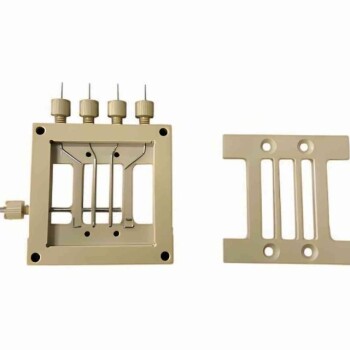
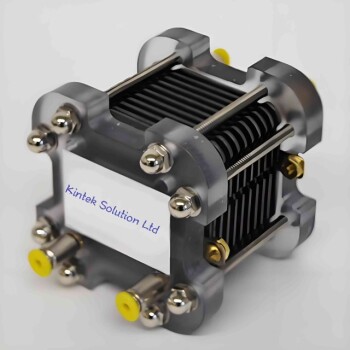
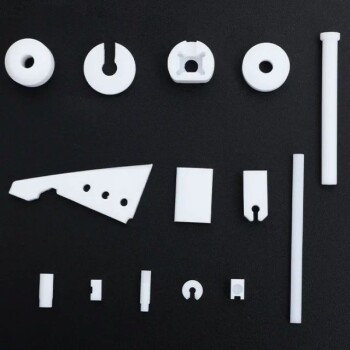
The all-PTFE electrolytic cell is a specialized reaction vessel constructed entirely from polytetrafluoroethylene to maximize durability in harsh electrochemical environments. By replacing standard glass or metal components with this high-performance fluoropolymer, the cell provides a chemically inert and electrically insulating structure capable of withstanding aggressive electrolytes without degradation.
Core Insight: When standard glassware cannot survive the chemistry or electrical conditions of your experiment, the all-PTFE cell provides the ultimate defense. Its monolithic fluoropolymer construction ensures zero corrosion, total insulation, and long-term stability in the most demanding reaction environments.
Engineering for Extreme Environments
Unmatched Chemical Stability
The primary advantage of the all-PTFE construction is its virtual immunity to chemical attack. Unlike glass, which can be etched by hydrofluoric acid or strong alkalis, this cell resists erosion from nearly all known chemicals.
This ensures that the vessel itself does not react with your electrolyte. Consequently, your experimental data remains pure, free from interference caused by dissolved container materials.
Superior Electrical Insulation
Accurate electrochemical measurements require strict control over current paths. The all-PTFE cell leverages the material's excellent insulating properties and low dielectric constant to prevent electrical leakage.
By insulating the reaction environment completely, the structure guarantees that current flows exclusively between the electrodes. This eliminates "stray currents" through the cell walls that could skew sensitive voltammetric or amperometric data.
Wide Thermal Range
The structural integrity of these cells remains consistent across extreme temperature gradients.
Thanks to the thermal properties of PTFE, the cell can operate effectively from as low as -180°C up to +260°C. This allows researchers to perform cryogenic or high-temperature electrolysis in the same vessel without fear of cracking or melting.
Practical Operational Benefits
Non-Stick Surface for Clean Results
PTFE is renowned for its high lubricity and non-stick surface properties.
In an electrolytic context, this prevents reaction byproducts or salts from adhering stubbornly to the cell walls. This characteristic makes the cell exceptionally easy to clean and significantly reduces the risk of cross-contamination between different experimental runs.
Long-Term Durability
Standard laboratory equipment often degrades due to environmental stress.
The all-PTFE cell possesses strong anti-aging abilities, resisting the brittleness that plagues other plastics and the etching that affects glass. It maintains stable performance over long periods, even when continuously exposed to harsh atmospheric conditions or corrosive fumes.
Understanding the Trade-offs
Lack of Visual Transparency
The most significant structural trade-off of an all-PTFE cell is its opacity.
Because the material is not transparent, you cannot visually monitor the reaction in real-time. If observing color changes, bubble formation, or electrode surface morphology during the experiment is critical, this cell type may not be suitable.
Mechanical Softness
While chemically robust, PTFE is mechanically softer than borosilicate glass or quartz.
Users must exercise care when inserting electrodes or cleaning the interior. Sharp tools or abrasive scrubbing pads can scratch the surface, potentially creating micro-crevices that are difficult to clean.
Making the Right Choice for Your Experiment
To determine if an all-PTFE cell is the correct vessel for your specific application, consider your priority requirements:
- If your primary focus is handling super-acids (like HF) or strong bases: Choose the all-PTFE cell for its total chemical inertness and corrosion resistance.
- If your primary focus is visual monitoring of the reaction: Choose a glass or quartz cell, as the opacity of PTFE will prevent direct observation.
- If your primary focus is high-precision electrical data: Choose the all-PTFE cell to eliminate background noise caused by wall conductivity or leakage.
The all-PTFE electrolytic cell is your definitive solution when material inertness and electrical precision outweigh the need for visual observation.
Summary Table:
| Feature | Advantage | Benefit |
|---|---|---|
| Material | 100% Virgin PTFE | Immunity to HF, strong acids, and alkalis |
| Temperature | -180°C to +260°C | Suitable for cryogenic and high-heat electrolysis |
| Insulation | High Dielectric Strength | Eliminates stray currents for precise data |
| Surface | Non-Stick/Hydrophobic | Prevents salt buildup and cross-contamination |
| Durability | Anti-aging Properties | Resistant to brittleness and environmental stress |
Elevate Your Electrochemical Precision with KINTEK
Don't let corrosive electrolytes compromise your research data. KINTEK specializes in high-performance laboratory equipment, providing researchers with premium electrolytic cells and electrodes designed for the most demanding conditions.
Our all-PTFE cells offer the ultimate defense against chemical attack and electrical leakage, ensuring your results remain pure. Beyond electrochemical tools, KINTEK provides a comprehensive range of high-temperature furnaces, hydraulic presses, and specialized consumables tailored for advanced material science.
Ready to upgrade your lab's durability? Contact our specialists today to find the perfect PTFE solution or high-pressure reactor for your application.
Related Products
- PTFE Electrolytic Cell Electrochemical Cell Corrosion-Resistant Sealed and Non-Sealed
- Double Layer Five-Port Water Bath Electrolytic Electrochemical Cell
- Electrolytic Electrochemical Cell with Five-Port
- Thin-Layer Spectral Electrolysis Electrochemical Cell
- Optical Water Bath Electrolytic Electrochemical Cell
People Also Ask
- What is the necessity of selecting a PTFE electrolytic cell? Ensure Precise Graphene Corrosion Testing Accuracy
- What is the proper method for cleaning the surface of an all-PTFE electrolytic cell? Ensure Accurate Results with a Pristine Surface
- How should an all-PTFE electrolytic cell be stored after use? Expert Maintenance Tips for Long-Lasting Performance
- What is the proper cleaning method for an all-PTFE electrolytic cell? Essential Tips for Surface Integrity
- What are the standard opening specifications for all-PTFE electrolytic cells? A Guide to Sealed vs. Non-Sealed Ports