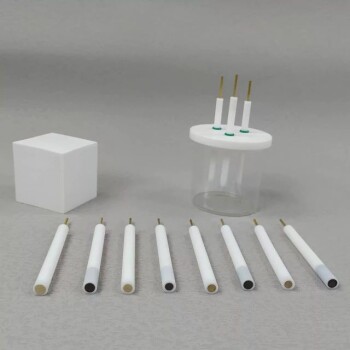
Platinum wire is the gold standard for auxiliary electrodes in electrochemical sensing. Its primary technical advantages include exceptional electrical conductivity and extreme chemical inertness, which ensure that the measured current reflects only the redox activity of gallic acid at the working electrode.
The use of a platinum wire electrode provides a stable, non-reactive pathway to complete the electrochemical circuit. This isolation ensures that current signals originate solely from the analyte, preventing data corruption from side reactions or electrode degradation.
Maintaining Chemical Integrity and Signal Purity
Superior Chemical Inertness
Platinum is chosen for its ability to remain stable across a wide range of experimental potentials. In gallic acid detection, this chemical inertness ensures the electrode does not participate in the redox process, keeping the focus entirely on the analyte.
Prevention of Electrolyte Contamination
Unlike base metals, platinum does not release impurity ions into the electrolyte, even in aggressive or acidic environments. This prevents unwanted metallic species from interfering with the electrochemical evaluation of the working electrode's surface.
High-Purity Signal Isolation
By acting as a passive conductor, the platinum wire guarantees that the current signals captured by the workstation are a true representation of the gallic acid reaction. This eliminates "noise" or parasitic currents that would otherwise decrease the accuracy of the detection results.
Enhancing Measurement Accuracy and Stability
High Electrical Conductivity
Platinum's high electrical conductivity allows for efficient electron transfer between the auxiliary and working electrodes. This minimizes ohmic drop within the circuit, ensuring the system can respond rapidly to changes in the concentration of gallic acid.
Protecting the Reference Electrode
In a three-electrode system, the platinum wire carries the experimental current, preventing it from flowing through the reference electrode. This protection avoids potential polarization of the reference, maintaining the stability and precision of the entire measurement system.
Balancing Charge Transfer
The auxiliary electrode serves to balance the charge transfer occurring at the working electrode. Platinum’s stability ensures this charge balance is maintained without the electrode itself becoming a source of experimental error or drift over time.
Optimizing Kinetic Response
Overcoming Rate-Limiting Constraints
Using a spiral platinum wire increases the effective surface area of the auxiliary electrode. This ensures that the counter electrode never becomes the rate-limiting step, allowing the workstation to accurately measure high current densities if required.
Reducing Polarization Resistance
The high specific surface area of platinum configurations reduces polarization resistance. This efficiency ensures that the reaction rate of the entire electrochemical circuit is governed strictly by the working electrode’s interaction with the gallic acid.
Understanding the Trade-offs
Cost and Material Availability
The most significant drawback of platinum is its high material cost compared to alternatives like carbon or stainless steel. For routine, low-precision testing, the expense may not always be justified by the marginal gains in stability.
Potential for Gas Evolution
While inert, platinum can catalyze the evolution of hydrogen or oxygen if the potential moves too far outside the stability window of the solvent. If gas bubbles form on the wire, they can temporarily reduce the effective surface area and introduce minor fluctuations in the current.
Making the Right Choice for Your Goal
How to Apply This to Your Project
- If your primary focus is maximum analytical precision: Use a high-purity platinum wire to ensure no impurity ions interfere with the gallic acid redox signature.
- If your primary focus is high-current density experiments: Opt for a spiral or "platinum black" coated wire to maximize surface area and prevent the auxiliary electrode from limiting the reaction rate.
- If your primary focus is long-term stability in acidic media: Rely on platinum’s resistance to corrosion to maintain a consistent conductive path over multiple test cycles.
By leveraging the unique physical and chemical properties of platinum, researchers can isolate the specific behavior of gallic acid with the highest degree of scientific validity.
Summary Table:
| Key Advantage | Technical Benefit | Impact on Detection |
|---|---|---|
| Chemical Inertness | Remains stable across potentials | Prevents side reactions & ensures signal purity |
| High Conductivity | Efficient electron transfer | Minimizes ohmic drop & enables rapid response |
| Ion Stability | No leaching of impurity ions | Prevents electrolyte contamination |
| Charge Balancing | Carries experimental current | Protects reference electrode from polarization |
| Design Flexibility | High surface area (Spiral) | Prevents the auxiliary electrode from limiting the reaction rate |
Elevate Your Electrochemical Research with KINTEK
Precision in gallic acid detection starts with high-quality components. KINTEK specializes in premium laboratory equipment and consumables, offering high-purity platinum wire electrodes, electrolytic cells, and high-performance electrodes designed for maximum analytical accuracy.
Beyond electrochemistry, our portfolio supports your entire lab workflow with high-temperature furnaces, hydraulic presses, and advanced cooling solutions. Whether you are a researcher focused on signal purity or a distributor seeking reliable supply chains and OEM support, we bring the expertise and durability your projects demand.
Ready to optimize your lab's performance? Contact KINTEK today for a tailored solution!
References
- Chenggong Gui. Prediction of food additives based on grey prediction model and electrochemical analysis of gallic acid. DOI: 10.54097/hset.v33i.5328
This article is also based on technical information from Kintek Solution Knowledge Base .
Related Products
- Platinum Sheet Electrode for Laboratory and Industrial Applications
- Rotating Platinum Disk Electrode for Electrochemical Applications
- Platinum Sheet Electrode for Battery Lab Applications
- Platinum Auxiliary Electrode for Laboratory Use
- High Purity Gold Platinum Copper Iron Metal Sheets
People Also Ask
- What is a common use for a platinum sheet electrode? As a Reliable Counter Electrode in Electrochemical Cells
- What is the most critical guideline for immersing a platinum sheet electrode in an electrolyte? Ensure Accurate Electrochemical Measurements
- What is the purity of the platinum sheet in a platinum sheet electrode? The Key to Reliable Electrochemical Data
- What is the expected lifespan of a platinum sheet electrode? Maximize Your Electrode's Service Life
- What are the available specifications for platinum sheet electrodes? Find the Perfect Fit for Your Electrochemical Needs