Specialized pressure-applying electrochemical cells primarily address the mechanical instability inherent to solid-solid interfaces and the chemical sensitivity of sulfide-based electrolytes. These devices act as a stabilizing exoskeleton, ensuring that the critical contact points within the battery stack survive the physical stress of operation.
Core Insight Solid-state batteries fail when their internal layers lose physical contact or react with the atmosphere. Specialized cells solve this by applying continuous, adjustable mechanical pressure to maintain the electrode-electrolyte interface while simultaneously creating a hermetic seal to protect sensitive materials like LGPS from moisture.
Overcoming Mechanical Instability
Counteracting Volume Fluctuations
Batteries "breathe" during operation. As lithium moves during charging and discharging (stripping and plating), the volume of the electrode materials changes significantly.
Without external intervention, this expansion and contraction leads to gaps. Specialized cells provide continuous external stack pressure (often between 1.5 MPa and 17 MPa) to physically compress the layers, compensating for these volume shifts in real-time.
Preventing Interface Delamination
Unlike liquid electrolytes, which flow to fill gaps, solid electrolytes like LGPS cannot wet the electrode surface.
If the contact is lost, the battery creates an open circuit or creates areas of high localized current. Pressure cells force the Lithium metal and LGPS electrolyte to remain in tight physical contact, preventing separation and crack propagation that would otherwise kill the battery's cycle life.
Minimizing Interfacial Impedance
Physical separation leads to electrical resistance.
By maintaining substantial contact pressure, these cells ensure the active contact area remains high. This directly reduces interfacial resistance and impedance, allowing ions to transport efficiently between the cathode, electrolyte, and anode.
Ensuring Chemical Integrity
Isolating Sensitive Sulfides
Materials like Li10GeP2S12 (LGPS) are highly reactive sulfides.
They degrade rapidly when exposed to ambient air. Specialized test cells feature a sealed design specifically engineered to isolate these electrolytes from atmospheric moisture and oxygen, preventing irreversible chemical degradation before testing even begins.
Understanding the Trade-offs
Complexity vs. Reliability
Standard testing hardware (like coin cells) creates fixed, uncontrolled pressure that varies as the battery expands.
While specialized pressure cells offer superior data reliability, they require bulky, complex hardware to maintain adjustable and constant pressure. The trade-off is a higher setup complexity to gain the "true" performance data of the material, unclouded by the mechanical failures that occur in standard cells.
Making the Right Choice for Your Goal
- If your primary focus is Cycle Life Stability: Prioritize cells capable of maintaining higher pressures (above 7 MPa) to mechanically suppress separation during the aggressive volume changes of Li-metal stripping.
- If your primary focus is Material Characterization: Ensure the cell design emphasizes hermetic sealing to prevent moisture contamination from skewing your intrinsic conductivity data for LGPS.
Engineering the cell casing is just as critical as engineering the chemistry inside it.
Summary Table:
| Challenge | Impact on Battery | Specialized Cell Solution |
|---|---|---|
| Volume Fluctuations | Expansion/contraction creates gaps | Continuous external stack pressure (1.5-17 MPa) |
| Interface Delamination | Loss of physical contact/open circuits | Forced tight contact via mechanical compression |
| High Interfacial Impedance | Reduced ion transport efficiency | Maintaining high active contact area to lower resistance |
| Chemical Sensitivity | LGPS degradation via air/moisture | Hermetic sealing and atmospheric isolation |
Elevate Your Solid-State Battery Research with KINTEK
Precise mechanical control and chemical isolation are non-negotiable for accurate ASSB characterization. KINTEK specializes in advanced laboratory equipment designed for high-stakes energy research. Our portfolio includes specialized electrolytic cells and electrodes specifically engineered to apply constant stack pressure and maintain hermetic seals, ensuring your LGPS and Li-metal testing yields reliable, repeatable data.
Beyond battery research tools, KINTEK offers a comprehensive range of high-temperature furnaces (muffle, vacuum, CVD), crushing and milling systems, and hydraulic pellet presses to streamline your material synthesis.
Ready to overcome mechanical instability in your lab? Contact us today to explore our specialized battery testing solutions.
Related Products
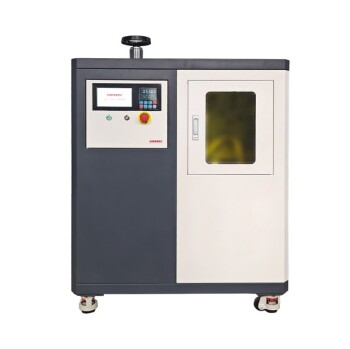
- Warm Isostatic Press for Solid State Battery Research
- Laboratory Hydraulic Press Lab Pellet Press for Button Battery
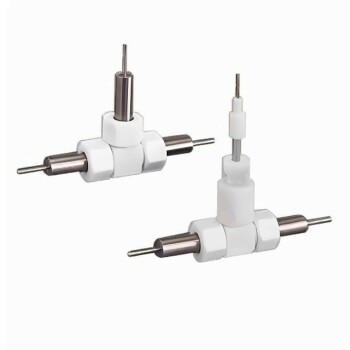
- Customizable Swagelok Type Test Cells for Advanced Battery Research Electrochemical Analysis
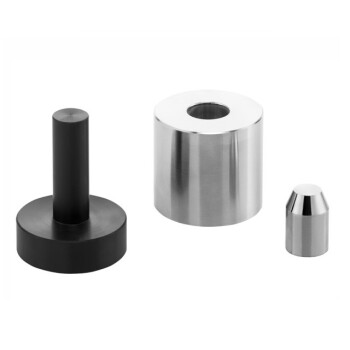
- Button Battery Tablet Press Sealing Mold for Lab Use
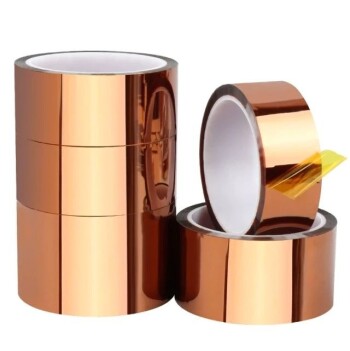
- Lithium Battery Tab Tape for Battery Lab Applications
People Also Ask
- What is the temperature of a warm isostatic press? Achieve Optimal Densification for Your Materials
- What is the function of a Warm Isostatic Press (WIP) in all-solid-state pouch cells? Optimize Battery Density
- Why are Warm Isostatic Presses (WIP) necessary for solid-state batteries? Achieve Atomic-Level Contact
- What advantages does a warm isostatic press offer over a traditional uniaxial press for Li6PS5Cl electrolyte sheets?
- How do warm isostatic presses improve dry electrode performance? Enhance ASSB Conductivity with Heat & Pressure