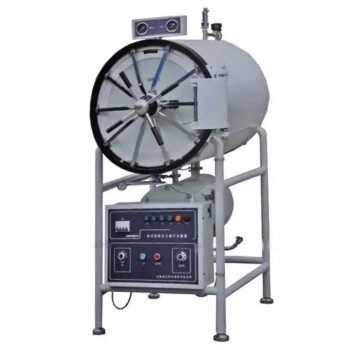
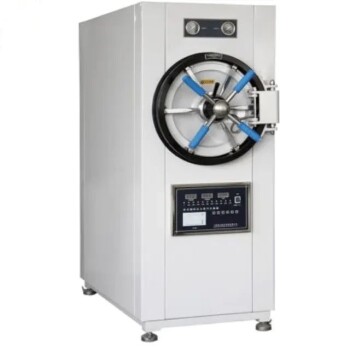
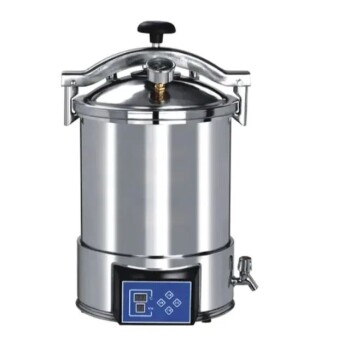
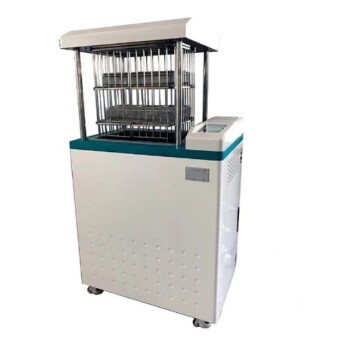
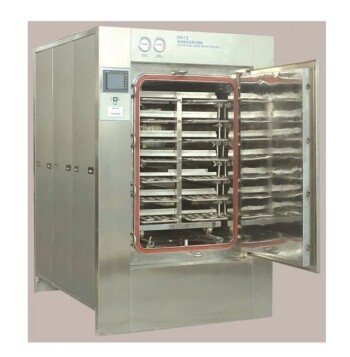
Large-capacity stainless steel autoclaves provide a rigorously controlled environment defined by high temperature (typically 288°C) and high pressure (around 10.3 MPa). These specific conditions are engineered to accurately replicate the severe operating environments of Boiling Water Reactors (BWR) and Pressurized Water Reactors (PWR), enabling the precise testing of nuclear materials.
Core Insight: By integrating a sealed high-pressure vessel with advanced water chemistry controls, these autoclaves do more than just heat water; they recreate the complex "chemical ecosystem" of a nuclear reactor to validate the safety and longevity of fuel cladding materials.
The Physical Pillars of Simulation
To bridge the gap between the laboratory and a functional nuclear plant, the autoclave must maintain three specific physical conditions simultaneously.
Precise Thermal and Hydraulic Stability
The primary function of the autoclave is to create a stable hydrothermal environment.
External electric heating and precision pressure devices maintain the internal temperature at 288°C and pressure at 10.3 MPa.
This stability is critical because fluctuations in heat or pressure can alter the phase of the water or the stress placed on the materials, invalidating the simulation of reactor conditions.
Controlled Water Chemistry
Heat and pressure alone are insufficient; the chemical composition of the water must also mimic the reactor coolant.
The system allows for the strict regulation of dissolved oxygen (DO) and dissolved hydrogen (DH) levels within the sealed space.
This control extends to trace impurity ions, such as sulfate, which are introduced to test how materials handle chemical stressors found in real-world operations.
Lithiated and Borated Aqueous Environments
Beyond basic impurities, the autoclave can maintain specific chemical solutions required for different reactor types.
For PWR simulations, the system can manage a lithiated aqueous solution or control boron/lithium compositions.
This capability is essential for studying the interaction between the coolant chemistry and the structural materials over long exposure periods.
Material Testing Applications
The ultimate goal of creating these physical conditions is to assess material performance.
Assessing FeCrAl Alloy Durability
The primary application described is the evaluation of FeCrAl (Iron-Chromium-Aluminum) alloys used for nuclear fuel cladding.
Researchers use the autoclave to determine the long-term environmental durability of these alloys when exposed to the corrosive combination of high heat, pressure, and specific water chemistries.
Accelerated Corrosion and Cracking Studies
These systems facilitate the study of Environmentally Assisted Cracking (EAC) and general corrosion behavior.
By sustaining these extreme conditions, the autoclave allows researchers to accelerate the aging process of materials like 316L stainless steel and alloy 182 to predict service life reliability.
Understanding the Trade-offs
While these autoclaves are powerful simulators, successful testing requires navigating specific complexities.
Complexity of Chemical Equilibrium
maintaining precise levels of trace impurities (like sulfate) or gases (DO/DH) within a sealed, high-pressure loop is technically demanding.
Any deviation in chemistry control systems can lead to inaccurate corrosion data, as material degradation is highly sensitive to even minor chemical shifts.
The Limits of Simulation
While the autoclave simulates the physicochemical environment (heat, pressure, chemistry), it is a laboratory approximation.
It isolates the material from other reactor variables, such as intense neutron radiation, focusing specifically on thermal and chemical corrosion factors.
Making the Right Choice for Your Goal
To utilize these systems effectively, align the autoclave's parameters with your specific testing objectives.
- If your primary focus is BWR Simulation: Prioritize precise control over dissolved oxygen and maintaining the standard 288°C / 10.3 MPa set points to mimic the oxidizing environment of a boiling water reactor.
- If your primary focus is PWR Simulation: Ensure the system allows for the introduction of lithium and boron into the water chemistry to replicate the primary circuit conditions of a pressurized water reactor.
- If your primary focus is Cladding Durability: Concentrate on the stability of trace impurity ions (like sulfate) to stress-test FeCrAl alloys against potential contaminants.
The value of a large-capacity autoclave lies not just in its ability to withstand pressure, but in its ability to sustain a precise, hostile chemical environment over time.
Summary Table:
| Feature | Reactor Simulation Specification |
|---|---|
| Temperature | 288°C (Hydrothermal Stability) |
| Pressure | 10.3 MPa (High-Pressure Containment) |
| Water Chemistry | Controlled Dissolved Oxygen (DO) & Hydrogen (DH) |
| Chemical Variants | Lithiated, Borated, and Sulfate-injected solutions |
| Key Applications | FeCrAl Cladding Durability & EAC Cracking Studies |
Precision Simulation for Nuclear Research
Ensure the safety and longevity of your fuel cladding materials with KINTEK’s high-temperature high-pressure reactors and autoclaves. Our equipment is engineered to replicate the most demanding reactor environments, offering unmatched control over thermal, hydraulic, and chemical parameters.
Whether you are testing FeCrAl alloys, studying 316L stainless steel corrosion, or analyzing stress cracking, KINTEK provides the specialized laboratory systems your team needs. Beyond autoclaves, we offer a comprehensive range of muffle and vacuum furnaces, crushing systems, and hydraulic presses to support every stage of material science.
Ready to elevate your lab's testing capabilities? Contact KINTEK Experts Today to find the perfect solution for your research goals.
References
- Raúl B. Rebak, Peter L. Andresen. Resistance of Ferritic FeCrAl Alloys to Stress Corrosion Cracking for Light Water Reactor Fuel Cladding Applications. DOI: 10.5006/3632
This article is also based on technical information from Kintek Solution Knowledge Base .
Related Products
- Stainless High Pressure Autoclave Reactor Laboratory Pressure Reactor
- Mini SS High Pressure Autoclave Reactor for Laboratory Use
- High Pressure Laboratory Autoclave Reactor for Hydrothermal Synthesis
- Customizable High Pressure Reactors for Advanced Scientific and Industrial Applications
- Desktop Fast High Pressure Laboratory Autoclave Sterilizer 16L 24L for Lab Use
People Also Ask
- Why is a laboratory high-pressure reactor used in the hydrothermal synthesis of hydroxyapatite catalysts?
- What role does a laboratory high-pressure reactor play in the leaching process of spent cathode materials? Optimize Recovery
- Why is a laboratory high-pressure reactor necessary for synthesizing fly ash-based zeolite? Achieve Pure Crystallization
- What conditions do laboratory high-pressure reactors provide for HTC? Optimize Your Biochar Production Processes
- What is the function of a high-pressure reactor autoclave? Enhancing Cu/N Co-Doped Carbon Catalyst Synthesis