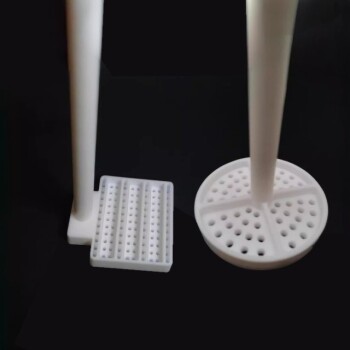
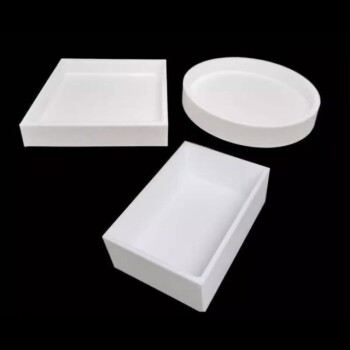
The Teflon-lined high-pressure reactor serves as the critical reaction vessel for hydrothermal oxidation and the subsequent atomic doping of carbon frameworks. It provides a sealed, high-pressure, and constant-temperature environment that enables the use of concentrated reagents to functionalize carbon surfaces. This process specifically generates oxygen-containing functional groups, such as C-OOH, which act as the essential reactive "anchors" for integrating nitrogen (N) and sulfur (S) atoms into the carbon skeleton.
The reactor's primary function is to facilitate "surface activation" by maintaining high autogenous pressure and temperature. This activation creates the chemical handles necessary for nitrogen and sulfur precursors to bond effectively with the carbon lattice, ultimately optimizing the material for applications like sodium storage.
The Chemical Mechanism of Surface Activation
Generating Reactive Functional Groups
The reactor allows for hydrothermal oxidation, typically utilizing concentrated nitric acid or similar oxidizing agents. Under these pressurized conditions, the acid promotes the formation of numerous oxygen-containing functional groups on the carbon surface. These groups are vital because they break the chemical inertness of the raw carbon, making it receptive to further modification.
Facilitating N and S Atomic Integration
Once the carbon surface is populated with oxygen groups, the reactor provides the energy needed for dual-atom doping. The high-pressure environment ensures that nitrogen and sulfur precursors can penetrate the carbon framework and undergo chemical interaction. This results in the stable integration of N and S atoms, which enhances the material's electrochemical activity and sodium storage performance.
Promoting Uniform Nucleation
By maintaining a constant temperature and sealed environment, the reactor ensures that the doping process occurs uniformly across the material. This prevents the formation of localized clusters and promotes a homogenous distribution of N and S atoms. Such uniformity is critical for achieving consistent performance in high-performance battery or capacitor electrodes.
Engineering Advantages of the Reactor Design
Corrosion Resistance via Teflon Liners
The use of a Polytetrafluoroethylene (PTFE) liner is non-negotiable when working with concentrated acids or strong alkaline solutions. Teflon is highly resistant to chemical attack, protecting the outer stainless-steel shell of the autoclave from corrosion. This ensures the purity of the synthesized carbon material by preventing metallic contamination from the reactor walls.
Management of Autogenous Pressure
As the reactor is heated, the liquid phase expands and creates autogenous pressure within the sealed vessel. This pressure drives the reactants into the pores of the carbon precursor, facilitating in-situ growth and tight coupling of the dopants. Without this pressure, the doping efficiency would be significantly lower, leading to poor atomic loading.
Structural Integrity and Confinement
The sealed nature of the reactor prevents the loss of volatile precursors or intermediate products during the heating cycle. This confinement is essential for maintaining the stoichiometry of the reaction and ensuring that the nitrogen and sulfur sources remain in contact with the carbon support. It also allows the synthesis of hierarchical nanostructures that increase the number of active sites in the final material.
Understanding the Trade-offs
Thermal Limitations of PTFE
While Teflon is chemically robust, it has a definitive thermal ceiling, typically around 220°C to 250°C. Exceeding these temperatures can lead to the mechanical failure or deformation of the liner, which may compromise the seal. For synthesis requiring higher temperatures, more expensive PPL (para-polyphenylene) liners must be utilized.
Safety Risks of High-Pressure Systems
Hydrothermal reactions generate significant internal pressure that can become hazardous if the vessel is overfilled. Standard safety protocols require that the reactor be filled to no more than 60-80% of its total capacity to allow for liquid expansion. Failure to observe these limits can result in catastrophic pressure release or vessel explosion.
How to Apply This to Your Project
When selecting or operating a Teflon-lined reactor for carbon material doping, your approach should vary based on your specific performance requirements.
- If your primary focus is Sodium Storage (NIBs): Prioritize hydrothermal oxidation with nitric acid to maximize the density of C-OOH groups, as these are the primary precursors for successful dual-doping.
- If your primary focus is Material Purity: Ensure the PTFE liner is thoroughly cleaned with aqua regia between runs to prevent cross-contamination of dopants from previous synthesis cycles.
- If your primary focus is Scalability: Monitor the filling ratio strictly to maintain consistent autogenous pressure across different reactor volumes, ensuring reproducible N and S doping levels.
The Teflon-lined high-pressure reactor is the foundational tool that transforms inert carbon into a highly functionalized, dual-atom doped framework through controlled hydrothermal chemistry.
Summary Table:
| Key Feature | Role in (N, S)-C Synthesis | Benefit |
|---|---|---|
| Hydrothermal Oxidation | Surface Activation | Generates C-OOH reactive "anchors" |
| PTFE (Teflon) Liner | Corrosion Resistance | Prevents metallic contamination from acids |
| Autogenous Pressure | Mass Transfer | Drives N and S precursors into carbon lattice |
| Sealed Confinement | Uniform Nucleation | Ensures homogeneous doping and stoichiometry |
Elevate Your Material Synthesis with KINTEK
Achieve precision in your dual-atom doping research with KINTEK’s industry-leading high-pressure reactors and autoclaves. Specialized in laboratory equipment, we offer a comprehensive range of PTFE-lined vessels, high-temperature furnaces (CVD, vacuum, muffle), and hydraulic presses designed for rigorous carbon framework functionalization.
Whether you are optimizing sodium storage performance or developing advanced hierarchical nanostructures, KINTEK provides the reliability, thermal stability, and purity your research demands. Contact us today to discuss your specific requirements and explore our full portfolio of cooling solutions, crushing systems, and specialized laboratory consumables.
References
- Bin Lü, Qi‐Hui Wu. Synthesis of Low-Cost and High-Performance Dual-Atom Doped Carbon-Based Materials with a Simple Green Route as Anodes for Sodium-Ion Batteries. DOI: 10.3390/molecules28217314
This article is also based on technical information from Kintek Solution Knowledge Base .
Related Products
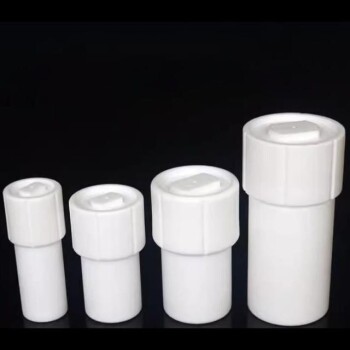
- Custom PTFE Teflon Parts Manufacturer for Reagent Wide Mouth Fine Mouth Sample High Temperature Bottles
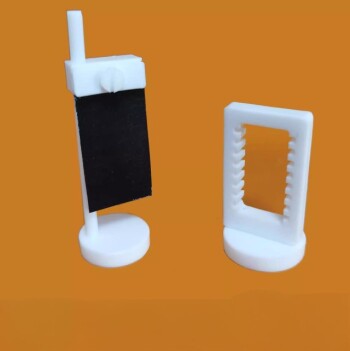
- Custom PTFE Teflon Parts Manufacturer for Hydrothermal Synthesis Reactor Polytetrafluoroethylene Carbon Paper and Carbon Cloth Nano-growth
- Custom PTFE Teflon Parts Manufacturer for Microwave Digestion Tank
- Stainless High Pressure Autoclave Reactor Laboratory Pressure Reactor
- Customizable High Pressure Reactors for Advanced Scientific and Industrial Applications
People Also Ask
- What makes PTFE bottles suitable for static leaching? Ensure Zero-Contamination for Glass Testing
- Why Use PTFE Sample Bottles for Coal Demineralization? Ensure Chemical Stability and Data Integrity
- Why are PTFE containers necessary for selective HF etching of MAX phases? Ensure Safe & Pure MXene Synthesis
- Why use high-quality PTFE containers for CO2 reduction electrolytes? Eliminate silicon contamination and ensure data.
- Why is a PTFE container required for acid leaching of silicon nanosheets? Ensure High Purity and Safety