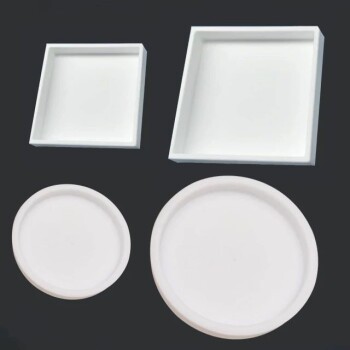
PTFE-lined high-pressure reactors (autoclaves) serve as the fundamental containment system for microwave-assisted solvothermal synthesis. These vessels provide a chemically inert, sealed environment that allows solvents to be heated far beyond their normal boiling points. This combination of high temperature and autogenous pressure facilitates the rapid dissolution of precursors and the controlled nucleation of high-crystallinity nanomaterials.
The primary function of a PTFE-lined reactor is to create a controlled, high-energy environment that stabilizes volatile solvents at extreme temperatures, protecting the equipment from corrosion while enabling precise chemical reactions that are impossible at atmospheric pressure.
Chemical Protection and Structural Integrity
Resistance to Corrosive Agents
The PTFE (polytetrafluoroethylene) liner is chosen specifically for its exceptional chemical inertness. It withstands aggressive agents used in synthesis, such as strong reducing agents (NaBH4) and reactive sulfur or selenium sources.
Safeguarding the External Jacket
High-pressure reactors typically utilize a stainless steel outer jacket for structural strength. The PTFE liner acts as a critical barrier, preventing organic solvents like acetonitrile, methanol, or NMP from corroding the metal housing during high-temperature cycles.
Maintaining a Contamination-Free Environment
Because PTFE is non-reactive, it ensures that the resulting nanocrystals maintain high purity and stoichiometric accuracy. This is vital for the synthesis of sensitive materials like perovskite oxides or binary metal sulfides.
Manipulation of Solvent Properties
Enabling Superheated Liquid States
The sealed nature of the autoclave allows solvents to remain in a liquid state at temperatures exceeding their atmospheric boiling points. This "superheating" significantly increases the solubility of reactants, allowing for more efficient chemical interactions.
Generating Autogenous Pressure
As the microwave energy heats the internal volume, autogenous pressure is generated within the sealed liner. This pressure drives the decomposition of precursors and promotes the chemical reaction between metal salts and organic ligands.
Accelerating Reaction Kinetics
The high-pressure environment drastically increases the reaction rate compared to conventional methods. This acceleration facilitates the self-assembly of complex structures, such as metal-organic frameworks (MOFs) like Gallium MIL-53.
Control Over Material Morphology
Influencing Nucleation and Growth
The stable, high-energy environment within the reactor allows for controlled nucleation. This precision is necessary to produce uniform nanometer-scale powders with specific phase structures.
Directional Morphological Control
By maintaining consistent pressure, the reactor enables the growth of elongated structures like nanorods or core-shell particles. It allows researchers to drive growth along surfactant templates or specific crystal facets.
Achieving High Crystallinity
Solvothermal conditions promote the formation of high-crystallinity products at much lower temperatures than traditional solid-state methods. This is particularly effective for achieving the desired phase purity in perovskite and sulfide materials.
Understanding the Trade-offs
Temperature Limitations of PTFE
While PTFE is chemically resilient, it has a physical limit, typically around 250°C to 260°C. Exceeding these temperatures can lead to liner deformation or "creeping," which may compromise the seal and safety of the reactor.
Thermal Lag and Microwave Absorption
PTFE is largely transparent to microwaves, meaning the solvent or reactants must absorb the energy. This can sometimes lead to thermal gradients if the internal mixture is not properly agitated or if the solvent has a low dissipation factor.
Cleaning and Memory Effects
The porous nature of some PTFE grades can lead to the absorption of small molecules. If not cleaned rigorously, "memory effects" from previous experiments can contaminate subsequent batches, especially when working with high-surface-area catalysts.
How to Apply This to Your Project
Recommendations for Success
- If your primary focus is high crystallinity: Ensure your solvent-to-volume ratio allows for sufficient autogenous pressure to drive the dissolution-crystallization process effectively.
- If your primary focus is preventing contamination: Dedicate specific PTFE liners to specific material families (e.g., one for sulfides, one for oxides) to avoid cross-contamination.
- If your primary focus is equipment longevity: Never exceed the manufacturer's maximum temperature rating for PTFE, as structural failure under pressure poses significant safety risks.
By leveraging the chemical inertness and pressure-containment capabilities of PTFE-lined reactors, researchers can achieve unparalleled control over the synthesis of advanced nanostructures.
Summary Table:
| Function | Key Benefit | Synthesis Impact |
|---|---|---|
| Chemical Inertness | Resists aggressive reducing agents | Prevents contamination; ensures high purity |
| Pressure Containment | Generates autogenous pressure | Enables superheated liquid states |
| Thermal Protection | Protects steel jacket from corrosion | Extends equipment lifespan and safety |
| Morphology Control | Stable high-energy environment | Facilitates precise nucleation of nanostructures |
Elevate Your Nanomaterial Research with KINTEK
Precision in microwave-assisted synthesis requires equipment that can withstand extreme chemical and pressure environments. KINTEK specializes in high-performance laboratory solutions, offering a comprehensive range of high-temperature high-pressure reactors and autoclaves equipped with premium PTFE products and liners.
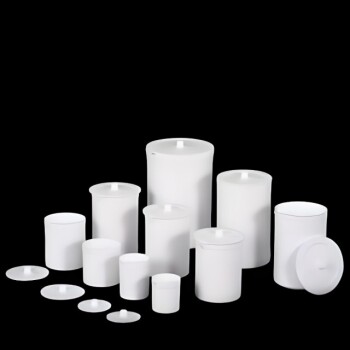
Whether you are synthesizing MOFs, perovskite oxides, or complex nanorods, our reactors ensure superior thermal stability and contamination-free results. Beyond autoclaves, we provide essential tools including PTFE crucibles, ceramic components, and specialized cooling solutions to support your entire workflow.
Ready to optimize your lab’s efficiency and reaction kinetics? Contact KINTEK today to discuss your specific requirements with our technical experts and find the perfect high-pressure system for your project.
References
- Yolanda Rati, Miranti Agustin. Raman spectroscopy of nanocomposites ZnO/ZnS and ZnO/ZnSe obtained by solvothermal-microwave synthesis method. DOI: 10.17586/2226-1494-2023-23-6-1136-1142
This article is also based on technical information from Kintek Solution Knowledge Base .
Related Products
- Custom PTFE Teflon Parts Manufacturer for Hydrothermal Synthesis Reactor Polytetrafluoroethylene Carbon Paper and Carbon Cloth Nano-growth
- Custom PTFE Teflon Parts Manufacturer for Reagent Wide Mouth Fine Mouth Sample High Temperature Bottles
- Customizable High Pressure Reactors for Advanced Scientific and Industrial Applications
- Stainless High Pressure Autoclave Reactor Laboratory Pressure Reactor
- Custom PTFE Teflon Parts Manufacturer for Microwave Digestion Tank
People Also Ask
- What is the function of a PTFE reactor in MXene etching? Ensure Safe, High-Purity MAX Phase Conversion
- Why is a PTFE reactor required for titanium-based nano-ceramic coating solutions? Ensure Chemical Inertness & Purity
- Why must a Polytetrafluoroethylene (PTFE) reactor be used for Ti3C2TX MXene etching? Ensure Safety and Purity
- Why are PTFE reactors preferred for silver phosphate glass testing? Ensure Purity and Kinetic Accuracy
- What are the advantages of using polytetrafluoroethylene (PTFE) liners in hydrothermal synthesis reactors? High Purity