Knowledge What instruments are sterilized in an autoclave the temperature must be maintained at what? The Essential Guide to Effective Sterilization
Author avatar

Tech Team · Kintek Solution

Updated 1 week ago

What instruments are sterilized in an autoclave the temperature must be maintained at what? The Essential Guide to Effective Sterilization


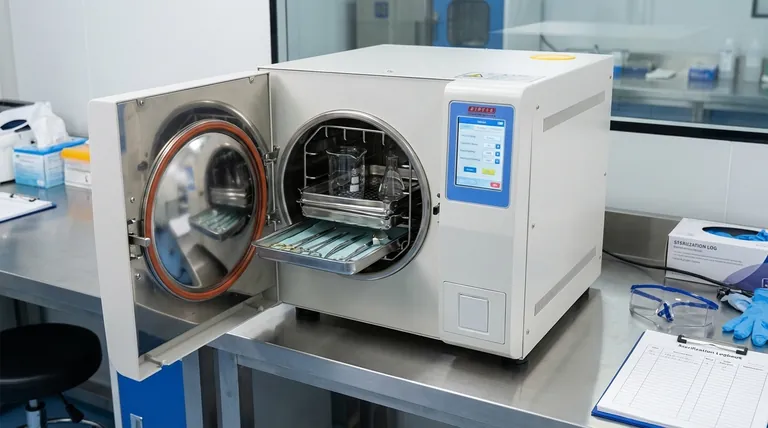
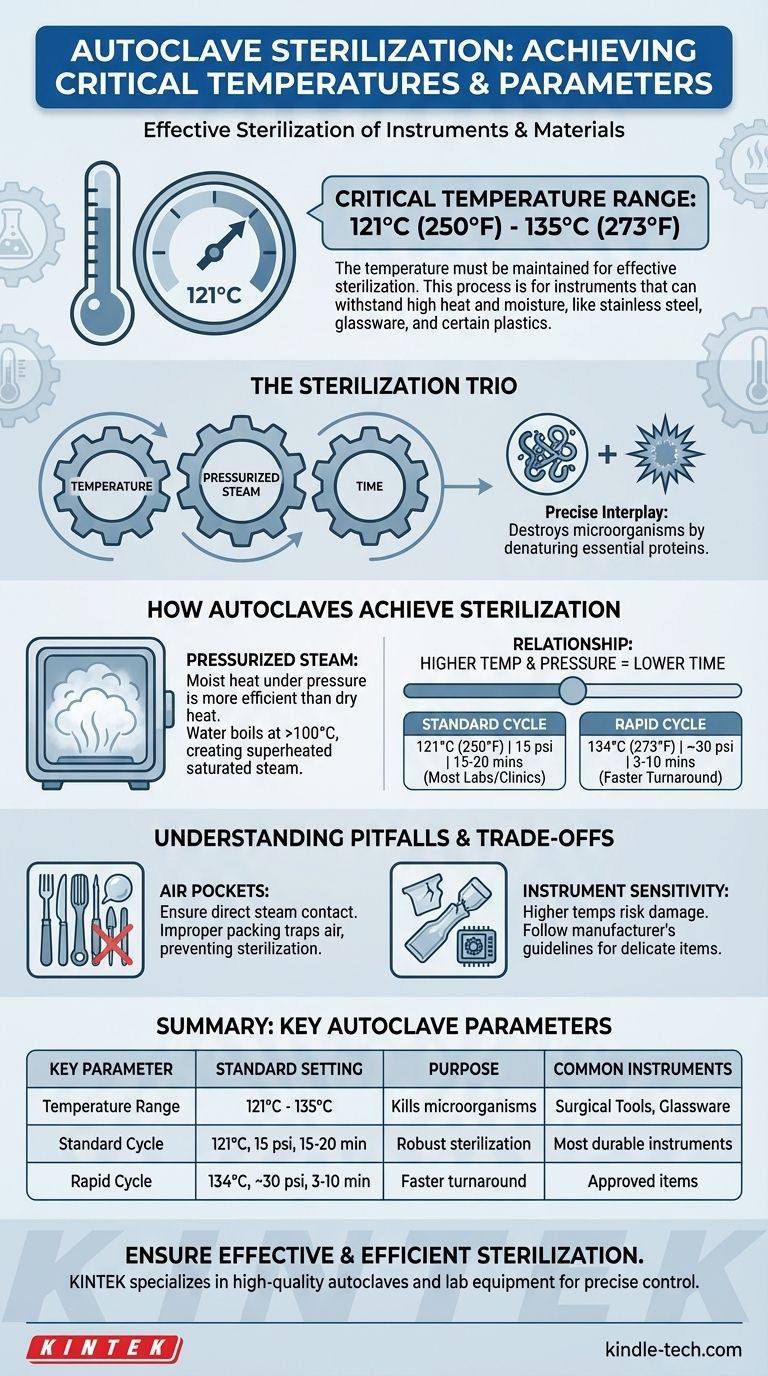
For an autoclave to effectively sterilize instruments, the temperature must be maintained between 121°C (250°F) and 135°C (273°F). This process is used for instruments and materials that can withstand high heat and moisture, such as stainless steel surgical tools, glassware, and certain types of plastics. The most common setting combines a temperature of 121°C with pressurized steam for at least 15 minutes to ensure all microorganisms are destroyed.

The critical takeaway is that sterilization in an autoclave is not just about heat. It is the result of a precise interplay between temperature, pressurized steam, and time, working together to denature the essential proteins of all microorganisms.
What instruments are sterilized in an autoclave the temperature must be maintained at what? The Essential Guide to Effective Sterilization

How Autoclaves Achieve Sterilization

An autoclave doesn't function like a simple oven. Its effectiveness comes from using moist heat under pressure, a far more efficient method of sterilization than dry heat alone.

The Role of Pressurized Steam

At normal atmospheric pressure, water boils at 100°C (212°F). An autoclave is a sealed chamber that increases the pressure, which allows water to exist as saturated steam at much higher temperatures.

This superheated steam can penetrate materials and transfer heat more effectively than dry air, rapidly killing microbes.

The Critical Relationship: Temperature, Pressure, and Time

The three core variables of autoclaving are linked. Increasing the temperature and pressure allows you to decrease the required sterilization time.

A standard cycle for many labs and clinics is 121°C (250°F) at 15 psi (pounds per square inch) of pressure for 15-20 minutes.

However, a faster cycle might run at 134°C (273°F) at nearly double the pressure (~30 psi) for as little as 3-10 minutes. This demonstrates a clear inverse relationship: as temperature goes up, required time comes down.

Understanding the Pitfalls and Trade-offs

Simply reaching the target temperature does not guarantee sterilization. The process is sensitive, and several factors can lead to failure.

The Danger of Air Pockets

Effective sterilization requires direct steam contact with every surface. If instruments are packed too densely or wrapped improperly, air can become trapped.

These air pockets prevent steam from reaching the instrument surfaces, leaving them unsterilized even though the autoclave's sensors report that the cycle reached the correct temperature and pressure.

Instrument and Material Sensitivity

While higher temperatures allow for faster cycles, they also increase the risk of damage to instruments. Delicate equipment, plastics, or complex devices with lumens may be degraded or damaged by the higher heat and pressure of a rapid "flash" cycle.

Always follow the instrument manufacturer's guidelines for sterilization. Not all "autoclavable" items can withstand every type of cycle.

Making the Right Choice for Your Goal

The cycle you choose depends entirely on the items being sterilized and your operational needs.

  • If your primary focus is robust sterilization of durable goods: Use the standard cycle of 121°C at 15 psi for at least 15 minutes, as this is a universally accepted and highly effective method for most surgical instruments and glassware.
  • If your primary focus is rapid turnaround of simple, unwrapped instruments: A higher temperature cycle (e.g., 132°C-135°C) for a shorter time may be appropriate, but use it with caution and only for items approved for this process.
  • If you are sterilizing complex or delicate items: Always default to the instrument manufacturer's specific instructions, which may require lower temperatures, longer cycles, or even different sterilization methods altogether.

Understanding these core principles empowers you to ensure every cycle is not just complete, but truly effective.

Summary Table:

Key Autoclave Sterilization Parameter Standard Setting Purpose
Temperature Range 121°C - 135°C Kills microorganisms by denaturing proteins
Standard Cycle 121°C at 15 psi for 15-20 min Most common setting for durable instruments
Rapid Cycle 134°C at ~30 psi for 3-10 min Faster sterilization for approved items
Common Instruments Surgical tools, glassware, certain plastics Items that withstand heat and moisture

Ensure your lab's sterilization is both effective and efficient. KINTEK specializes in high-quality autoclaves and lab equipment designed for precise temperature control and reliable performance. Whether you need to sterilize surgical instruments, glassware, or specialized lab consumables, our solutions help you maintain critical sterilization standards. Contact us today to find the perfect autoclave for your laboratory's needs!

Visual Guide
What instruments are sterilized in an autoclave the temperature must be maintained at what? The Essential Guide to Effective Sterilization Visual Guide

Related Products

People Also Ask

Related Products

Desktop Fast Laboratory Autoclave Sterilizer 35L 50L 90L for Lab Use

Desktop Fast Laboratory Autoclave Sterilizer 35L 50L 90L for Lab Use

The desktop fast steam sterilizer is a compact and reliable device used for rapid sterilization of medical, pharmaceutical, and research items. It efficiently sterilizes surgical instruments, glassware, medicines, and resistant materials, making it suitable for various applications.

Desktop Fast Laboratory Autoclave Sterilizer 20L 24L for Lab Use

Desktop Fast Laboratory Autoclave Sterilizer 20L 24L for Lab Use

The desktop fast steam sterilizer is a compact and reliable device used for rapid sterilization of medical, pharmaceutical, and research items.

Laboratory High Pressure Steam Sterilizer Vertical Autoclave for Lab Department

Laboratory High Pressure Steam Sterilizer Vertical Autoclave for Lab Department

Vertical pressure steam sterilizer is a kind of sterilization equipment with automatic control, which is composed of heating system, microcomputer control system and overheating and overpressure protection system.

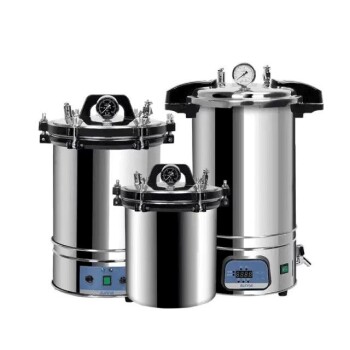
Portable Digital Display Automatic Laboratory Sterilizer Lab Autoclave for Sterilization Pressure

Portable Digital Display Automatic Laboratory Sterilizer Lab Autoclave for Sterilization Pressure

Portable autoclave sterilization pressure is a device that uses pressure saturated steam to quickly and effectively sterilize items.

Portable High Pressure Laboratory Autoclave Steam Sterilizer for Lab Use

Portable High Pressure Laboratory Autoclave Steam Sterilizer for Lab Use

Portable autoclave sterilization pressure is a device that uses pressure saturated steam to quickly and effectively sterilize items.

Laboratory Sterilizer Lab Autoclave Pulsating Vacuum Desktop Steam Sterilizer

Laboratory Sterilizer Lab Autoclave Pulsating Vacuum Desktop Steam Sterilizer

The pulsating vacuum desktop steam sterilizer is a compact and reliable device used for rapid sterilization of medical, pharmaceutical, and research items.

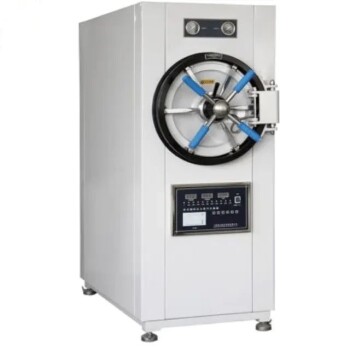
Laboratory High Pressure Horizontal Autoclave Steam Sterilizer for Lab Use

Laboratory High Pressure Horizontal Autoclave Steam Sterilizer for Lab Use

The horizontal autoclave steam sterilizer adopts the gravity displacement method to remove the cold air in the inner chamber, so that the inner steam and cold air content is less, and the sterilization is more reliable.

Desktop Fast High Pressure Laboratory Autoclave Sterilizer 16L 24L for Lab Use

Desktop Fast High Pressure Laboratory Autoclave Sterilizer 16L 24L for Lab Use

The desktop fast steam sterilizer is a compact and reliable device used for rapid sterilization of medical, pharmaceutical, and research items.

Laboratory Horizontal Autoclave Steam Sterilizer Lab Microcomputer Sterilizer

Laboratory Horizontal Autoclave Steam Sterilizer Lab Microcomputer Sterilizer

The horizontal autoclave steam sterilizer adopts the method of gravity displacement to remove the cold air in the inner chamber, so that the content of steam cold air in the inner chamber is less, and the sterilization is more reliable.

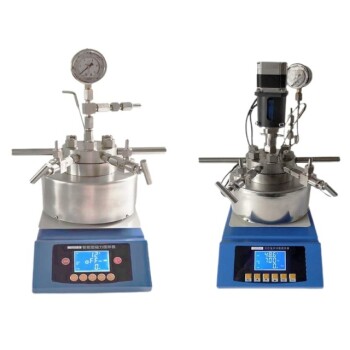
Mini SS High Pressure Autoclave Reactor for Laboratory Use

Mini SS High Pressure Autoclave Reactor for Laboratory Use

Mini SS High Pressure Reactor - Ideal for medicine, chemical, and scientific research industries. Programmed heating temp and stirring speed, up to 22Mpa pressure.

High Pressure Laboratory Autoclave Reactor for Hydrothermal Synthesis

High Pressure Laboratory Autoclave Reactor for Hydrothermal Synthesis

Discover the applications of Hydrothermal Synthesis Reactor - a small, corrosion-resistant reactor for chemical labs. Achieve rapid digestion of insoluble substances in a safe and reliable way. Learn more now.

Customizable High Pressure Reactors for Advanced Scientific and Industrial Applications

Customizable High Pressure Reactors for Advanced Scientific and Industrial Applications

This laboratory-scale high-pressure reactor is a high-performance autoclave engineered for precision and safety in demanding research and development environments.

Customizable Laboratory High Temperature High Pressure Reactors for Diverse Scientific Applications

Customizable Laboratory High Temperature High Pressure Reactors for Diverse Scientific Applications

High-pressure lab reactor for precise hydrothermal synthesis. Durable SU304L/316L, PTFE liner, PID control. Customizable volume & materials. Contact us!

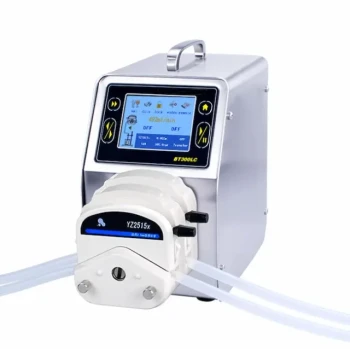
Variable Speed Peristaltic Pump

Variable Speed Peristaltic Pump

KT-VSP Series Smart Variable Speed Peristaltic Pumps offer precise flow control for labs, medical, and industrial applications. Reliable, contamination-free liquid transfer.

Laboratory Vibratory Sieve Shaker Machine Slap Vibrating Sieve

Laboratory Vibratory Sieve Shaker Machine Slap Vibrating Sieve

KT-T200TAP is a slapping and oscillating sieving instrument for laboratory desktop use, with 300 rpm horizontal circular motion and 300 vertical slapping motions to simulate manual sieving to help sample particles pass through better.

Three-dimensional electromagnetic sieving instrument

Three-dimensional electromagnetic sieving instrument

KT-VT150 is a desktop sample processing instrument for both sieving and grinding. Grinding and sieving can be used both dry and wet. The vibration amplitude is 5mm and the vibration frequency is 3000-3600 times/min.

Shaking Incubators for Diverse Laboratory Applications

Shaking Incubators for Diverse Laboratory Applications

Precision lab shaking incubators for cell culture & research. Quiet, reliable, customizable. Get expert advice today!

Custom PTFE Teflon Parts Manufacturer for Magnetic Stirring Bar

Custom PTFE Teflon Parts Manufacturer for Magnetic Stirring Bar

The PTFE magnetic stirring bar, made from high-quality PTFE, offers exceptional resistance to acids, alkalis, and organic solvents, coupled with high-temperature stability and low friction. Ideal for laboratory use, these stirring bars are compatible with standard flask ports, ensuring stability and safety during operations.

Custom PTFE Teflon Parts Manufacturer PTFE Beaker and Lids

Custom PTFE Teflon Parts Manufacturer PTFE Beaker and Lids

The PTFE beaker is a laboratory container that is resistant to acid, alkali, high and low temperatures and is suitable for temperatures ranging from -200ºC to +250ºC. This beaker has excellent chemical stability and is widely used for heat treatment samples and volume analysis.

Small Vacuum Heat Treat and Tungsten Wire Sintering Furnace

Small Vacuum Heat Treat and Tungsten Wire Sintering Furnace

The small vacuum tungsten wire sintering furnace is a compact experimental vacuum furnace specially designed for universities and scientific research institutes. The furnace features a CNC welded shell and vacuum piping to ensure leak-free operation. Quick-connect electrical connections facilitate relocation and debugging, and the standard electrical control cabinet is safe and convenient to operate.


Leave Your Message