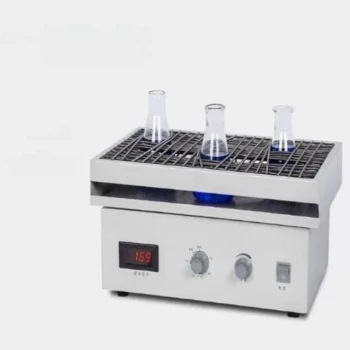
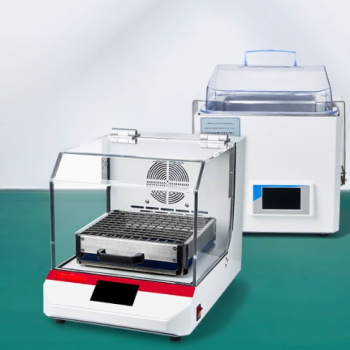
A constant temperature shaker functions as the primary kinetic engine in wastewater adsorption experiments. It ensures that solid adsorbent particles remain fully suspended in the pollutant solution through stable mechanical agitation, while simultaneously maintaining a precise thermal environment. This dual action maximizes the collision frequency between pollutants and active sites, allowing the system to reach adsorption equilibrium rapidly and accurately.
Core Takeaway: By rigorously controlling mixing speed and temperature, these devices eliminate external mass transfer resistance and environmental variables. This ensures that the resulting kinetic and thermodynamic data reflects the true chemical properties of the adsorbent, rather than inconsistencies in the experimental setup.
The Mechanics of Mass Transfer
Overcoming Film Diffusion Resistance
In a static solution, a stagnant layer of liquid (the hydrodynamic boundary layer) forms around each adsorbent particle. This "film" acts as a barrier, slowing down the movement of pollutants.
The mechanical mixing provided by the shaker generates shear force. This force thins the boundary layer, allowing pollutant molecules to migrate faster from the bulk liquid to the solid interface.
Maximizing Surface Contact
For adsorption to occur, the pollutant must physically touch the active site on the adsorbent.
The shaker’s rotation keeps particles in a continuous state of suspension. This prevents settling and ensures the entire surface area of the adsorbent is accessible for reaction, increasing the frequency of molecular collisions.
Facilitating Pore Diffusion
Once a pollutant reaches the surface, it often needs to travel into the internal porous structure of the material.
The mechanical energy and turbulence generated by the stirrer help drive the diffusion of ions (such as heavy metals like Ni(II)) into these internal pores. This is critical for fully utilizing the capacity of porous adsorbents like activated carbon or fly ash.
The Role of Thermal Stability
Establishing Thermodynamic Parameters
Adsorption is a temperature-dependent process. The capacity of an adsorbent changes depending on whether the reaction is exothermic or endothermic.
By maintaining a specific, constant temperature, researchers can isolate the effect of heat. This allows for the accurate calculation of thermodynamic parameters, such as enthalpy and entropy, which dictate the feasibility of the reaction.
Ensuring Data Reproducibility
Reaction rates are highly sensitive to ambient temperature fluctuations.
A constant temperature environment removes this variable entirely. It ensures that observed changes in adsorption speed are due to the material's properties, not the room's temperature, guaranteeing reproducible kinetic models.
Common Pitfalls and Trade-offs
Particle Attrition
While agitation is necessary, excessive speed can be detrimental.
High rotational speeds may physically grind brittle adsorbents into finer dust. This artificially increases the surface area, skewing results and potentially making the subsequent separation of solids from liquids difficult.
Kinetic Misinterpretation
The shaker primarily resolves external mass transfer resistance (getting the pollutant to the particle).
However, it cannot speed up the intrinsic chemical reaction at the active site. Researchers must distinguish whether the rate-limiting step is the physical mixing (diffusion controlled) or the chemical bond formation (reaction controlled).
Making the Right Choice for Your Goal
When configuring your shaker for an experiment, align your settings with your specific analytical focus:
- If your primary focus is Kinetics: Prioritize optimizing rotational speed to ensure the complete elimination of liquid film diffusion resistance.
- If your primary focus is Thermodynamics: Prioritize precise temperature control to accurately simulate specific environmental conditions and calculate energy changes.
- If your primary focus is Industrial Scaling: Use settings that mimic the hydrodynamic conditions of large-scale treatment tanks to ensure data transferability.
The integrity of your adsorption study relies on using the shaker to create a uniform, controlled environment that eliminates physical barriers to the chemical process.
Summary Table:
| Feature | Role in Adsorption Experiments | Impact on Data |
|---|---|---|
| Mechanical Agitation | Thins the hydrodynamic boundary layer | Overcomes film diffusion resistance |
| Particle Suspension | Prevents settling and maximizes surface contact | Ensures full utilization of active sites |
| Thermal Control | Maintains a stable thermodynamic environment | Enables calculation of Enthalpy and Entropy |
| Shear Force | Facilitates movement into internal pores | Improves accuracy of pore diffusion rates |
| Speed Regulation | Balances mixing intensity and particle integrity | Prevents artificial surface area increase |
Elevate Your Environmental Research with KINTEK Precision
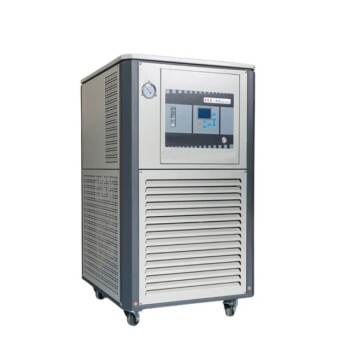
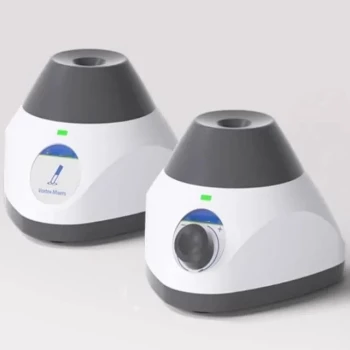
Precise control over kinetics and thermodynamics is the backbone of successful wastewater treatment research. At KINTEK, we specialize in high-performance laboratory equipment designed to deliver the stability your experiments demand. From advanced constant temperature shakers and homogenizers to a comprehensive range of laboratory stirrers and cooling solutions, we provide the tools necessary to eliminate variables and ensure reproducible data.
Whether you are analyzing heavy metal adsorption or developing new porous materials, KINTEK offers the specialized equipment and consumables—including PTFE products, ceramics, and high-pressure reactors—to support your breakthroughs.
Ready to optimize your lab's performance? Contact us today to explore our full catalog and expert solutions!
References
- Yasmin Vieira, Guilherme Luiz Dotto. An overview of geological originated materials as a trend for adsorption in wastewater treatment. DOI: 10.1016/j.gsf.2021.101150
This article is also based on technical information from Kintek Solution Knowledge Base .
Related Products
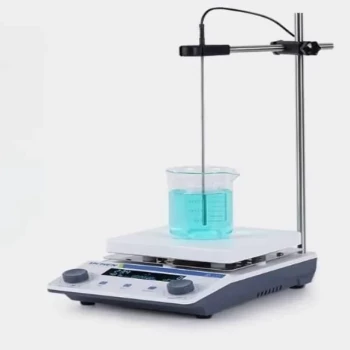
- Laboratory Small Constant Temperature Heated Magnetic Stirrer Heater and Stirrer
- High Temperature Constant Temperature Heating Circulator Water Bath Chiller Circulator for Reaction Bath
- 40L Chiller Water Bath Cooling Circulator Low Temperature Constant Temperature Reaction Bath
- 50L Chiller Water Bath Cooling Circulator Low Temperature Constant Temperature Reaction Bath
- 5L Chilling Circulator Cooling Water Bath Circulator for Low Temperature Constant Temperature Reaction Bath
People Also Ask
- What role does a magnetic stirrer with heating play in ZnO nanoparticle synthesis? Precision Control for Quality Results
- What role does a constant temperature heating magnetic stirrer play in MFC-HAp synthesis? Achieve Material Homogeneity
- What is the function of a laboratory magnetic stirrer in Ni–Cr–P electrodeposition? Optimize Ion Transport & Coating
- Why is a laboratory magnetic stirrer required for benzoic acid esters? Boost Reaction Speed & Yield with High RPM
- What role does a laboratory magnetic stirrer play in TiO2 and TiO2-Ag sol preparation? Master Chemical Kinetics