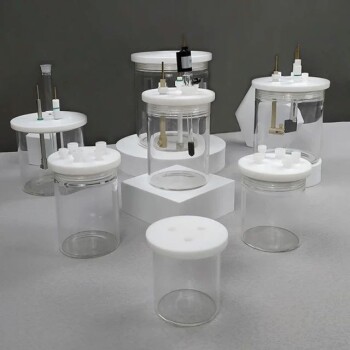
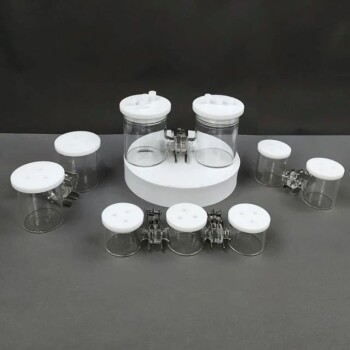
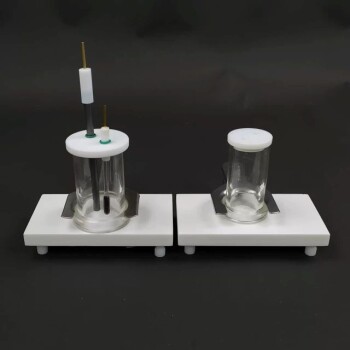
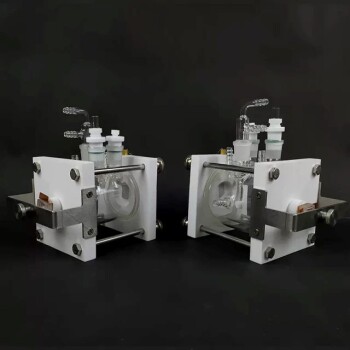
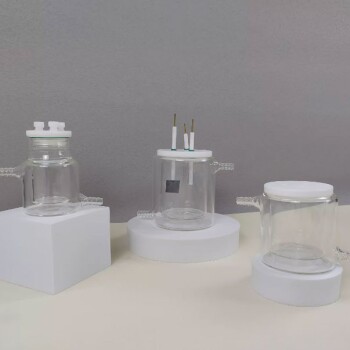
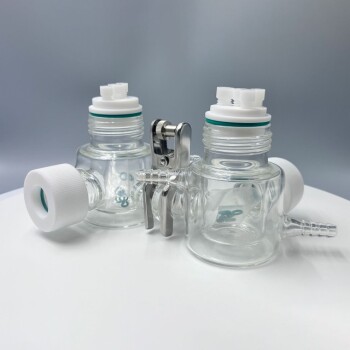
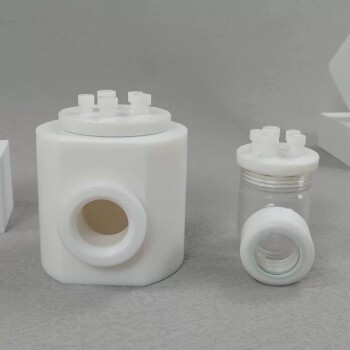
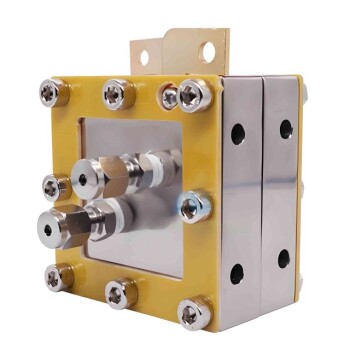
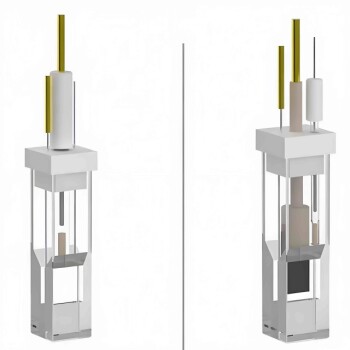
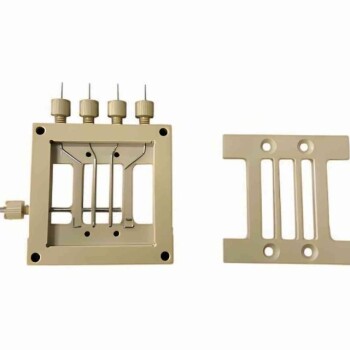
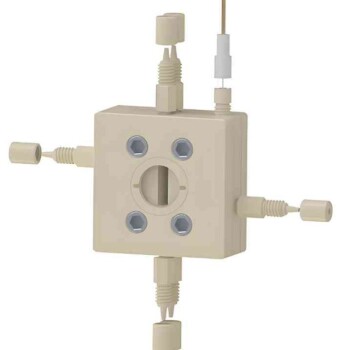
The core function of an Electrolytic Cell in tritium determination is sample enrichment. By utilizing the isotope separation effect during electrolysis, the cell concentrates tritium from a large volume of water into a significantly smaller volume. This process effectively isolates the heavier tritium isotopes while removing light hydrogen, creating a sample with higher specific activity that is suitable for precise measurement.
The Electrolytic Cell acts as a vital amplifier for radioactive detection. Because environmental tritium levels are often below standard detection thresholds, this device concentrates the sample to lower the detection limit and ensure accurate analysis.
The Mechanism of Isotope Separation
Leveraging Physical Differences
The Electrolytic Cell relies on the fundamental physical differences between hydrogen isotopes.
Tritium is heavier than light hydrogen.
During the electrochemical process, this mass difference results in a distinct separation effect.
The Electrolysis Process
The cell applies a constant direct current (DC) to the water sample.
This electrical energy drives a non-spontaneous redox reaction, decomposing the water into hydrogen and oxygen gases.
However, light hydrogen creates gas and escapes the liquid phase much more readily than tritium.
Resulting Concentration
As the electrolysis continues, the total volume of water decreases significantly.
Because the light hydrogen escapes faster, the remaining liquid becomes increasingly rich in tritium.
You essentially trade a large volume of low-activity water for a small volume of high-activity concentrate.
Why Pre-treatment is Critical
Lowering Detection Limits
Direct measurement of environmental water samples is often impossible due to extremely low radioactivity levels.
The concentration achieved by the Electrolytic Cell brings these low levels up to a range that detectors can accurately read.
This effectively lowers the minimum detectable limit of the entire analytical system.
Ensuring Analytical Accuracy
In environmental monitoring, precision is paramount.
By increasing the signal-to-noise ratio through concentration, the cell reduces statistical uncertainty in the final readout.
This ensures that data regarding radioactive contamination or natural background levels is technically sound.
Operational Considerations and Trade-offs
Process Time vs. Sensitivity
While electrolysis provides necessary sensitivity, it adds a significant step to the analytical workflow.
The process requires time to reduce the sample volume sufficiently to achieve the desired enrichment factor.
This makes the timeline for analysis longer compared to direct measurement methods used for higher-activity samples.
Importance of Constant Current
The primary reference highlights the necessity of applying a constant current.
Fluctuations in electrical input can alter the rate of electrolysis and the separation efficiency.
Maintaining stable electrical parameters is essential to ensure the concentration factor is calculated accurately.
Implications for Sample Analysis
If your primary focus is Environmental Monitoring: The Electrolytic Cell is non-negotiable; it is the only way to achieve the sensitivity required to detect low-level background tritium.
If your primary focus is High-Activity Screening: You may not require this enrichment step, as the tritium activity might already exceed the detection limit of your instrumentation without volume reduction.
The Electrolytic Cell transforms a sample from undetectable to measurable, bridging the gap between trace environmental levels and instrument sensitivity.
Summary Table:
| Feature | Description of Function in Tritium Analysis |
|---|---|
| Primary Goal | Sample Enrichment (Isotope Concentration) |
| Mechanism | Isotope separation effect via electrolysis |
| Input Requirement | Constant direct current (DC) for stable separation |
| Key Outcome | Reduced sample volume with increased specific activity |
| Benefit | Lowers detection limits for low-level environmental monitoring |
Precision Solutions for Your Environmental Monitoring Needs
Maximize your analytical accuracy with KINTEK’s high-performance laboratory solutions. Whether you are conducting critical tritium enrichment or complex material synthesis, our comprehensive range of equipment is engineered for reliability and precision.
From advanced electrolytic cells and high-purity electrodes for specialized research to high-temperature furnaces, hydraulic presses, and cooling solutions (ULT freezers & freeze dryers), KINTEK provides the tools necessary for modern laboratory success. Our expertise extends to essential consumables like PTFE products, ceramics, and crucibles, ensuring your entire workflow is supported by quality.
Ready to lower your detection limits and enhance your lab's efficiency? Contact our technical experts today to find the perfect equipment for your application.
References
- Raluca Ivan. Fabrication of hybrid nanostructures by laser technique for water decontamination. DOI: 10.21175/rad.abstr.book.2023.15.4
This article is also based on technical information from Kintek Solution Knowledge Base .
Related Products
- PTFE Electrolytic Cell Electrochemical Cell Corrosion-Resistant Sealed and Non-Sealed
- Super Sealed Electrolytic Electrochemical Cell
- Electrolytic Electrochemical Cell with Five-Port
- H Type Electrolytic Cell Triple Electrochemical Cell
- Electrolytic Electrochemical Cell Gas Diffusion Liquid Flow Reaction Cell
People Also Ask
- What is the necessity of selecting a PTFE electrolytic cell? Ensure Precise Graphene Corrosion Testing Accuracy
- What is the proper method for cleaning the surface of an all-PTFE electrolytic cell? Ensure Accurate Results with a Pristine Surface
- How should an all-PTFE electrolytic cell be stored after use? Expert Maintenance Tips for Long-Lasting Performance
- What is the proper cleaning method for an all-PTFE electrolytic cell? Essential Tips for Surface Integrity
- What are the standard opening specifications for all-PTFE electrolytic cells? A Guide to Sealed vs. Non-Sealed Ports