A circulating loop system integrated with a Hastelloy autoclave acts as a high-fidelity simulator for the primary side water environment of a pressurized water reactor (PWR). Its primary function is to establish and maintain extreme operating conditions—specifically a temperature of 330°C and a pressure of 150 bar—to facilitate realistic corrosion testing. By utilizing precision sensors, the system controls water chemistry to accurately measure metal loss and oxidation kinetics in Alloy 690.
Core Insight: The system is not merely a containment vessel; it is a dynamic control environment. Its ability to stabilize temperature, pressure, and chemical parameters is the critical factor that allows researchers to distinguish between experimental noise and actual material degradation in Alloy 690.
Simulating the PWR Environment
Replicating Extreme Physical Conditions
The fundamental purpose of this system is to bridge the gap between laboratory conditions and the reality of a nuclear core.
To achieve this, the loop maintains a temperature of 330°C and a pressure of 150 bar.
These specific parameters are non-negotiable for simulating the primary side water environment of a pressurized water reactor (PWR).
Precise Chemical Control
Beyond temperature and pressure, the corrosion rate of Alloy 690 is heavily dictated by water chemistry.
The circulating loop utilizes precision sensors to continuously monitor dissolved oxygen (DO), dissolved hydrogen (DH), and pH levels.
This real-time monitoring ensures the environment remains chemically pure and stable throughout the experiment.
The Objective of the Experiment
Measuring Metal Loss
The controlled environment allows for the isolation of variables that cause material mass reduction.
Researchers use this setup to quantify exactly how much metal is lost from Alloy 690 components over time.
Analyzing Oxidation Kinetics
The system is designed to facilitate long-term operation, which is essential for studying slow-acting oxidation processes.
By maintaining stability, the system enables the accurate tracking of oxidation kinetics, revealing how oxide layers form and evolve on the alloy's surface.
Critical Considerations for Accuracy
The Necessity of System Purity
For corrosion data to be valid, the test environment must not be contaminated by the testing equipment itself.
The use of a Hastelloy autoclave is instrumental here, as it provides a robust, corrosion-resistant containment vessel.
This ensures that the "pure and stable environment" mentioned in the reference is maintained, preventing foreign corrosion products from skewing the results for the Alloy 690 samples.
Stability Over Time
Simulating a nuclear reactor environment requires consistency over long durations.
Fluctuations in pressure or chemistry can alter the oxidation mechanism, rendering the data useless.
Therefore, the system's ability to maintain a steady state is just as important as its ability to reach high temperatures.
Applying This to Materials Testing
To obtain reliable data on Alloy 690, you must align the system's capabilities with your specific experimental needs.
- If your primary focus is recreating reactor conditions: Ensure the loop can consistently hold 330°C and 150 bar without fluctuation to mimic the PWR primary side.
- If your primary focus is studying chemical sensitivity: Prioritize the calibration of DO, DH, and pH sensors to detect how subtle chemical changes impact oxidation kinetics.
The value of this experimental setup lies in its ability to isolate the material behavior of Alloy 690 within a chaotic, high-energy environment.
Summary Table:
| Feature | Specification/Function |
|---|---|
| Operating Temperature | 330°C (Simulates PWR primary side) |
| Operating Pressure | 150 bar |
| Chemical Monitoring | Real-time DO, DH, and pH control |
| Autoclave Material | Corrosion-resistant Hastelloy |
| Key Measurements | Metal loss and oxidation kinetics |
| Core Application | High-fidelity nuclear material simulation |
Elevate Your Nuclear Materials Research with KINTEK
Precision in simulated corrosion experiments demands equipment that can withstand the most extreme environments without compromising data integrity. KINTEK specializes in advanced laboratory solutions, offering a robust portfolio of high-temperature high-pressure reactors and autoclaves, including Hastelloy systems designed specifically for PWR simulation and Alloy 690 testing.
From precise high-temperature furnaces and cooling solutions to essential corrosion-resistant consumables, our engineering team provides the tools needed to maintain chemical purity and mechanical stability at 330°C and 150 bar. Ensure your research distinguishes real material degradation from experimental noise with KINTEK’s industry-leading technology.
Ready to optimize your lab’s simulation capabilities?
Contact KINTEK experts today for a customized solution
References
- Kyung Mo Kim, Do Haeng Hur. Corrosion Control of Alloy 690 by Shot Peening and Electropolishing under Simulated Primary Water Condition of PWRs. DOI: 10.1155/2015/357624
This article is also based on technical information from Kintek Solution Knowledge Base .
Related Products
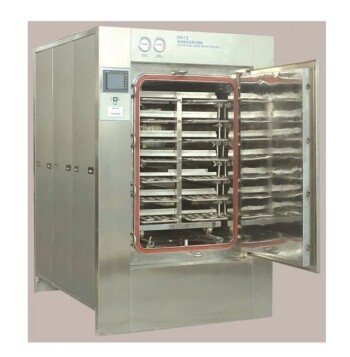
- Laboratory Sterilizer Lab Autoclave Herbal Powder Sterilization Machine for Plant
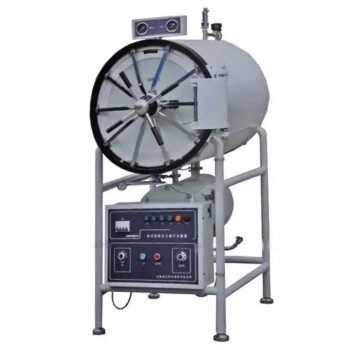
- Laboratory High Pressure Horizontal Autoclave Steam Sterilizer for Lab Use
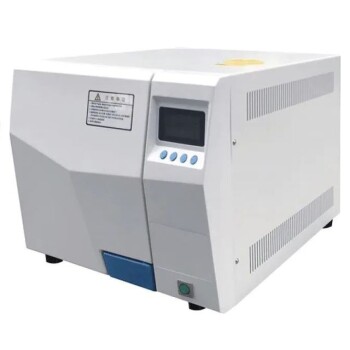
- Desktop Fast Laboratory Autoclave Sterilizer 35L 50L 90L for Lab Use
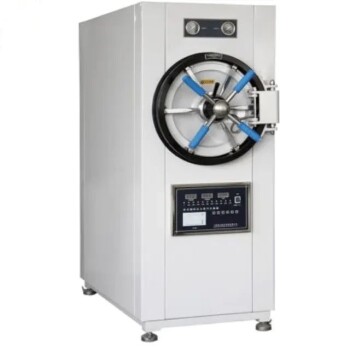
- Laboratory Sterilizer Lab Autoclave Vertical Pressure Steam Sterilizer for Liquid Crystal Display Automatic Type
- Desktop Fast High Pressure Laboratory Autoclave Sterilizer 16L 24L for Lab Use
People Also Ask
- What is the primary function of a laboratory sterilization autoclave? Master the Physics of Wet Heat Sterilization
- What is an autoclave sterilizer? Achieve Absolute Sterility with Steam and Pressure
- What is the size of an autoclave sterilizer? Find the Perfect Fit for Your Lab's Needs
- In what industries and applications are steam sterilizers or autoclaves used? Discover Key Uses Across 4 Major Sectors
- What is the autoclave temperature for sterilization? Master the 121°C Standard for Guaranteed Sterility