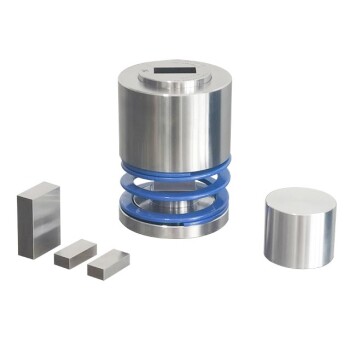
The primary function of a high-pressure autoclave or hydrogenation reactor in the context of biocrude upgrading is to serve as a controlled vessel for chemical stabilization. These reactors create an environment where high-pressure hydrogen and specific catalysts (such as NiMo/Al2O3) force raw biocrude to undergo structural changes, specifically removing impurities and saturating hydrocarbons to mimic petroleum properties.
Biocrude oil derived from Hydrothermal Liquefaction (HTL) contains high levels of heteroatoms like oxygen and nitrogen, making it unstable and unsuitable for direct use. The hydrogenation reactor provides the critical high-pressure conditions necessary to drive deoxygenation and denitrogenation, transforming the crude into a stable, standard-compliant fuel.
The Transformation Mechanism
Removing Impurities (Heteroatoms)
Raw biocrude oil is chemically distinct from conventional crude due to its significant content of heteroatoms, specifically oxygen and nitrogen.
The reactor facilitates deoxygenation and denitrogenation reactions. By introducing hydrogen at high pressure, these impurities are stripped from the carbon backbone, stabilizing the molecular structure of the oil.
Saturating Hydrocarbons
Beyond removing impurities, the biocrude requires structural modification to become a viable fuel.
The reactor promotes the saturation of hydrocarbons, adding hydrogen atoms to carbon double bonds. This process converts unstable, reactive molecules into stable paraffins and naphthenes that closely resemble the chemical properties of petroleum-based fuels.
The Role of the Reactor Environment
Creating Extreme Conditions
The autoclave functions as a sealed high-pressure and high-temperature environment.
As noted in material synthesis contexts, these vessels maintain conditions far exceeding the standard boiling point of water. In biocrude upgrading, this extreme environment is essential to force hydrogen gas to dissolve into the liquid oil and interact with the catalyst.
Facilitating Catalytic Efficiency
The physical design of the reactor ensures intimate contact between the biocrude, hydrogen gas, and the solid catalyst (e.g., NiMo/Al2O3).
The high-pressure environment accelerates reaction rates, ensuring that the catalytic upgrading process occurs efficiently enough to be industrially viable. Without this pressurized containment, the necessary chemical bonds would not break or form at a practical rate.
Understanding the Trade-offs
Operational Complexity vs. Product Quality
While high-pressure reactors yield high-quality fuel, they introduce significant operational complexity.
Running a reactor at these elevated pressures requires expensive, specialized metallurgy to prevent embrittlement and failure. The "sealed environment" that makes the chemistry possible also makes the process more capital-intensive and safety-critical than atmospheric refining processes.
Catalyst Deactivation Risks
The same heteroatoms that are removed from the oil can eventually foul or poison the catalyst.
While the reactor environment facilitates the reaction, the aggressive nature of biocrude upgrading means the catalyst (NiMo/Al2O3) must be carefully monitored for activity loss over time, leading to potential downtime for regeneration or replacement.
Making the Right Choice for Your Goal
When integrating a hydrogenation reactor into your bioprocessing workflow, consider your specific objectives:
- If your primary focus is meeting fuel standards: Prioritize reactor designs that maximize hydrogen partial pressure to ensure complete deoxygenation and saturation.
- If your primary focus is process economy: Evaluate the trade-off between operating pressure and fuel quality; lower pressures save money but may leave residual heteroatoms that reduce stability.
The high-pressure reactor is the bridge between raw, unstable biomass and the standardized energy infrastructure we rely on today.
Summary Table:
| Feature | Function in Biocrude Upgrading | Outcome |
|---|---|---|
| High-Pressure H2 | Drives deoxygenation and denitrogenation | Removes impurities (O, N) |
| Catalytic Environment | Facilitates contact between NiMo/Al2O3 and oil | Accelerates reaction rates |
| Heat & Pressure | Forces hydrogen dissolution into liquid biocrude | Saturates hydrocarbons |
| Sealed Containment | Maintains extreme conditions beyond boiling points | Stable molecular structure |
Elevate Your Bio-Fuel Research with KINTEK
Transform raw biocrude into high-standard energy with KINTEK’s precision-engineered high-pressure high-pressure reactors and autoclaves. Our specialized systems are designed to withstand the rigors of catalytic upgrading, ensuring optimal hydrogen partial pressure for complete deoxygenation and denitrogenation.
From high-temperature furnaces and crushing systems to our robust high-pressure reactors, KINTEK provides the advanced laboratory equipment and consumables needed for cutting-edge energy research. Contact our experts today to discuss how our customized solutions can enhance your lab's efficiency and process quality.
References
- Saeed Ranjbar, F. Xavier Malcata. Hydrothermal Liquefaction: How the Holistic Approach by Nature Will Help Solve the Environmental Conundrum. DOI: 10.3390/molecules28248127
This article is also based on technical information from Kintek Solution Knowledge Base .
Related Products
- Customizable High Pressure Reactors for Advanced Scientific and Industrial Applications
- Stainless High Pressure Autoclave Reactor Laboratory Pressure Reactor
- Mini SS High Pressure Autoclave Reactor for Laboratory Use
- Customizable Laboratory High Temperature High Pressure Reactors for Diverse Scientific Applications
- High Pressure Laboratory Autoclave Reactor for Hydrothermal Synthesis
People Also Ask
- What is the function of high-pressure reactors in the synthesis of MFI-type zeolites? Master Dry Gel Conversion.
- Graphene Fiber Synthesis: Key High-Pressure Reactor Processing Conditions Explained
- What reactor is used for high pressure reactions? Select the Right Autoclave for Your Lab
- What is the primary function of a high-pressure reactor in NiMoO4 preparation? Optimize Hydrothermal Catalyst Synthesis
- What are the hazards of high pressure reactors? A Guide to Managing Explosive Risks