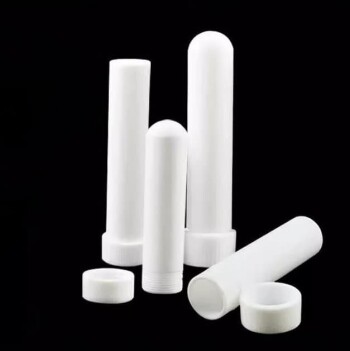
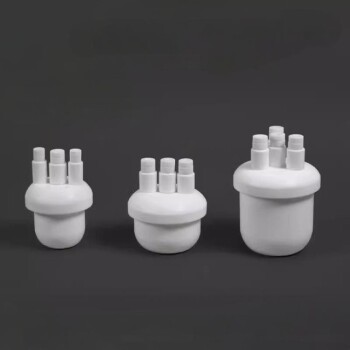
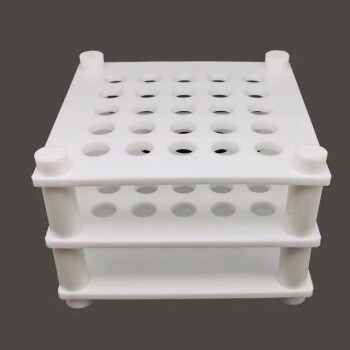
A high-pressure reactor with a polytetrafluoroethylene (PTFE) liner serves as the critical containment vessel for the hydrothermal leaching of Nickel-Titanium (NiTi) alloys. Its primary function is to maintain a closed-loop, high-temperature, and high-pressure environment while shielding the metallic reactor body from intense acid corrosion using the chemically inert PTFE barrier.
The combination of a pressure-sealed vessel and a PTFE liner solves two fundamental problems: it generates the extreme physical conditions required to decompose insoluble oxides and prevents the corrosive acids from destroying the equipment or contaminating the final product.
Facilitating Reaction Conditions
Creating a Closed-Loop Environment
The high-pressure reactor provides a sealed environment that allows the system to exceed standard atmospheric limits.
By closing the loop, the reactor utilizes saturated vapor pressure generated by rising temperatures. This allows aqueous solutions to reach temperatures significantly higher than their normal boiling points.
Accelerating Reaction Kinetics
The primary purpose of this elevated temperature and pressure is to increase reaction rates.
Under these extreme conditions, the system can successfully decompose difficult materials, such as the insoluble NiTiO3 oxide layers often found in NiTi alloys. Without the pressure generated by the sealed vessel, the leaching process would be inefficient or fail to break down these stable compounds.
The Critical Role of the PTFE Liner
Resisting Aggressive Corrosion
Hydrothermal leaching frequently employs strong mineral acids, including sulfuric, hydrochloric, and phosphoric acids.
At the elevated temperatures required for the process, these acids become extremely aggressive. The PTFE liner acts as a chemically stable shield, preventing these acids from making contact with the metal body of the reactor.
Preserving Equipment Integrity
Without the liner, the acid would rapidly erode the steel reactor vessel.
The liner ensures the structural safety of the high-pressure equipment by acting as the primary barrier against chemical attack, extending the lifespan of the reactor significantly.
Ensuring Leachate Purity
Beyond protecting the vessel, the liner protects the chemical process itself.
If the acids were to corrode the metal reactor, iron and other metallic impurities would leach into the solution. The PTFE liner prevents this cross-contamination, ensuring the purity of the resulting leachate remains high.
Operational Considerations and Safety
Managing Spontaneous Pressure
Operating a high-pressure reactor requires precise control over the physical environment to prevent catastrophic failure.
Technicians must calculate the spontaneous pressure generated by specific acid systems at target temperatures. Thermodynamic tools, such as the Clausius-Clapeyron equation, are essential for predicting these pressures.
Balancing Efficiency and Safety
There is a trade-off between maximizing reaction speed and maintaining safe operating limits.
While higher pressures accelerate the decomposition of oxide layers, they also increase the stress on the vessel. Proper pressure calculation is a prerequisite for ensuring process safety while optimizing the decomposition efficiency.
Making the Right Choice for Your Goal
To maximize the effectiveness of hydrothermal leaching, consider the following parameters:
- If your primary focus is Process Efficiency: Calculate the precise saturated vapor pressure required to decompose specific insoluble oxides like NiTiO3 without over-pressurizing the system.
- If your primary focus is Product Quality: Prioritize the integrity of the PTFE liner to prevent trace metal contamination from the reactor wall, ensuring a high-purity leachate.
The success of hydrothermal leaching relies on the synergy between the physical pressure containment of the reactor and the chemical resistance of the PTFE liner.
Summary Table:
| Feature | Function in Hydrothermal Leaching |
|---|---|
| Sealed Vessel | Creates high-pressure environment to exceed boiling points and accelerate kinetics. |
| PTFE Liner | Acts as a chemically inert barrier against aggressive acids (H2SO4, HCl). |
| Corrosion Shield | Prevents equipment erosion and metallic cross-contamination of the leachate. |
| Pressure Control | Manages saturated vapor pressure to decompose stable NiTiO3 oxide layers. |
Elevate Your Material Research with KINTEK’s Advanced Solutions
Precision and durability are non-negotiable in hydrothermal processing. KINTEK specializes in high-performance laboratory equipment, providing researchers with the robust high-temperature high-pressure reactors and autoclaves needed to master challenging applications like NiTi alloy leaching.
Our reactors, equipped with high-quality PTFE liners and ceramics, ensure your processes remain contamination-free while protecting your investment from aggressive acid corrosion. Whether you are performing complex battery research, material crushing, or high-pressure synthesis, KINTEK offers a comprehensive range of solutions—from vacuum and tube furnaces to isostatic hydraulic presses and cooling systems—tailored to meet the rigorous demands of your lab.
Ready to optimize your reaction kinetics and ensure leachate purity? Contact our specialists today to find the perfect reactor for your workflow!
References
- Muhammed İhsan Özgün, Arslan Terlemez. Effect of various mineral acids during the hydrothermal leaching process of NiTi alloy. DOI: 10.5505/pajes.2022.88021
This article is also based on technical information from Kintek Solution Knowledge Base .
Related Products
- Custom PTFE Teflon Parts Manufacturer for Hydrothermal Synthesis Reactor Polytetrafluoroethylene Carbon Paper and Carbon Cloth Nano-growth
- Custom PTFE Teflon Parts Manufacturer for Reagent Wide Mouth Fine Mouth Sample High Temperature Bottles
- Stainless High Pressure Autoclave Reactor Laboratory Pressure Reactor
- Customizable High Pressure Reactors for Advanced Scientific and Industrial Applications
- Custom PTFE Teflon Parts Manufacturer for Microwave Digestion Tank
People Also Ask
- What is the function of a PTFE reactor in MXene etching? Ensure Safe, High-Purity MAX Phase Conversion
- Why is a PTFE reactor required for titanium-based nano-ceramic coating solutions? Ensure Chemical Inertness & Purity
- Why must a Polytetrafluoroethylene (PTFE) reactor be used for Ti3C2TX MXene etching? Ensure Safety and Purity
- Why are PTFE reactors preferred for silver phosphate glass testing? Ensure Purity and Kinetic Accuracy
- What are the advantages of using polytetrafluoroethylene (PTFE) liners in hydrothermal synthesis reactors? High Purity