The primary function of a laboratory autoclave in the preparation of nano-etched Ti-6Al-4V alloys is to guarantee complete sterilization of the samples before biological testing. By subjecting the alloy to a high-pressure environment at 121°C for 20 minutes, the device eliminates all environmental microbial contamination. This step is a prerequisite for generating valid experimental data in bacterial challenge studies.
Core Takeaway: The autoclave provides a "clean slate" for scientific inquiry. It ensures that any antibacterial activity observed during experiments is attributed solely to the surface nanomorphology of the alloy, rather than pre-existing contamination or external biological interference.
Ensuring Experimental Integrity
To understand the necessity of the autoclave, one must look beyond simple cleaning. In biological experiments involving implantable materials like Ti-6Al-4V, the separation of variables is critical.
Establishing a Sterile Baseline
The nano-etching process modifies the physical structure of the alloy, but the sample is still exposed to the environment during handling.
Without terminal sterilization, the sample could introduce foreign bacteria into the experiment. The autoclave uses saturated steam under pressure to destroy all forms of microbial life on the alloy's surface.
Isolating the Variable
The goal of these specific experiments is to test the surface nanomorphology—the specific microscopic texture created by etching.
Researchers need to prove that the texture itself exerts an antibacterial effect. If the sample is not sterilized in the autoclave first, it becomes impossible to determine if subsequent bacterial growth (or lack thereof) is due to the material's design or random environmental factors.
Distinguishing Between Heat Treatments
It is vital to distinguish the role of the autoclave from other heating equipment used in the preparation of Ti-6Al-4V alloys, such as laboratory ovens. While both apply heat, they serve fundamentally different purposes in the workflow.
Autoclave: Biological Safety
The autoclave is strictly a biological tool. Its parameters (121°C, 20 mins, high pressure) are selected specifically to kill pathogens without necessarily altering the bulk mechanical properties of the metal.
Laboratory Oven: Material Enhancement
In contrast, a high-temperature laboratory oven is used for annealing after the etching process.
According to technical standards, the oven heat treatment focuses on physical properties: enhancing corrosion resistance, improving plasticity, and reducing surface stresses caused by etching. It promotes bone ingrowth potential but is distinct from the sterilization step performed by the autoclave.
Making the Right Choice for Your Goal
Correctly sequencing these heating steps is essential for the success of your biomaterial project.
- If your primary focus is material stability: Prioritize the laboratory oven (annealing) to reduce surface stress and improve corrosion resistance.
- If your primary focus is biological validity: You must utilize the autoclave as the final step to ensure any antibacterial data is statistically valid and contaminant-free.
The autoclave acts as the final gatekeeper, validating that your material's surface structure is the true agent of biological interaction.
Summary Table:
| Feature | Laboratory Autoclave (Sterilization) | Laboratory Oven (Annealing) |
|---|---|---|
| Primary Goal | Eliminate microbial contamination | Relieve stress & improve plasticity |
| Conditions | 121°C, 20 mins, Saturated Steam | High-temp dry heat (Material specific) |
| Outcome | Biological safety & data validity | Enhanced corrosion resistance & durability |
| Application | Final step before biological testing | Post-etching material enhancement |
Elevate Your Biomaterial Research with KINTEK Precision
Ensure the integrity of your biological experiments with KINTEK’s industry-leading sterilization and material processing solutions. Whether you are validating the antibacterial properties of nano-etched alloys or optimizing material stability, we provide the specialized tools you need for success.
Our laboratory-grade portfolio includes:
- High-Temperature High-Pressure Reactors & Autoclaves for flawless sterilization and synthesis.
- Advanced Muffle & Vacuum Furnaces for precise annealing and stress relief.
- Crushing, Milling & Hydraulic Presses (pellet, isostatic) for sample preparation.
- Battery Research Tools & Consumables including electrolytic cells and electrodes.
Don't let contamination compromise your data. Contact KINTEK today to discover how our high-performance equipment can streamline your lab's workflow and deliver statistically valid results for your next breakthrough.
References
- Richard Bright, Krasimir Vasilev. Bio-Inspired Nanostructured Ti-6Al-4V Alloy: The Role of Two Alkaline Etchants and the Hydrothermal Processing Duration on Antibacterial Activity. DOI: 10.3390/nano12071140
This article is also based on technical information from Kintek Solution Knowledge Base .
Related Products
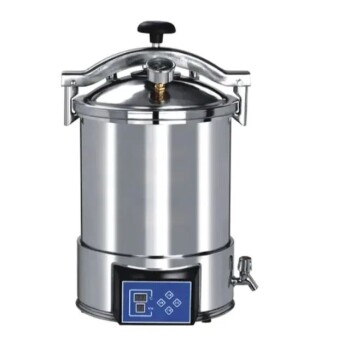
- Portable Digital Display Automatic Laboratory Sterilizer Lab Autoclave for Sterilization Pressure
- Desktop Fast Laboratory Autoclave Sterilizer 35L 50L 90L for Lab Use
- Desktop Fast Laboratory Autoclave Sterilizer 20L 24L for Lab Use
- Desktop Fast High Pressure Laboratory Autoclave Sterilizer 16L 24L for Lab Use
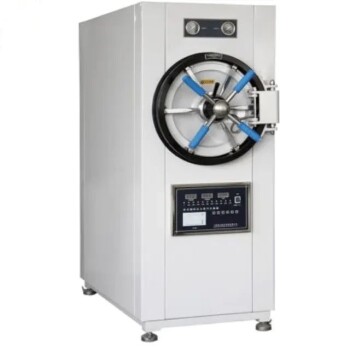
- Laboratory High Pressure Horizontal Autoclave Steam Sterilizer for Lab Use
People Also Ask
- What is the primary function of a laboratory sterilization autoclave? Master the Physics of Wet Heat Sterilization
- What are the two types of autoclave used in the laboratory? Gravity vs. Pre-Vacuum Explained
- What is the autoclave temperature for sterilization? Master the 121°C Standard for Guaranteed Sterility
- What precautions should be taken during autoclave in laboratory? A Complete Safety Guide to Prevent Burns and Explosions
- What extreme conditions does a laboratory autoclave simulate? Testing Wear Resistance of Nuclear Fuel Cladding