Knowledge What is the function of a laboratory reactor in polycondensation? Ensure Precision in Cardanol-Modified Resin Synthesis
Author avatar

Tech Team · Kintek Solution

Updated 2 days ago

What is the function of a laboratory reactor in polycondensation? Ensure Precision in Cardanol-Modified Resin Synthesis


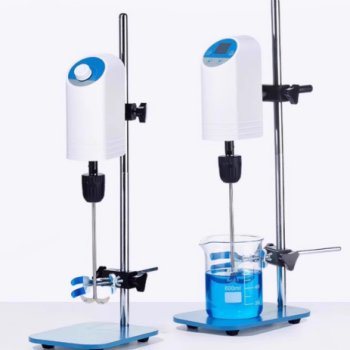
The primary function of a laboratory reactor equipped with a mechanical stirrer is to generate high-efficiency shear force and ensure the uniform mixing of reactants during high-temperature polycondensation. By maintaining constant material circulation at temperatures between 200 and 220 °C, the stirrer ensures that raw materials—specifically polyols, polyfunctional acids, and cardanol—remain in full contact to facilitate consistent molecular chain growth.

The success of alkyd resin synthesis relies on strictly controlling the reaction environment. The mechanical stirrer is the critical component that prevents localized overheating and carbonization, effectively guaranteeing a uniform molecular weight distribution in the final product.

Achieving Homogeneity in Polymerization

Facilitating Reactant Contact

In the synthesis of cardanol-modified alkyd resins, the chemical reaction relies on the physical interaction of diverse raw materials.

The mechanical stirrer drives the movement of polyols, polyfunctional acids, and cardanol. This continuous agitation ensures these distinct components come into full, repeated contact, allowing the necessary chemical bonds to form efficiently.

Application of Shear Force

Simple motion is often insufficient for viscous polymer mixtures; high-efficiency shear force is required.

The reactor utilizes the mechanical stirrer to apply this force, physically disrupting the fluid dynamics within the vessel. This ensures that the mixture remains homogeneous rather than separating or settling, which is vital for the consistency of the polymer chain.

Critical Thermal Management

Uniform Heat Distribution

The polycondensation process occurs at high temperatures, specifically between 200 and 220 °C.

Without active circulation, heat transfer within the resin mixture would be uneven. The mechanical stirrer facilitates the circulation of material, ensuring that thermal energy is distributed distinctively and evenly throughout the entire volume of the reactor.

Preventing Localized Overheating

A static or poorly mixed reactor is prone to "hot spots" near the heating source.

The circulation provided by the stirrer prevents materials from stagnating in these high-heat zones. This is the primary defense against localized overheating, which leads to carbonization (burning) of the resin and degrades the quality of the final product.

Understanding Process Risks

The Consequence of Poor Circulation

If the mechanical stirrer fails to provide adequate circulation, the reaction environment becomes unstable.

This lack of uniformity leads to uneven molecular chain growth. Consequently, the final resin will exhibit a broad or unpredictable molecular weight distribution, negatively impacting its performance characteristics.

avoiding Material Degradation

The most severe risk in this high-temperature process is the chemical degradation of the cardanol and other inputs.

Inadequate stirring allows portions of the mixture to exceed the safe temperature threshold of 220 °C. This results in carbonization, introducing impurities and darkening the resin, rendering it unsuitable for high-quality applications.

Optimizing Your Synthesis Strategy

To ensure the highest quality cardanol-modified alkyd resins, align your equipment settings with your specific production goals:

  • If your primary focus is Product Consistency: Ensure the stirrer speed provides sufficient shear force to maintain a uniform molecular weight distribution throughout the batch.
  • If your primary focus is Material Purity: Prioritize continuous circulation to eliminate stagnant zones, preventing localized overheating and subsequent carbonization.

By maintaining precise control over mechanical agitation, you transform a volatile chemical mixture into a stable, high-performance polymer.

Summary Table:

Key Feature Functional Role in Polycondensation Impact on Resin Quality
Mechanical Stirrer Generates high-efficiency shear force Ensures uniform molecular weight distribution
Material Circulation Constant movement at 200–220 °C Facilitates consistent molecular chain growth
Thermal Management Distributes heat evenly throughout the vessel Prevents localized overheating and carbonization
Shear Force Disrupts fluid dynamics in viscous mixtures Maintains homogeneity of polyols, acids, and cardanol

Elevate Your Polymer Synthesis with KINTEK

Precision is paramount when synthesizing high-performance cardanol-modified alkyd resins. KINTEK specializes in advanced laboratory equipment designed to handle the rigorous demands of high-temperature polycondensation. From our state-of-the-art high-temperature high-pressure reactors and autoclaves to high-torque crushing and milling systems, we provide the tools necessary to ensure consistent molecular weight distribution and prevent material degradation.

Whether you are refining battery research or scaling up chemical production, our comprehensive portfolio—including cooling solutions, precision shakers, and specialized ceramics—is engineered to optimize your lab's efficiency and purity. Contact KINTEK today to discover how our tailored laboratory solutions can enhance your synthesis strategy and product quality.

References

  1. Maxinne Denis, Claire Négrell. Triple Benefits of Cardanol as Chain Stopper, Flame Retardant and Reactive Diluent for Greener Alkyd Coating. DOI: 10.3390/org4010009

This article is also based on technical information from Kintek Solution Knowledge Base .

Related Products

People Also Ask

Related Products

Customizable Laboratory High Temperature High Pressure Reactors for Diverse Scientific Applications

Customizable Laboratory High Temperature High Pressure Reactors for Diverse Scientific Applications

High-pressure lab reactor for precise hydrothermal synthesis. Durable SU304L/316L, PTFE liner, PID control. Customizable volume & materials. Contact us!

High Pressure Laboratory Autoclave Reactor for Hydrothermal Synthesis

High Pressure Laboratory Autoclave Reactor for Hydrothermal Synthesis

Discover the applications of Hydrothermal Synthesis Reactor - a small, corrosion-resistant reactor for chemical labs. Achieve rapid digestion of insoluble substances in a safe and reliable way. Learn more now.

Stainless High Pressure Autoclave Reactor Laboratory Pressure Reactor

Stainless High Pressure Autoclave Reactor Laboratory Pressure Reactor

Discover the versatility of Stainless High Pressure Reactor - a safe and reliable solution for direct and indirect heating. Built with stainless steel, it can withstand high temperatures and pressures. Learn more now.

Laboratory High Pressure Horizontal Autoclave Steam Sterilizer for Lab Use

Laboratory High Pressure Horizontal Autoclave Steam Sterilizer for Lab Use

The horizontal autoclave steam sterilizer adopts the gravity displacement method to remove the cold air in the inner chamber, so that the inner steam and cold air content is less, and the sterilization is more reliable.

Desktop Fast High Pressure Laboratory Autoclave Sterilizer 16L 24L for Lab Use

Desktop Fast High Pressure Laboratory Autoclave Sterilizer 16L 24L for Lab Use

The desktop fast steam sterilizer is a compact and reliable device used for rapid sterilization of medical, pharmaceutical, and research items.

Portable High Pressure Laboratory Autoclave Steam Sterilizer for Lab Use

Portable High Pressure Laboratory Autoclave Steam Sterilizer for Lab Use

Portable autoclave sterilization pressure is a device that uses pressure saturated steam to quickly and effectively sterilize items.

Laboratory High Pressure Steam Sterilizer Vertical Autoclave for Lab Department

Laboratory High Pressure Steam Sterilizer Vertical Autoclave for Lab Department

Vertical pressure steam sterilizer is a kind of sterilization equipment with automatic control, which is composed of heating system, microcomputer control system and overheating and overpressure protection system.

Mini SS High Pressure Autoclave Reactor for Laboratory Use

Mini SS High Pressure Autoclave Reactor for Laboratory Use

Mini SS High Pressure Reactor - Ideal for medicine, chemical, and scientific research industries. Programmed heating temp and stirring speed, up to 22Mpa pressure.

Desktop Fast Laboratory Autoclave Sterilizer 35L 50L 90L for Lab Use

Desktop Fast Laboratory Autoclave Sterilizer 35L 50L 90L for Lab Use

The desktop fast steam sterilizer is a compact and reliable device used for rapid sterilization of medical, pharmaceutical, and research items. It efficiently sterilizes surgical instruments, glassware, medicines, and resistant materials, making it suitable for various applications.

Visual High-Pressure Reactor for In-Situ Observation

Visual High-Pressure Reactor for In-Situ Observation

The visual high-pressure reactor uses transparent sapphire or quartz glass, maintaining high strength and optical clarity under extreme conditions for real-time reaction observation.

Laboratory Sterilizer Lab Autoclave Pulsating Vacuum Desktop Steam Sterilizer

Laboratory Sterilizer Lab Autoclave Pulsating Vacuum Desktop Steam Sterilizer

The pulsating vacuum desktop steam sterilizer is a compact and reliable device used for rapid sterilization of medical, pharmaceutical, and research items.

Manual High Temperature Heated Hydraulic Press Machine with Heated Plates for Lab

Manual High Temperature Heated Hydraulic Press Machine with Heated Plates for Lab

The High Temperature Hot Press is a machine specifically designed for pressing, sintering and processing materials in a high temperature environment. It is capable of operating in the range of hundreds of degrees Celsius to thousands of degrees Celsius for a variety of high temperature process requirements.

Microwave Plasma Chemical Vapor Deposition MPCVD Machine System Reactor for Lab and Diamond Growth

Microwave Plasma Chemical Vapor Deposition MPCVD Machine System Reactor for Lab and Diamond Growth

Get high-quality diamond films with our Bell-jar Resonator MPCVD machine designed for lab and diamond growth. Discover how Microwave Plasma Chemical Vapor Deposition works for growing diamonds using carbon gas and plasma.

915MHz MPCVD Diamond Machine Microwave Plasma Chemical Vapor Deposition System Reactor

915MHz MPCVD Diamond Machine Microwave Plasma Chemical Vapor Deposition System Reactor

915MHz MPCVD Diamond Machine and its multi-crystal effective growth, the maximum area can reach 8 inches, the maximum effective growth area of single crystal can reach 5 inches. This equipment is mainly used for the production of large-size polycrystalline diamond films, the growth of long single crystal diamonds, the low-temperature growth of high-quality graphene, and other materials that require energy provided by microwave plasma for growth.

Split Chamber CVD Tube Furnace with Vacuum Station Chemical Vapor Deposition System Equipment Machine

Split Chamber CVD Tube Furnace with Vacuum Station Chemical Vapor Deposition System Equipment Machine

Efficient split chamber CVD furnace with vacuum station for intuitive sample checking and quick cooling. Up to 1200℃ max temperature with accurate MFC mass flowmeter control.

Warm Isostatic Press WIP Workstation 300Mpa for High Pressure Applications

Warm Isostatic Press WIP Workstation 300Mpa for High Pressure Applications

Discover Warm Isostatic Pressing (WIP) - A cutting-edge technology that enables uniform pressure to shape and press powdered products at a precise temperature. Ideal for complex parts and components in manufacturing.

Square Bidirectional Pressure Mold for Lab Use

Square Bidirectional Pressure Mold for Lab Use

Discover precision in molding with our Square Bidirectional Pressure Mold. Ideal for creating diverse shapes and sizes, from squares to hexagons, under high pressure and uniform heating. Perfect for advanced material processing.

Double Layer Five-Port Water Bath Electrolytic Electrochemical Cell

Double Layer Five-Port Water Bath Electrolytic Electrochemical Cell

Experience optimal performance with our Water Bath Electrolytic Cell. Our double-layer, five-port design boasts corrosion resistance and longevity. Customizable to fit your specific needs. View specs now.

Square Lab Press Mold for Laboratory Applications

Square Lab Press Mold for Laboratory Applications

Create uniform samples easily with Square Lab Press Mold - available in various sizes. Ideal for battery, cement, ceramics, and more. Custom sizes available.

Laboratory Jaw Crusher

Laboratory Jaw Crusher

Discover the small jaw crusher for efficient, flexible, and affordable crushing in labs and small mines. Ideal for coal, ores, and rocks. Learn more now!


Leave Your Message